
What is CBD?
CBD is very much in vogue in France, where the Conseil d'Etat confirmed on 29 December 2022 (n° 444887) that hemp flowers and leaves with less than 0.3% THC may be sold. Research explores many questions about it, often in preclinical or small studies whose results do not allow any conclusion; CBD sold to the public is not a medicine. CBD, short for cannabidiol, is a molecule naturally present in hemp. It is the second most studied cannabinoid after THC (Tetrahydrocannabinol). It is also the cannabinoid that is usually found in the highest concentration in industrial hemp.
Hemp and cannabis, what is the difference?
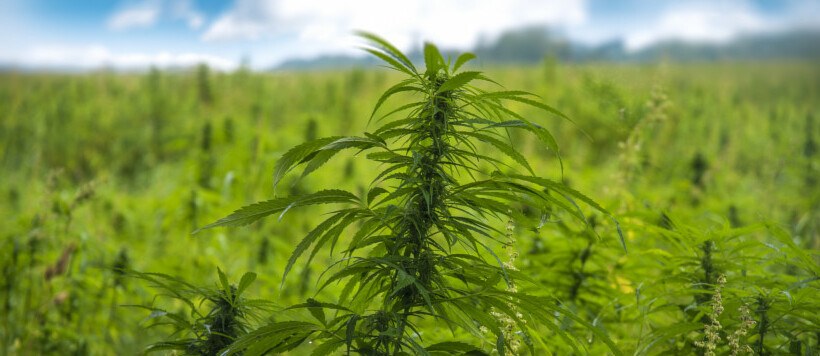
The answer is simple, there is none, hemp is cannabis, and cannabis is hemp. It is the same plant. We should even say the same family of plants. Indeed, this family of plants bearing the name of Cannabis includes 3 varieties:
- Cannabis Sativa or industrial hemp which has a very high concentration of CBD (cannabidiol), and a negligible amount of THC (less than 0.3% according to French and European rules). It is from this variety that CBD is obtained.
- Cannabis Indica, rich in THC, and poor in CBD, is the recreational cannabis, known for its psychoactive effects. Its consumption is illegal in most countries.
- Cannabis Ruderalis, low in both CBD and THC. It has no known use.
How is CBD obtained?
As we have seen, CBD (cannabidiol) is extracted from Cannabis Sativa. There are several methods of extracting CBD as follows:
- Solvent extraction: Chemical solvents of various kinds, such as ethanol, isopropyl alcohol, propane or butane. This method, inexpensive, is not without risks, because it is almost impossible to remove all the solvent used, once the product is finished. This exposes the consumer to certain health risks.
- Oil-based extraction: This is the least expensive method, it has the advantage of not requiring chemicals. However, it is not very effective, and the quantity of CBD extracted will be low.
- Supercritical CO2 extraction: today the most effective way to obtain a high-quality extract without solvents or additives. The CBD obtained by this technique is of high purity, and the THC content of the finished product must be checked by laboratory analysis. It is the method generally considered the most reliable.
How to consume CBD?
CBD is found in different forms: flowers, oils, cosmetics. In the European Union, CBD is not authorised as a food (Novel Food Regulation (EU) 2015/2283), so oils and other products to be swallowed cannot be sold as food in France. The way a product is used also changes how much cannabidiol reaches the body, which is one more reason to talk to a doctor before any use, especially for a child.
Can I give CBD to my child?
Parents sometimes ask about CBD for their child for reasons such as:
- Better sleep
- Reduction of anxiety or anxiety attacks
- For ADHD children
- For children with autism
- For children with asthma
- Or epileptic seizures.
- Etc.

These questions are understandable, but CBD is not a medicine and should not be given to a child on one's own initiative. The World Health Organization (WHO) noted in 2018 that cannabidiol shows no potential for abuse or dependence, but this does not make it a treatment, and side effects (drowsiness, digestive troubles, changes in liver enzymes) and interactions with medicines are reported. The only cannabidiol-based medicine authorised (Epidyolex) is prescribed by a doctor for certain rare epilepsies (Dravet syndrome, Lennox-Gastaut syndrome, tuberous sclerosis complex), under medical supervision. For any question about your child's health, ask your doctor or paediatrician.