
What this article covers
CBD in food
As for all successful products, CBD (cannabidiol) is available in a multitude of products. Food products are no exception to the rule, and some stores, even organic food stores, have offered them. Yet CBD is not authorised as a food in the European Union: under the Novel Food Regulation (EU) 2015/2283, a CBD food needs an authorisation that none has obtained, and on 20 May 2026 the French Ministry of Agriculture recalled that food products containing CBD are illegal and must be withdrawn from the market.
None of these CBD foods can be legally sold in France: CBD candies with a mint, lemon or honey taste, CBD chocolate bars, CBD-enriched drinks, oils to swallow, capsules or gummies are not authorised. What remains allowed in the kitchen are hemp seeds, hemp seed oil and plain hemp leaves for infusion, not enriched with CBD.
What is CBD?
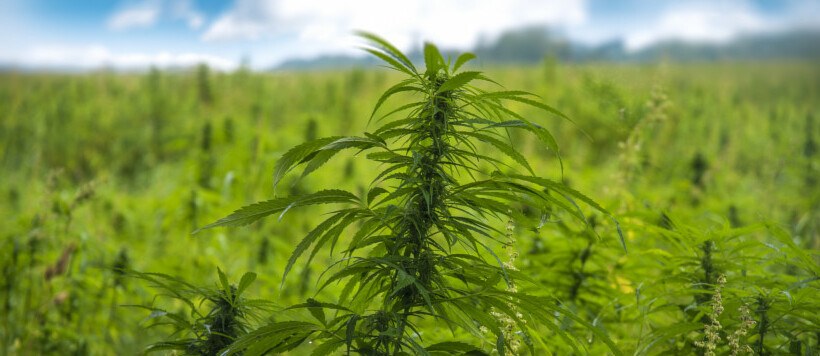
CBD or cannabidiol is a molecule found in the flowers of the industrial hemp (Cannabis Sativa). This large plant, which can reach 5 meters, has been cultivated by man for thousands of years. Hemp was used for its very resistant fibers, which were used to make clothes and ropes. It was also used for food, because its seeds are rich in nutrients, and allow to obtain a nourishing oil (the seeds do not contain CBD). Finally, hemp was used for its flowers rich in CBD, and THC. Nowadays, agricultural hemp varieties are selected for a very low THC content: EU rules and French law set the limit at 0.3% THC.
What does research say about CBD?
Natural substance from a plant used since time immemorial by humanity, CBD is the subject of many studies, often preclinical or on small groups :
- Possible anti-inflammatory activity: some in vivo studies, carried out on animals (BUCCELLATO et al. 2011, MECHA, et al. 2013, KOZELA et al. 2013, RIBEIRO et al. 2012), have explored it; these preclinical results do not allow any conclusion for humans.
- Pain: research is exploring a possible effect, but the available data do not show that CBD relieves pain as a medicine would.
- Stress and anxiety: a few small studies have looked at this question; their results remain preliminary.
- Sleep: some users report it, but studies are few and do not allow any conclusion.
CBD is not a medicine: for any health problem, ask a doctor for advice.

CBD in your food?
Since time immemorial, hemp, and more particularly its seeds, have been part of the human diet, it is only more recently that the idea of incorporating CBD from the flowers has emerged. This idea comes up against the law: as CBD is not authorised as a food in the EU, adding CBD to dishes, drinks or sweets is not a legal use, whatever the form.
The same applies to CBD oils intended to be swallowed or placed under the tongue: in France, they are among the CBD food products that must be withdrawn from the market. A CBD oil can only be sold legally for other uses, such as a cosmetic for external application.
If you are looking for the taste of hemp in your dishes, turn to hemp seeds and hemp seed oil, which contain no CBD and are permitted foods. Hemp seed oil is rich in omega-3 and -6, minerals and vitamins. Moreover, it will bring to your dishes the subtle taste of hemp, which will not fail to surprise your guests.
How to use hemp in cooking?
You prefer to make your own hemp dishes and drinks? There is nothing easier: use hemp seed oil or shelled hemp seeds, and let your creativity speak. Hemp seed oil is best used raw: a few drops in fruit and vegetable juices, a smoothie, a salad dressing, or a soup once served. Shelled hemp seeds can be sprinkled on salads, yoghurts, ice cream or your favorite cakes. Plain hemp leaves, not enriched with CBD, can also be used in infusion. The amount will depend on your taste: start with a little the first time, and increase depending on the flavor you want.
Some rules to follow :
- Hemp seed oil blends well with other ingredients: depending on your recipe, you can combine it with butter, dairy, honey, chocolate, or other vegetable oils.
- Prefer a low temperature cooking of the food, or no cooking at all, in order to preserve all the food qualities of the products. Hemp seed oil is rich in polyunsaturated fatty acids, which are sensitive to heat.
Use sparingly. Hemp has a subtle but particular taste. It is therefore advisable to start gently, in order to better apprehend the aroma of hemp.
How to choose a CBD oil for external use
Here is what to look at in a CBD oil intended for cosmetic use, never to be swallowed.
Know the extraction process of cannabinoids
There are 3 techniques to extract CBD from hemp (Cannabis Sativa) :
- Supercritical CO2 extraction : this method is expensive, but also perfectly clean. It has been used for many years in several industries, food, cosmetics, and pharmaceutical. It allows to isolate with precision, the desired molecule(s) while preserving their properties. The extraction temperature being very low, the molecules sensitive to heat like phytocannabinoids (CBD, CBG, etc.), and terpenes are protected. This process yields a very pure extract, which is why it is generally considered the cleanest method.
- The extraction of CBD by vegetable oils : the cannabidiol is extracted from the flowers thanks to vegetable oils (hemp oil, olive oil, sesame oil, etc.). The CBD then benefits from the qualities of each of these oils. Unfortunately, this method is not very effective, and the final product is poor in active ingredients.
- Solvent extraction : very inexpensive, this method of extracting CBD should be avoided. Solvent extraction is done with isopropyl alcohol, butane, propane, or ethanol. It very regularly leaves residues in the final product. Oils produced by this technique carry a risk of contamination by solvents.
Is the CBD broad spectrum?
There are a lot of CBD products available today, balms, creams, oils, etc.. The merchants never lack imagination to surprise, but it is sometimes complicated to make its choice in front of all the proposed articles. Labels indicate whether a CBD product is broad spectrum and organic. Broad-spectrum products are linked to the hypothesis of the entourage effect, which refers to the synergy of all the substances contained in the plant, here hemp (Cannabis Sativa), cannabinoids (CBD, CBG, CBN, etc.), but also flavonoids and terpenes. This synergy is still being studied. You now know what the law allows in the kitchen: hemp seeds and hemp seed oil yes, CBD foods no.