

But what is CBD?
Cannabidiol, more commonly known as CBD, has become a hotly debated topic in the news, and its properties are being actively studied.
CBD (which is the acronym for Cannabidiol), is a molecule found in hemp. It is the second most studied cannabinoid after its famous cousin THC (Tetrahydrocannabinol). It is also the cannabinoid which is usually found at the highest concentration in industrial hemp and the second highest concentration in medicinal hemp.
Where is CBD found?
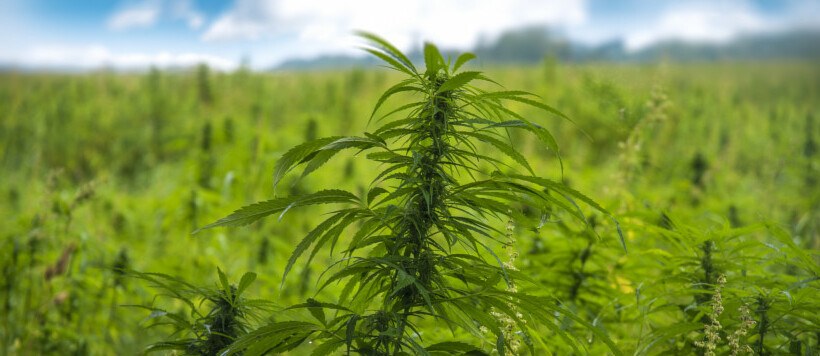
CBD is naturally present in the cannabis plant, which has different species, Cannabis Sativa (hemp useful/industrial), Cannabis Indica (Marijuana), and Cannabis Ruderalis. By convention, cannabis that is low in THC and high in CBD is generally referred to as hemp.
Small aside on THC
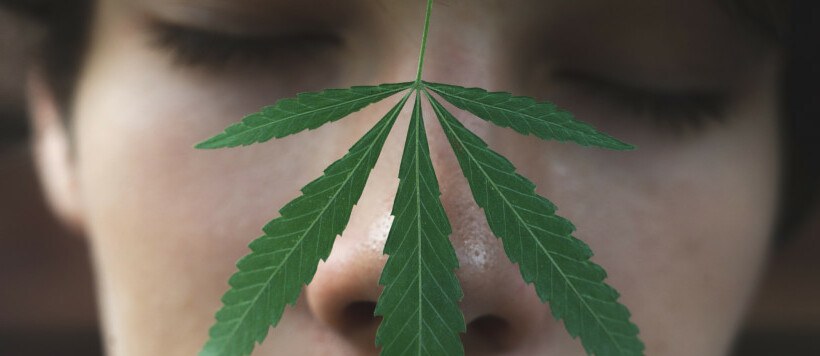
THC (Delta-9-tetrahydrocannabinol) is the cannabinoid found in the highest amount in the Indica cannabis plant (recreational cannabis). This molecule has strong psychoactive properties that can alter cognitive and psychic abilities and cause drowsiness, dependence and loss of control. For these reasons, its sale, possession and use are illegal in many countries, France included, although legislation varies from one country to another. Since THC and CBD come from the same plant, they are often associated or confused. However, the consumption of CBD has no psychotropic effects. In addition, a 1974 study showed that when both molecules are consumed simultaneously, CBD could attenuate the psychotropic effects of THC. It is therefore important to differentiate between industrial cannabis (Sativa), which contains less than 0.3% THC (the limit in force in France and the EU) and its cousin to the Cannabis that we will call "recreational" (Cannabis Indica) which contains much more, from 15% to 20 %, depending on where it came from. For example, a comparison could be made with the citrus family. Everybody knows that citrus fruits are not a single fruit, but a family of fruits, with oranges, lemons, pomelos, etc. Likewise, the genus Cannabis is known for 2 species in particular, which are hemp and marijuana. Although they appear to be identical visually, their properties are quite different.
Why is CBD so interesting for researchers?
This molecule, discovered in the 1940s, has a molecular structure close to THC, but without the psychotropic effects of THC: no intoxication or euphoria. Since the year of its discovery, cannabidiol has been the subject of more than 9,000 publications indexed in PubMed (as of October 2026), over three quarters of which have been published since 2016, thus showing the growing interest of the scientific world in this molecule. We all have an endocannabinoid system (ECS), which explains this interest. Studies, often preclinical (on cells or animals) or carried out on small groups, explore possible anxiolytic, analgesic or antioxidant effects; their results do not allow any conclusion to be drawn. CBD is not a medicine: for any health problem, ask a doctor for advice. The topics explored by research include:
- CBD and cardiovascular action
- CBD, anti-inflammatory action and immunity
- CBD and brain action
- CBD and cancer
- CBD and nausea
- CBD and addiction (tobacco, cocaine, opiates)
- CBD and Osteoporosis
- CBD and obesity
- CBD and weight loss
- CBD and migraines
- CBD and Alzheimer's disease
- CBD and depression
- CBD and Parkinson's disease
- CBD and sleep disorders
- CBD and sport
- CBD and chronic pain
- CBD and Post Traumatic Stress Disorders
- CBD and asthma
- CBD and anxiety
- CBD and dystonia
- CBD and epilepsy
- CBD and schizophrenia
- CBD and Autism Spectrum Disorders
- CBD and glaucoma
- CBD and hepatitis
- CBD and Crohn's disease
- CBD and osteoarthritis
Did you say endocannabinoid system?
The endocannabinoid system (ECS) is one of the important players in cell homeostasis and one of the major biological discoveries of the late 20th century: the first cannabinoid receptor was identified in 1988. Its functions are numerous and many physiological processes of our body involve it. Taking a great shortcut, one could say that the ECS is a system of systems (bone, respiratory, cardiac, hormonal, digestive, nervous, etc.): a regulating system that takes part in many bodily functions. The ECS uses cannabinoids to transmit certain signals and regulate homeostasis.
Clinical endocannabinoid deficiency (CECD)
In 2004, the American neurologist Ethan Russo proposed the hypothesis of a "clinical endocannabinoid deficiency", which could play a role in some conditions such as migraine, fibromyalgia or irritable bowel syndrome; he revisited it in 2016. This hypothesis is still debated and has not been demonstrated. Ethan Russo has notably served as medical director of Phytecs, a company studying the endocannabinoid system. The phytocannabinoids present in certain plants such as hemp have a structure that allows them to interact with the same receptors as the endocannabinoids naturally produced by the human body.
A little bit of history
Mankind has been using hemp since the dawn of time! Traces of its use by man have been found by archaeologists in Eastern Europe but also in Japan, around 11,500 to 10,200 years ago for the oldest. It could therefore be one of the first plants domesticated by man. Indeed its culture presented several significant advantages. Its resistant fibres allowed the manufacture of fabrics and ropes. Its seeds oils in addition to tasting good were very satisfying. Its resin was also used in traditional medicine. Wars of conquest, migrations and trade have allowed hemp to spread over all the continents. In 600 B.C. the Chinese and Europeans used its fibres to make clothing, and when Gutenberg first printed the Bible, he used hemp paper. This paper will be used until the 19th century. Later in the early 20th century, cotton imported from the United States replaced hemp as the main fibre for making clothes. In spite of this, it was still used for military clothing during the two world wars, as the strength of hemp fibres is far superior to that of cotton. Nowadays, hemp is still used in a multitude of fields, weaving, ropes, paper, animal husbandry, and so on, and agriculture, but also in the field of construction and thermal renovation of buildings, medicine, etc. Until the 1930s, cannabis preparations were still found in Western pharmacopoeias. 1937 is a special year for the cultivation and consumption of hemp. Harry Anslinger (known as the Mc Carthy of drugs) drafts the Marihuana Tax Act to levy taxes on hemp products, and cannabis. But also to fight crime, since hemp marijuana was accused of causing violence and disorder. Some historians believe that the confusion between industrial hemp and marijuana was then maintained by the growing paper, cotton, pharmaceutical and oil industries. Thus, all the actors of the hemp sector were impacted, from the producer to the consumer, including all the commercial intermediaries, and prescribers, such as dentists, doctors and veterinarians. These taxes led to a drop in hemp production in the United States, soon followed by a decline worldwide. In the United States, after the November 6, 2018 elections, 33 states allowed medical marijuana, 10 of which also allowed its recreational use. Canada legalized adult cannabis use across the country on 17 October 2018. In France, the use of cannabis for recreational or medical purposes has been prohibited since 1953, when it was withdrawn from the French pharmacopoeia. In December 2018, a scientific committee of the ANSM (French National Agency for the Safety of Medicines) judged it relevant to authorise the use of cannabis for therapeutic purposes in certain clinical situations, and an experiment supervised by the ANSM started in March 2021. Portugal has legalized therapeutic cannabis since 2018.