Sleep and CBD
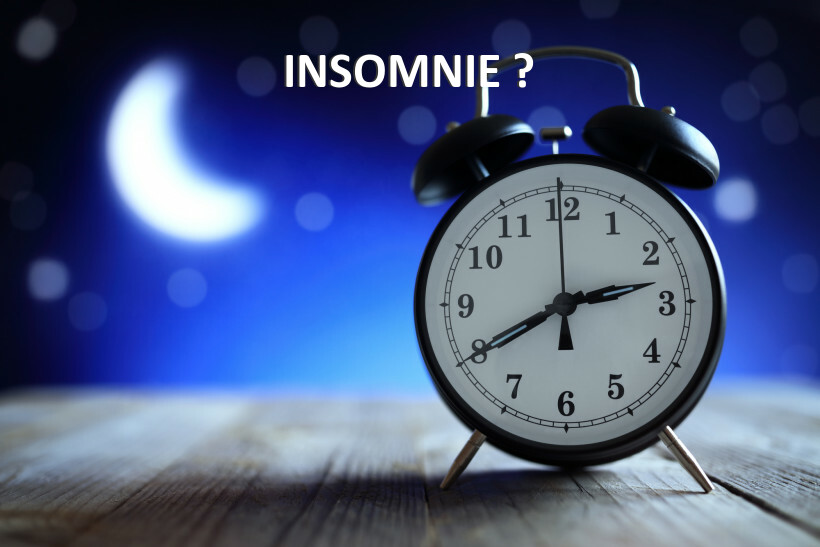
You've been in bed for more than an hour now, you toss and turn, watching your alarm clock, as if hypnotized by the minutes that pass without you being able to get to sleep... Already imagining the difficult day that is about to follow. Perhaps you are part of the far from exclusive group of the 40% of French people who declare suffering from sleep disorders! So if you want to understand sleep and what research says about CBD, read these few lines!
All doctors agree: sleep is health! A good night's rest is what we need. And since we spend almost a third of our life in bed, we might as well make this period restorative. Because sleep is the most complete form of rest for the body. It allows the body to recover, both mentally and physically.
Several studies have shown that a poor quality/quantity of sleep promotes stress, the risk of irritability, hypertension, infection or depressive symptoms, and even weight gain. Insomnia is the enemy of good health and even impacts our immune system. According to INSERM (National Institute of Health and Medical Research), we sleep 1h30 less than we did 50 years ago. And we all have a fairly precise idea of the influence that even one hour less sleep can have. On a 24-hour day, it is sometimes impossible to find extra sleep. So if we can't act on quantity, let's act on quality!
Good sleep habits are the first lever: regular schedules, light in the morning, screens off in the evening, less coffee and alcohol. If insomnia persists, talk to your doctor. CBD is not a sleeping pill and not a medicine, and side effects such as drowsiness or digestive troubles are reported.
Why is it so important to sleep well?
During sleep, one recovers mentally, physically and muscularly, the body relaxes. Several hormones are released during this time of rest, such as growth hormone (hGH) which participates in cell renewal, and melatonin which directs our internal clock, our rhythms of life.
The 4 phases of sleep
1st phase: the falling asleep phase
At this moment, you are there, present, but you feel yourself leaving, your eyes close on their own. You are still awake, but you are less and less aware of your environment and the noises that surround you. Your mind slows down, little by little...
2nd phase: light slow wave sleep
It is a light, shallow sleep. Studies have shown that it accounts for about 50% of sleep time per night. During this time, a noise, a smell, or a glow can still wake you up.
3rd phase: deep slow wave sleep
At this stage you are in a bubble, isolated from the outside world by your deep sleep. Your brain and whole body are recovering. You release tension and fatigue. It is difficult to wake up at this stage. Deep sleep accounts for about 20 to 25% of your resting time.
REM sleep
This phase is also called paradoxical sleep, because it combines signs of deep sleep with signs of wakefulness. REM stands for rapid eye movement: the brain is very active and the eyes move rapidly under the eyelids. Most of the dreams you remember take place during this phase.
Sleep cycles
The 4 phases represent a cycle, the duration of which is about 90 minutes. Each night, you go through 4 to 6 of these cycles, and depending on the time of night, the duration of some phases may vary. For example, at the beginning of rest the duration of deep sleep is more important, then in the second part, and until waking up, light and REM sleep will take more place in the cycles. It is the repetition of these cycles during your rest and a good quality of sleep that will allow your body to recover from its day and evacuate pain, stress and anxiety. You wake up feeling great.
Unfortunately, things are not always that easy, and when a small grain of sand gets lodged in the gears of your sleep, you quickly feel your energy melting like snow in the sun.
CBD and sleep: what do studies say?
Research on cannabidiol (CBD) and sleep is still at an early stage, mostly on animals or small groups, and does not allow any conclusion. In the European Union, CBD is not authorised as a food, and hemp products must contain less than 0.3% THC. Here is what some studies have explored.
CBD, stress and anxiety: early research
The effects of stress are well known to cause insomnia. Anxiety is one of the major factors leading to sleep disorders. A small case series (SHANNON et al.) reported less anxiety and better sleep in some patients using cannabidiol (CBD), without a control group; such data does not allow any conclusion.
CBD is not a treatment for anxiety or insomnia: if stress keeps you awake, talk to your doctor, especially since CBD may interact with some medicines, including sleeping pills.
CBD and total sleep time
A study published in 2013 (CHAGAS et al.) reported, in animal models, a longer total sleep time with CBD; animal results cannot be transposed to humans. The NSF (National Sleep Foundation) published a study that allowed it to determine the ideal number of hours of sleep according to age groups. Newborns are, unsurprisingly, the ones who need the most sleep, with no less than 14 to 17 hours being necessary for them to grow well. School-age children need 9 to 11 hours, and teenagers 8 to 10 hours. Adults and young adults will need 7 to 9 hours of sleep to be in good shape. Senior citizens (over 65 years old) need the least amount of sleep, with 7 to 8 hours of sleep. Every person is different, and if waking up too early in the morning is a source of fatigue, the right person to talk to is your doctor.
CBD and deep sleep
In the same animal study, researchers observed changes in the deep sleep phase with cannabidiol (CBD), which has not been shown in humans. As we have seen, deep sleep corresponds to the third phase. During this period the brain functions in slow motion and the sleeper is isolated from the rest of the world, deeply drowsy. This is the most recuperating moment, the body relaxes and evacuates the fatigue accumulated during the day. It is essential to the proper functioning of our grey matter, because during this phase the brain clears out the waste that accumulates in it.