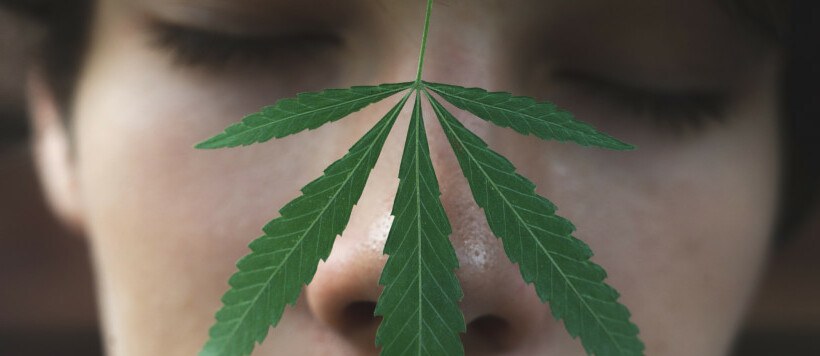

The Swiss Cannabis Law
In Switzerland, cannabis products containing less than 1% total THC are not subject to the Federal Act on Narcotics (LStup): they may be bought, possessed and consumed legally. Cannabis products above this level are classified as narcotics, and their trafficking is punishable under article 19 of this Act.
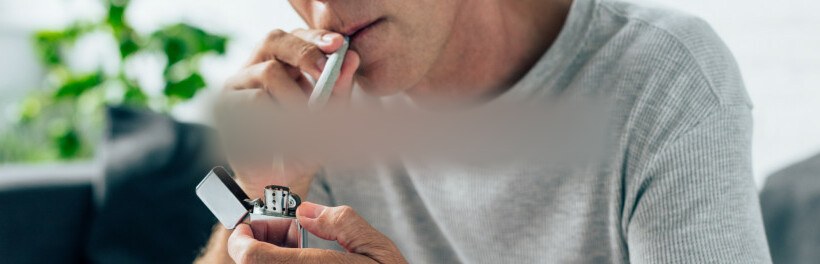
An adult caught consuming narcotic cannabis may be fined CHF 100 by way of a fixed penalty (LStup, art. 28b). Preparing a small quantity of no more than 10 grams for one's own consumption is not punishable (LStup, art. 19b).
CBD (cannabidiol) itself is not listed as a narcotic in Switzerland. The Swiss authorities recognise no health effect for freely sold CBD products: a product claiming to treat or relieve a condition falls under the law on therapeutic products and requires authorisation from Swissmedic.
A broader reform is under way: in February 2025, the Social Security and Health Committee of the National Council (SSHC-N) adopted a preliminary draft law on cannabis products (LPCan) to regulate non-medical use by adults, with a strictly controlled market; after a consultation held from 29 August to 1 December 2025, the report on its results was published on 8 May 2026 (Federal Office of Public Health). The text has not yet been adopted by Parliament.
Is it possible to grow cannabis in Switzerland ?
The answer is simple, it is possible to grow cannabis for its flowers, only if it contains less than 1% THC. In this case it is generally hemp, rich in CBD (cannabidiol). In the European Union, the limit for hemp is 0.3% THC, and some countries apply stricter rules to finished products. So be careful when buying CBD products in Switzerland, if you have to travel to one of these countries.
Is CBD legal ?
Yes: CBD is not subject to the Federal Act on Narcotics, and products containing less than 1% total THC may be sold. Each product must, however, comply with the rules of its category: CBD flowers and cigarettes are taxed as tobacco substitutes, cosmetics follow the rules on cosmetics, and CBD extracts used in foods are novel foods that require authorisation from the Federal Food Safety and Veterinary Office (FSVO). No CBD product may claim a therapeutic effect without authorisation from Swissmedic.
The sale of CBD products therefore remains regulated: in addition to the THC limit, each product must comply with the rules of the category it falls under.
The cultivation of hemp in Switzerland
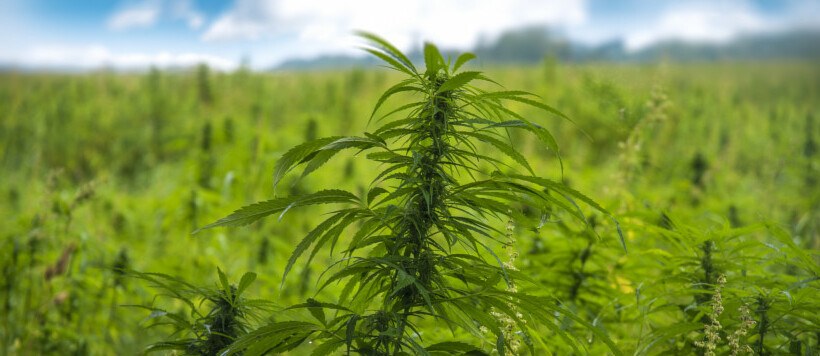
Hemp can be cultivated in Switzerland, as in other European countries, including France. The farmer must ensure that the plants do not exceed the THC level set by Swiss law (less than 1% total THC): above it, the crop falls under the Narcotics Act.
Industrial hemp is a plant selected for its low THC content and its high CBD (cannabidiol) concentration, but its use is not limited to CBD products. Hemp has a multitude of uses, notably thanks to its high quality fibers, which can be used to weave clothes, ropes, make paper, feed animals, or make non-polluting insulation, etc. It can be grown indoors, outdoors or in green houses, depending on the needs and the demand of the shops. The mode of culture can have an influence on the quality of the flowers, and by extension on the nature of the products with CBD.

What does research say about CBD ?
Cannabidiol (CBD) is a substance found naturally in hemp. Unlike THC-rich recreational cannabis, it has no psychotropic effect; it is not a medicine, however, and no health claim is authorised for CBD in the European Union (Regulation (EC) No 1924/2006). CBD is not a medicine: if you have a health problem or take medication, ask your doctor for advice before using any CBD product.
CBD & inflammation
Laboratory and animal studies are exploring how CBD interacts with inflammatory processes. These results cannot be transposed to humans: in case of muscle or joint pain, or of an inflammatory disease, it is a doctor you should consult.
CBD & pain
Researchers are studying whether CBD could play a role in pain perception. Most of this work is preclinical (cells, animals) or involves small groups of people: the results do not allow any conclusion to be drawn, and CBD is not a painkiller.
CBD & anxiety, stress
A few small clinical trials have looked at CBD and anxiety. Their small sample sizes do not allow any effect to be confirmed.
Other avenues (post-traumatic stress, panic attacks, obsessive-compulsive disorders) are only research hypotheses. Anyone with an anxiety disorder should see a doctor: CBD is not a medicine.
Our advice to buy quality CBD in Switzerland
You want to buy CBD in Switzerland, but you hesitate between different products (flowers, balms, etc.), but also the mode of production, indoor, outdoor, or greenhouse? A purchase in store, or in delivery? A nice promo, with an attractive price? It is sometimes difficult to find your way around, so here are our tips:
Learn about the origin of hemp
CBD is derived from the flowers of industrial hemp. If you want to buy the best CBD, find out where the plant comes from:
- In which country is it produced ? Depending on the cultivation code, certain phytosanitary products may or may not be allowed.
- What is the quality of the soil in which the plant is grown ? If the soil is rich in nutrients, then hemp will be able to produce beautiful flowers rich in CBD.
- Is it organic ? Hemp is a soil purifier, so it is important that the products that might be used during the growth of the plant are organic, so as not to pollute the plant, and the soil.
Learn about the extraction process
Before being displayed in the window of your shop, or on the internet page of an online delivery store, your CBD products have undergone a few manufacturing steps on which their quality greatly depends, one of the most critical being the extraction method. There are 3, some cleaner than others.
- The extraction of CBD by vegetable oil: CBD is extracted from flowers thanks to a vegetable oil (hemp oil, olive oil, sesame oil). Unfortunately this method is not very effective, and the product obtained remains relatively poor in CBD.
- Solvent extraction: without any doubt the least expensive method to extract CBD from a flower, but that is its only quality. Solvent extraction (isopropyl alcohol, propane, butane, ethanol) often leaves traces in the finished product: we advise against products made with this process.
- Extraction with supercritical CO2: this method is much more expensive and has been used since the early eighties in the food, pharmaceutical and cosmetic industries to extract certain molecules from plants. It allows to isolate, and to take with an unequalled precision, the desired molecule(s) while keeping their properties. The extraction temperature being low, the molecules sensitive to heat such as phytocannabinoids (CBD, CBG, etc.), and terpenes are preserved. The extract obtained by this process is purer than with other methods, as it contains no solvent residues. This is the method we consider the cleanest.
Choose a broad spectrum product
Today, in Switzerland, in France, and everywhere in Europe, you can find a multitude of CBD products, from flowers to balms and creams. The stores are not lacking in ideas, and when buying, it is sometimes difficult to make a choice in front of all these items. Do not fall into the trap of a cheap or discounted product of sometimes doubtful origin. A broad spectrum product contains, in addition to CBD, other compounds of the hemp plant (Cannabis Sativa): cannabinoids (CBG, CBN, etc.), terpenes and flavonoids. The so-called entourage effect, a possible synergy between these substances, is a hypothesis that is still being studied.
With all these tips, you are ready to choose a compliant CBD product in Switzerland. As a reminder, when you buy by delivery or in a store, be sure to check :
- The CBD and THC content stated on the label and in the laboratory analysis
- The origin of the hemp or flowers (Switzerland, France, USA)
- The nature, organic or not
- The quality guarantees
- The extraction method
- Is the product broad spectrum or not?