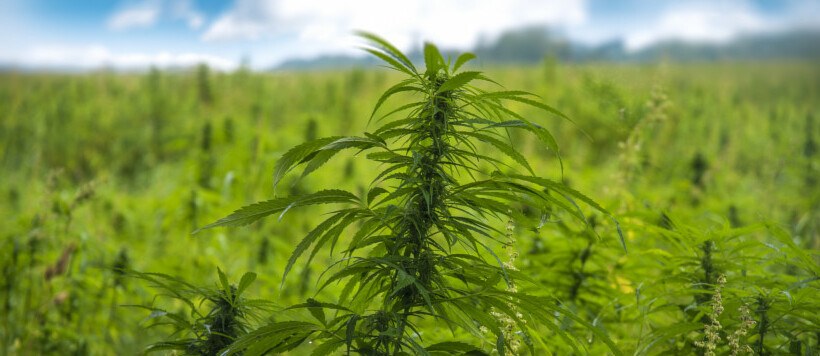

Hemp and Cannabis, what are the differences?
Before explaining the difference between hemp oil and CBD oil, it is important to understand the difference between hemp and cannabis. This difference is very simple to understand, since there is none: hemp is cannabis, it is exactly the same plant. In reality, Cannabis is a family of plants, with 3 main varieties:
- Cannabis Sativa, or industrial hemp: very rich in CBD (cannabidiol), very poor in THC
- Cannabis Indica or marijuana, typically recreational cannabis: low in CBD, but very high in THC
- Cannabis Ruderalis: low in CBD and THC
In France, only authorised varieties of Cannabis Sativa, more commonly known as industrial hemp, with less than 0.3% THC, may be grown. The name hemp is preferentially used to avoid any confusion with recreational cannabis, however, it is indeed cannabis in both cases, only the uses are different.
CBD and THC, the cannabinoids that everyone knows
Cannabis produces certain substances (more than a hundred), called cannabinoids, of which CBD and THC are part. Cannabinoids have the ability to activate certain receptors present in humans and other mammals. There are 3 types of cannabinoids:
- Phytocannabinoids, which are plant cannabinoids such as CBD (cannabidiol) and THC produced by the cannabis plant
- Endocannabinoids, which are cannabinoids produced by certain animals, including humans; some endocannabinoids are even found in breast milk.
- Synthetic cannabinoids, manufactured in laboratories.
THC, which has psychotropic effects, the same ones that give you the feeling of being high, is a banned substance in France and in most European countries. CBD (cannabidiol), which has no intoxicating effects, is not a narcotic in France: hemp flowers and leaves with less than 0.3% THC may be sold (Conseil d'Etat, 29 December 2022), but CBD is not authorised as a food in the European Union.

CBD hemp oil
CBD hemp oil, or CBD oil, is as its name suggests an oil rich in cannabidiol. It is obtained from plants selected for their abundance in CBD, and their great poverty in THC (less than 0,3 % in the plant, as provided by the law). This viscous, CBD-rich oil is obtained by extraction from the entire cannabis plant (stem, leaves, and flowers, but not seeds). Research explores possible effects of CBD, for example on inflammation, anxiety or pain, but these studies are mostly preclinical and do not allow any conclusion. In the European Union, CBD oils to be swallowed are considered novel foods that have not been authorised (Regulation (EU) 2015/2283), so they cannot be sold as food in France. What research has observed so far is summarised in our page on the effects of CBD.
Hemp oil
The part of the hemp plant used for human and animal consumption is the seed, also known as hempseed. It is from these seeds that hemp oil is produced. The nutritional profile of this oil is very interesting, because the seed is rich in vitamins, minerals and lipids with for the latter a ratio omega 3/omega 6 of 1 for 3. As the seeds contain virtually no cannabinoids, edible hemp seed oil contains no significant amount of CBD.
You will have understood that the difference between these 2 oils is that one contains CBD (as its name indicates), and the other does not.
CBD and the endocannabinoid system
Our body has a multitude of systems, such as the nervous system, respiratory, or digestive, etc.. There is also a much less known system, because it was discovered much later than the others: the endogenous cannabinoid system. Its first receptor was identified in 1988, and in 1992 the team of Professor Raphael Mechoulam at the Hebrew University of Jerusalem identified the first endocannabinoid, anandamide. Described by the scientific world as a huge discovery, the endocannabinoid system participates in the regulation of many parameters of the human body, such as sleep, memory, emotions, pain, inflammation, appetite, digestion, neuronal plasticity, etc. Researchers are studying how CBD (cannabidiol) interacts with this system, but this does not make CBD a medicine: for any health question, ask your doctor.