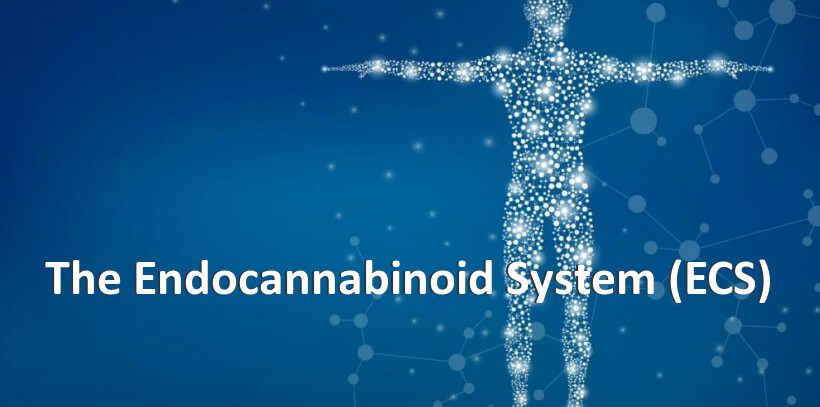
Our bodies all have a regulatory system called the endocannabinoid system (ECS). It takes part in regulating the other systems of our body. It is also the reason why researchers are interested in CBD (Cannabidiol).
The ECS, in order to transmit certain signals and regulate the homeostasis of our body, such as our sleep, our mood, our appetite or our hormone production, will use cannabinoids. It was during research on THC, the famous psychotropic cannabinoid contained in recreational cannabis, that the existence of the endocannabinoid system was first discovered. Membrane receptors sensitive to this molecule were discovered on the surface of cells. Scientists discovered the existence of two types of cannabinoid receptors with significantly different actions: CB1 and CB2.
CB1 receptors have a strong affinity for the THC molecule. They are in the majority in the nervous system, but are also found in the heart, bones, eyes, muscles, etc.
CB2 receptors are largely present in the immune system, and to a lesser extent in the central nervous system.
From discovery to discovery, it has been shown that the endocannabinoid system participates in embryonic brain development (breast milk contains endocannabinoids). Many researchers now consider the endocannabinoid system an important biological system, as it is involved in the homeostasis of our body. Some researchers put forward the hypothesis of a clinical endocannabinoid deficiency, which has not been confirmed to date. CBD is not a medicine: for any health problem, ask a doctor for advice. To understand this hypothesis, read our guide to clinical endocannabinoid deficiency.