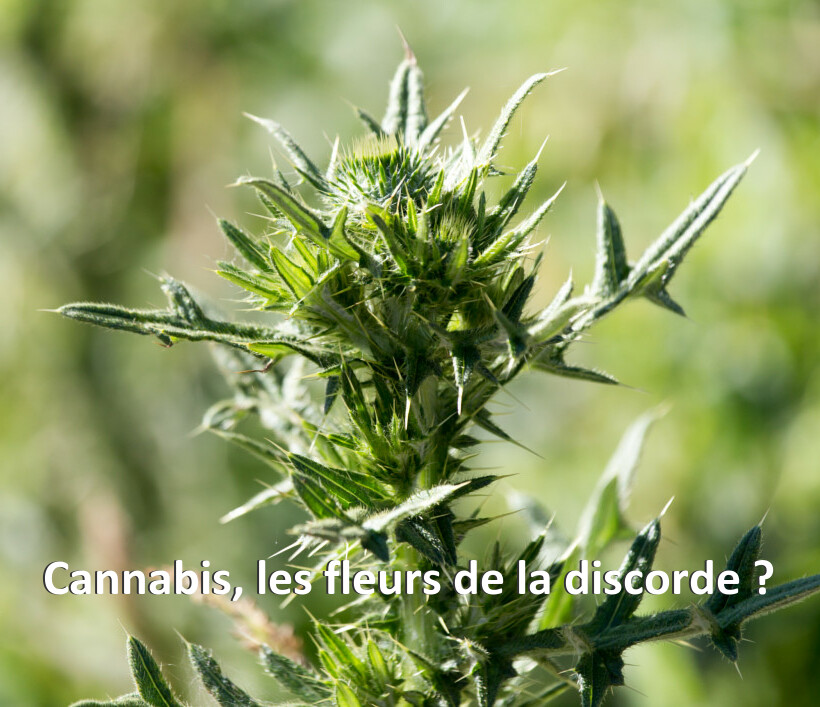
Before going further into the subject of legalization, let us start by understanding what recreational cannabis (rich in THC) is, which should not be confused with CBD, even though these 2 substances come from the same plant.
What is cannabis?
Cannabis is wrongly associated exclusively with recreational use, yet this plant has many other uses (fibers, seeds, materials). Cannabis forms a single botanical genus, commonly divided into 3 sub-genera:
- Cannabis Indica, which is used for its psychotropic effects: this is recreational cannabis. It has several names, marijuana or Indian hemp being the most common. This plant has flowers rich in THC, and it is this molecule that produces a psychotropic effect in the user. In most European Union countries, such as France, the consumption and sale of products rich in THC are prohibited by law. In France, the illicit use of narcotics is punishable by up to one year's imprisonment and a fine of up to €3,750 (Article L3421-1 of the French Public Health Code, code de la santé publique); possession and sale carry much heavier penalties.
- Cannabis Sativa, better known as industrial or agricultural hemp. This sub-genus of cannabis is chosen for its high CBD (cannabidiol) content and its very low THC content. The varieties authorized for cultivation have been selected to meet the requirements of European law. In France, the plant must have a THC content of no more than 0.3%, and the extracts obtained from it must respect the same limit (order of December 30, 2021). CBD-based products may only come from Cannabis Sativa (hemp).
- Cannabis Ruderalis, which is a wild hemp, is a small plant, generally less than one meter tall, whose flowers appear early. Cannabis Ruderalis provides little CBD and little THC.
What is THC?
THC (Δ9-tetrahydrocannabinol) is a psychotropic molecule naturally produced by cannabis. Its consumption causes various effects, such as altered consciousness, palpitations, memory loss, etc. THC is classified as a narcotic under French law. Its consumption and sale are therefore prohibited, except for traces tolerated in authorized hemp products (no more than 0.3%) and in authorized medicines.
Will recreational cannabis soon be legalized?
The recognition of the legality of CBD by the French Court of Cassation (Cour de cassation, ruling of June 23, 2021), then by the French Council of State (Conseil d'État, decision no. 444887 of December 29, 2022), gave hope to those in favor of a change in the law on medical or recreational cannabis. CBD is not a narcotic, but cannabis rich in THC remains prohibited in France.
- Let us remember that in 2016, Emmanuel Macron, then a candidate in the presidential election, acknowledged that there could be a certain effectiveness in legalizing cannabis. Re-elected in 2022, he has not undertaken any legalization: in 2026, cannabis use remains an offense in France, most often penalized with a fixed criminal fine.
- In early 2020, a parliamentary fact-finding mission was set up to study the question of cannabis and its various uses. After 1 year of work, the group of parliamentarians recommended a controlled legalization of cannabis.
- A poll published in June 2021 by IFOP indicated, for the first time, that a majority of French people support a change in legislation on recreational cannabis (THC).
- Several European countries have since taken the plunge: Malta (2021), Luxembourg (2023) and Germany (2024) allow adults, under conditions, to possess and grow cannabis.