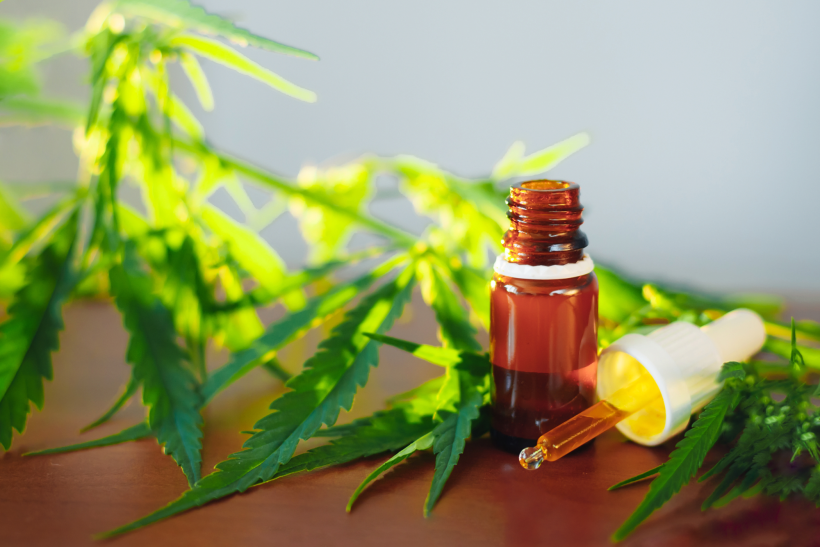
CBD (cannabidiol) is a compound naturally present in the cannabis plant. It is increasingly popular, particularly in the world of wellbeing. Unlike THC (tetrahydrocannabinol), CBD has no psychoactive effect, which means it does not cause euphoria or intoxication in users. Research is looking at its possible role in anxiety, pain, inflammation or sleep, without current results allowing any conclusion. In this article, we review what is known about CBD and wellbeing, and the status of the different forms of CBD.
In recent years, CBD has become increasingly popular. Yet it is neither an alternative treatment nor a substitute for medicines: CBD is not a medicine, and if you have a health problem, you should ask a doctor for advice. Nor is CBD free of side effects (drowsiness, digestive problems, changes in liver enzymes at high doses), and it may interact with certain medicines. The market is growing fast, with a wide variety of products whose status differs: hemp flowers and leaves, cosmetics, but also products to be swallowed that are not authorized. In this article, we offer you a clear introduction to CBD and wellbeing, in cautious terms and without promises.
What is CBD?
CBD is one of the many compounds found in hemp, a variety of cannabis whose cultivation is authorized. Cannabis contains more than 100 different compounds called cannabinoids, of which CBD and THC are the best known. Unlike THC, CBD has no psychoactive effect, which means it does not cause euphoria or a feeling of intoxication in users. THC, on the other hand, is responsible for the psychotropic effects often associated with marijuana. That is why CBD is not classified as a narcotic in France, unlike THC.
As we have seen, hemp is a variety of cannabis that contains a small amount of THC in its raw state, which must be below 0.3% in France. Marijuana, on the other hand, contains much higher levels of THC, which can cause significant psychoactive effects.
Hemp-derived CBD has been legal at the federal level in the United States since 2018, thanks to the Farm Bill, which allowed the production and sale of hemp-based products. However, regulations around CBD can vary between states and countries, so it is important to check local laws before buying and using CBD.
In France, the sale of hemp flowers and leaves containing less than 0.3% THC has been permitted since the decision of the French Council of State (Conseil d'État) of December 29, 2022.

CBD and wellbeing: what research is exploring
In this part of the article, we review the avenues being studied: anxiety, pain, inflammation and sleep. The work is often preclinical (in the laboratory or in animals) or carried out on small groups, and its results do not allow any conclusion.
- 1. Anxiety: Studies are exploring the link between CBD and anxiety, in particular through a possible interaction with serotonin receptors in the brain. Serotonin is a neurotransmitter that affects mood and behavior, and low serotonin levels are often associated with anxiety disorders.
- 2. Pain: Researchers are looking at the interaction of CBD with pain receptors in the brain and the peripheral nervous system. Trials in humans remain limited and do not make it possible to recognize any effect on chronic pain.
- 3. Inflammation: Inflammation is a natural immune response of the body, but chronic inflammation can cause long-term damage to the body. Studies, mostly in the laboratory, are looking at the action of CBD on the immune response and on cytokines, proteins involved in inflammation; they do not allow any conclusion in humans.
- 4. Insomnia: Research is exploring a possible role of CBD in sleep and the circadian rhythm, the body's internal biological clock that regulates sleep and wake cycles. The results are mixed and do not allow any conclusion. Persistent insomnia warrants a doctor's advice.
Forms of CBD and their status
We will now look at the different forms of CBD on the market and what the regulations say about them.
The different forms of CBD
Oils, capsules, creams and edible CBD products can be found on the market. In France and in the European Union, foodstuffs enriched with CBD (oils to be swallowed, capsules, gummies, drinks, foods) are not authorized: CBD has not been authorized as a novel food (Regulation (EU) 2015/2283). CBD cosmetics (creams, balms) fall under cosmetics regulations and may not claim any therapeutic effect. Hemp flowers and leaves containing less than 0.3% THC may be sold in France.
Why we do not give any dosage
As CBD sold in stores is not a medicine, there is no validated "right dose" for a health effect, and no dosage recommendation can be given. Only one cannabidiol-based medicine is prescribed, by a doctor, for certain rare forms of epilepsy. Be wary of products that promise an effect or state a dosage.
Precautions to take when using CBD
CBD is not without risk: side effects have been reported (drowsiness, digestive problems, changes in liver enzymes at high doses) and it may interact with certain medicines by acting on liver enzymes (cytochromes P450). If you are taking a treatment, talk to your doctor or pharmacist. CBD is not recommended during pregnancy and breastfeeding, and traces of THC can lead to a positive roadside drug test. The quality of commercial products is also uneven: only independent analyses can verify the absence of contaminants and the THC content. In short, CBD should never replace a treatment or delay a consultation: if you have a health problem, it is a doctor you should turn to.

CBD and wellbeing: a line of research, not a treatment
CBD is a natural, non-psychotropic compound found in hemp, very popular in the world of wellbeing. Research is exploring its possible role in anxiety, pain, inflammation or sleep, with no results so far that allow any conclusion. It is not a medicine, it has its side effects and interactions, and forms to be swallowed are not authorized as foods in the European Union. To take care of yourself, a doctor's advice remains the reference.