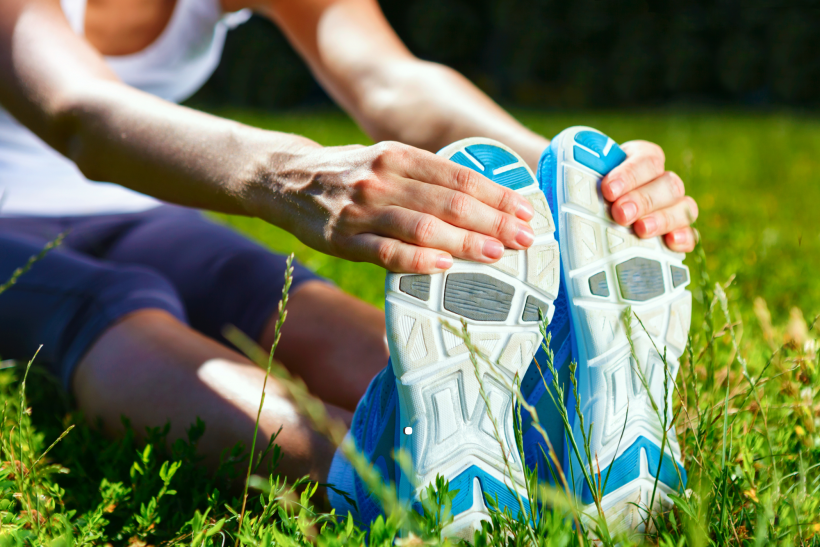
The benefits of sports
Physical activity, whether moderate or more intense, has become a real social phenomenon. Today everyone is aware of the benefits that sports can bring in terms of wellbeing and health. Exercise helps you stay fit, prevent chronic diseases and relax, but also surpass yourself by pushing your mental and physical limits. And make no mistake, you are never too old to take up a sport. Anyone, whatever their age or abilities, can exercise. You simply need to go at your own pace according to your age and state of health. The benefits of physical activity, for regular athletes and weekend warriors alike, are many:
- Exercise helps fight cardiovascular disease. Many studies have shown that regular training, even at low intensity, drastically lowers cardiovascular risks.
- Exercise is an effective way of fighting overweight and obesity by burning energy regularly.
- Exercise strengthens the skeleton by increasing bone density
- Exercise helps you age better and prevents age-related degenerative diseases
- Exercise strengthens the immune system and preserves the health of young people and adults alike.
- Exercise has anti-cancer effects: for example, it lowers the risk of breast cancer by 21% in women and the risk of colon cancer by 18% in men.
- In general, athletes are less affected by depression and low mood.
Why are athletes interested in CBD?
Very much in the news, cannabidiol, or CBD, has been attracting the interest of sportswomen and sportsmen for several years. CBD is a substance naturally produced by hemp (Cannabis Sativa); it is found in the flowers and aerial parts of the plant. CBD belongs to the cannabinoid family, like THC or CBG. However, unlike THC, it is not psychotropic. In France, the sale of products derived from authorized hemp varieties, with less than 0.3% THC, is permitted (French Council of State, Conseil d'État, December 29, 2022, no. 444887); CBD foodstuffs (oils to be swallowed, gummies) are not.
What does research say about CBD and sports?
Whether you are an amateur or a professional, training and competitions do not always leave you unscathed, and some people then take anti-inflammatories to improve their recovery, or painkillers to reduce physical pain and relieve muscles and joints. These medicines do have side effects, especially when taken for a long time or without medical advice (digestive, kidney or liver problems, raised blood pressure). But CBD is not a proven alternative: no study shows that it acts on pain or inflammation as well as they do, and it has its own side effects and drug interactions. Your doctor remains the right person to talk to.
CBD, pain and inflammation:
Musculoskeletal injuries are common among athletes. Tendinitis, muscle soreness, bruises and sprains are more frequent than you might think, and cause pain and inflammation. Studies, mostly preclinical, are exploring the effects of CBD on pain and inflammation; in athletes, trials are rare and do not allow any conclusion. CBD does not replace the care of an injury (rest, ice, medical advice).
CBD and sleep
Some people sometimes forget it, but sleep plays a major role in an athlete's recovery, whatever the intensity of the activity. Doctors recommend sleeping around 7 to 8 hours a night. Sleep allows deep, general relaxation of all the muscles, particularly those used during exercise. It is an essential stage for their regeneration. Sleep also helps to eliminate the toxins and waste accumulated during the session. Studies are exploring the effect of CBD on sleep, with mixed results, and nothing shows that it improves sports recovery. Drowsiness is in fact one of its reported side effects.
CBD and concentration
Sports require precise movements that demand great concentration. Research, in particular brain imaging studies on small groups, is exploring the effect of CBD on stress and anxiety; none shows that it increases an athlete's concentration or performance.
CBD and elite sports
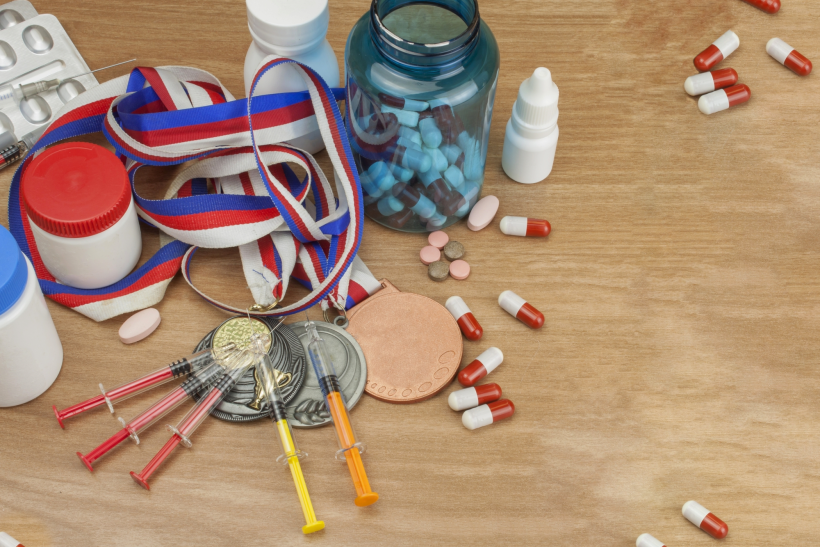
Some athletes say they use CBD, but a testimonial does not prove an effect. As for the rules, the World Anti-Doping Agency (WADA) removed cannabidiol from the list of prohibited substances in 2018; other cannabinoids, including THC, remain prohibited in competition. A CBD product may contain traces of THC and lead to a positive test: athletes subject to testing must be particularly careful.
Which CBD products are permitted?
There is a wide variety of CBD products, but not all of them are permitted in France:
- CBD oil: placed under the tongue or swallowed, CBD oil is a CBD foodstuff and may not be sold in France (Novel Food Regulation (EU) 2015/2283, press release of the French Ministry of Agriculture of May 20, 2026).
- CBD gummies: these CBD candies are also foodstuffs and may not be sold in France.
- CBD flowers: their sale is permitted in France if they come from authorized varieties with less than 0.3% THC. Smoking them exposes you to the harms of combustion, which are hardly compatible with sports; non-enriched leaves can be used for herbal tea.
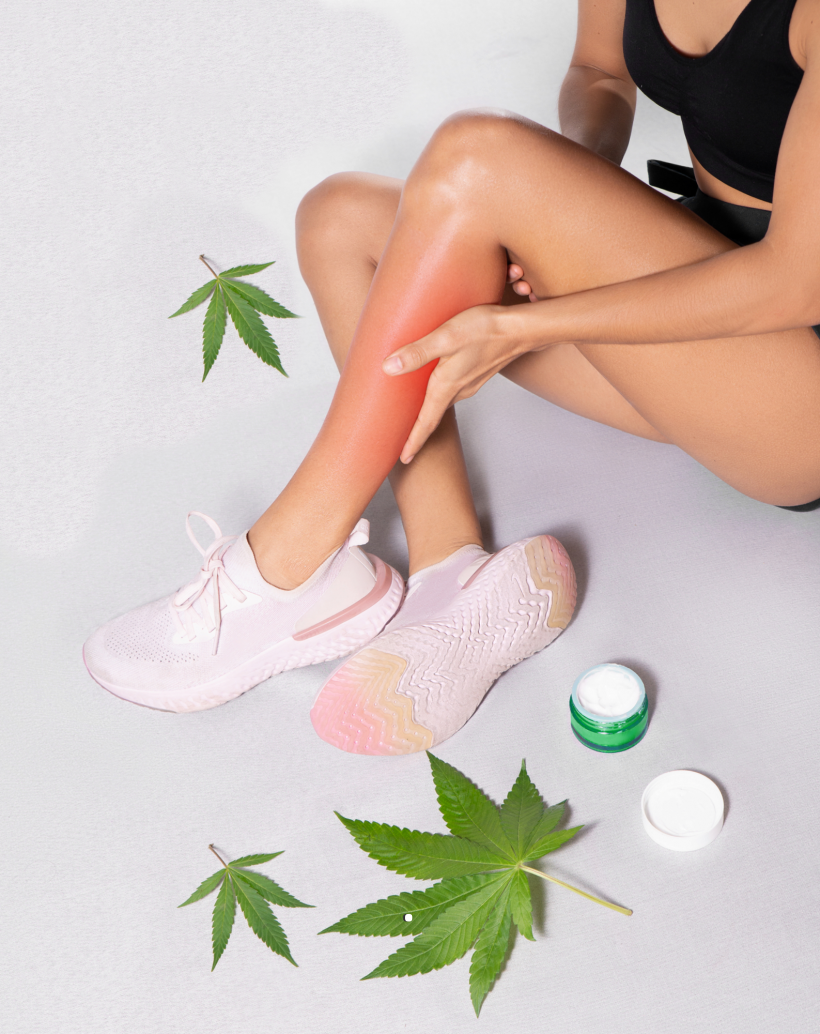
- CBD balms: these are cosmetics; they do not treat muscle or joint pain, skin problems or bruises.
- E-liquids: these are vaping products, regulated by the French Public Health Code (code de la santé publique); their composition is often hard to know, and vaping has no place in an athletic routine.
Two things to know about CBD products
Understanding the cannabinoid extraction process
There are 3 main techniques for extracting CBD from hemp (Cannabis Sativa):
- Supercritical CO2 extraction: This method is expensive, but also very clean. It has been used since the 1980s in several industries: food, cosmetics and pharmaceuticals. It makes it possible to isolate and precisely extract the desired molecule or molecules while preserving all their properties. The extraction temperature is low, so heat-sensitive molecules such as phytocannabinoids (CBD, CBG, etc.) and terpenes are protected. It leaves no solvent residue in the extract.
- Extraction of CBD with vegetable oils: Cannabidiol is extracted from the flower using vegetable oils (hemp oil, olive oil, sesame oil). The CBD will benefit from the nutritional properties of each of these oils; unfortunately, this method is not very efficient, and the product obtained remains low in active ingredients.
- Solvent extraction: very inexpensive, this method uses solvents (isopropyl alcohol, butane, propane, ethanol, etc.) which can leave residues in the finished product if their removal is poorly controlled.
Is your CBD broad-spectrum?
Today, in France, Switzerland and throughout Europe, there is a large number of CBD products: gummies, balms, oils, and so on. Sellers never lack imagination when it comes to innovation, and when buying, it is sometimes hard to choose among all the items on offer. Be careful: check the composition, the THC content (less than 0.3%) and the origin of the product, and be wary of promises. People often talk about the "entourage effect", a hypothesis of synergy between the substances in the hemp plant (Cannabis Sativa): cannabinoids (CBD, CBG, CBN, etc.), flavonoids and terpenes. This hypothesis remains debated and has not been demonstrated.
You are now better informed about cannabidiol. To progress and recover well, focus first on appropriate training, sleep, hydration and nutrition, and ask a sports doctor for advice in case of pain or before any use of CBD.