
I. What is CBD and where does it come from?
CBD, or cannabidiol, is a molecule found in the hemp plant, which belongs to the same family as cannabis. However, unlike THC, another molecule derived from cannabis, CBD has no psychotropic effects. That does not mean it is risk-free: side effects (drowsiness, digestive problems, raised liver enzymes) and interactions with certain medicines have been described. In addition, traces of THC, which is toxic to dogs and cats, may remain in some products.
Hemp is a hardy and versatile plant that has been used for thousands of years to make textiles, rope, paper and many other products. CBD oil for pets is extracted from this plant, in particular from the flowers, to obtain a natural product rich in cannabidiol.
II. The endocannabinoid system in animals
Did you know that animals, just like humans, have an endocannabinoid system? This system is made up of receptors found throughout the animal's body, notably in the brain, organs, tissues and immune system. CBD interacts with this system, which is involved in various bodily functions such as inflammation, pain or anxiety, through mechanisms that are still poorly understood.
In dogs and cats, this endocannabinoid system plays an important role in the body's balance. This explains researchers' interest in CBD, although no benefit for the animal's health can be inferred from it.

III. What research is exploring in animals
Veterinary studies on CBD remain few in number, often short and carried out on small groups. Here are the avenues most often studied, none of which has been established:
- Pain and osteoarthritis: a few trials in dogs with osteoarthritis are exploring an effect on pain and mobility, with mixed results. Osteoarthritis in an older animal calls for veterinary follow-up.
- Anxiety and stress: some work is looking at new or frightening situations, such as fireworks, thunderstorms, car rides or moving to a new home; the results do not allow any conclusion.
- Sleep and appetite: these avenues are mentioned but very little studied. An animal that sleeps badly or stops eating should be examined, as these signs may reveal an illness.
- Epilepsy: small trials have been carried out in dogs with epilepsy, with no established conclusion. Never change an epileptic animal's treatment or add anything to it without your vet's agreement.
- Immune system: antioxidant properties have been described in the laboratory. A few cell studies are also exploring cancer, but nothing allows us to speak of prevention or treatment: an animal with cancer must be cared for by a vet.
- Coat and skin: the skin also has receptors of the endocannabinoid system, which is prompting research. Persistent itching or irritation often has a cause (parasites, allergy) that only the vet can identify.
IV. Before giving CBD to your pet
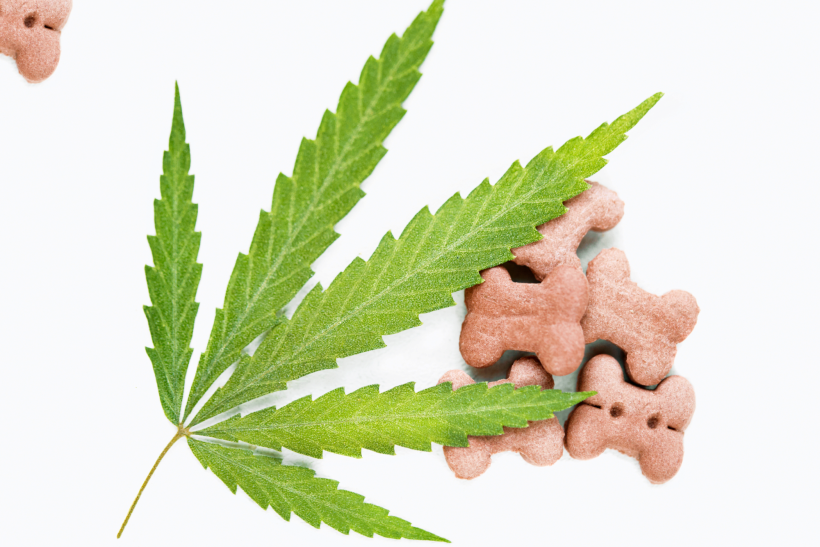
There are different forms of CBD products for pets, such as oils, treats, capsules and even topical products. None of them is an authorized veterinary medicine: their composition and actual CBD or THC content vary from one product to another.
No dose has been validated for dogs or cats. Do not improvise: only your vet can judge, depending on your pet's state of health and treatments, whether such a product should be considered.
V. Testimonials: why caution is needed
Many pet owners share their experiences with CBD oil online. These accounts are sincere, but they do not constitute proof, for several reasons:
- A testimonial cannot distinguish the effect of a product from a natural change, a change in the animal's environment or the expectations of its owner, who may perceive an improvement where there is none.
- A cat that hides and refuses to eat, or an older dog that limps, shows signs that may reveal an illness: a veterinary examination can find the cause and suggest an appropriate treatment.
These limits explain why only rigorous studies will one day make it possible to know what CBD does, or does not do, for our pets.
VI. Product transparency and traceability
If your vet considers that a CBD product may be an option, quality matters: origin of the hemp, extraction method and absence of contaminants.
Transparency and traceability are essential. A reputable manufacturer publishes the results of independent laboratory analyses for each batch, with the actual CBD and THC content. Show these analyses to your vet.
VII. CBD in dogs and cats: knowledge still limited
CBD is attracting genuine interest in veterinary medicine, but knowledge remains limited: no efficacy has been demonstrated in dogs or cats, no dose has been validated, and side effects exist. Your companion's wellbeing depends first and foremost on a suitable diet, exercise, attention and regular veterinary checkups. CBD is not a veterinary medicine: before giving anything to your pet, ask your vet for advice.