With more than 650,000 people, horseback riding is the 4th most popular sport in France, after soccer, tennis and basketball. There are just over 1 million horses in our country, which places it in second place in Europe behind Germany (1,300,500 animals) and ahead of Great Britain (950,000 animals). 2/3 of them are saddle horses and ponies. And like our other four-legged pets (dogs and cats), we can do a lot to ensure that they have a happy and healthy life. Let's see together what is known about CBD in horses.
What is CBD?
CBD (Cannabidiol) is a substance obtained from industrial hemp (Cannabis Sativa), and belongs to the family of cannabinoids. CBD has already been the subject of numerous scientific studies, mostly preclinical. When we talk about cannabis, we sometimes think directly of THC, which is a psychotropic cannabinoid. Cannabidiol (CBD) does not have this intoxicating effect, and it is not a narcotic in France. What interests researchers is the way it interacts with the endocannabinoid system. But research in horses is very limited, no CBD product sold to the public is a veterinary medicine, and the International Equestrian Federation (FEI) lists cannabidiol as a "controlled medication", which must not be present in a horse during competition (Eichler et al., Frontiers in Veterinary Science, 2023). Never give your horse a CBD product without the advice of your veterinarian. Weight management, another frequent question, is covered in our page on overweight and obesity in horses.
What is the Endocannabinoid System (ECS)?
The endocannabinoid system (ECS) contributes to the body's balance (homeostasis). Its first receptor was identified in 1988, and the system was described in the following years. Many physiological processes in our body and in that of our animals (a horse, for example) may involve it. Some researchers describe it, as a shortcut, as a regulatory system involved in many others (circulatory, endocrine, immune, skeletal, digestive, etc.). The ECS uses cannabinoids to transmit certain signals.
Clinical endocannabinoid deficiency (CED)
In 2004, the American neurologist Ethan Russo proposed the hypothesis of a "clinical endocannabinoid deficiency", which could play a role in some conditions such as migraine, fibromyalgia or irritable bowel syndrome. This hypothesis is still debated and has not been demonstrated. The phytocannabinoids present in certain plants such as hemp interact with the same system as the endocannabinoids naturally produced by the human body or certain animals such as horses, but this does not make them a treatment.
CBD in horses: what is being studied?
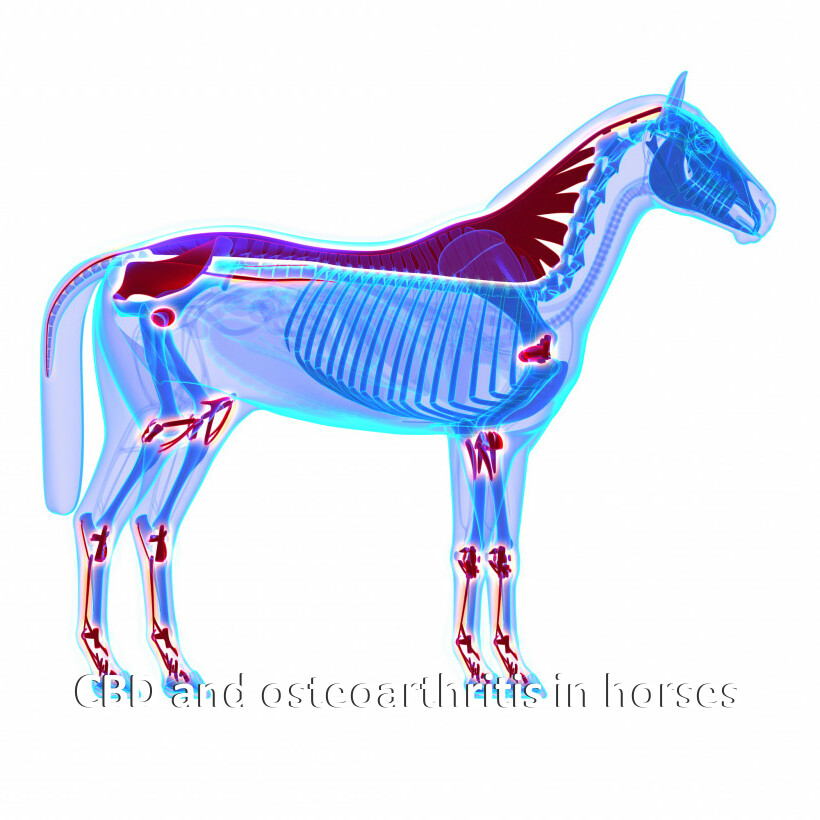
Researchers are exploring the possible effects of cannabidiol (CBD) in animals, for example on joint pain or stress, but studies in horses are very few and do not allow any conclusion. CBD is not a veterinary medicine: if your horse suffers from arthritis, anxiety, aggressiveness, convulsions, joint problems or pain, consult your veterinarian, the only one able to diagnose and treat it.