
What this article covers
What are overweight and obesity in horses?
Overweight and obesity are an excessive accumulation of fat in the horse's body. Veterinarians speak of obesity when the fat mass exceeds the animal's ideal weight by more than 15%. Unless you own a giant scale, it is very difficult to determine if the horse is overweight or not. For example, horses fed exclusively on hay will have a more distended belly than horses fed on grain, so appearances can be misleading. For this reason, a mathematical formula has been developed to obtain an estimate of the weight of the animal concerned. Calculation tools are available on the website of the IFCE (French Horse and Riding Institute, which took over from the National Studs).
What are the effects of overweight or obesity in horses?
Overweight or obese animals are predisposed to certain diseases, affecting their daily comfort and life expectancy. Excess weight has several consequences on the health of the horse:
- Slowing down the growth of young horses
- Heart and respiratory problems
- Exercise intolerance
- Laminitis
- Joint disorders
- Thermoregulation problems
- Decreased fertility
Why do horses gain too much weight?
In the wild, horses are very active and move around a lot. They travel great distances to feed and drink, but also to flee from predators. In addition, they are confronted with changing and sometimes harsh climatic conditions, such as in winter, when the cold is more intense and food is less abundant. Domestic horses, whether at pasture or in the stall, are much less active, are more or less protected from climatic risks, and generally have a rich and abundant feed. As a result, the horse expends less energy than it should, while eating a feed that is sometimes richer, or in any case available immediately.
How can you help your horse regain its healthy weight?
Do you think your horse is overweight or obese? Make an appointment with your veterinarian, he will do a complete medical check-up of your animal, and will give you the procedure to follow so that your horse regains full health. Once the fitness weight has been determined, a calculation of the necessary caloric intake will be established. He will also recommend that you gradually increase the animal's daily physical activity.
CBD, appetite and weight: what research explores
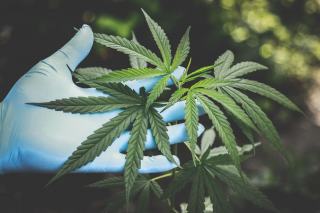
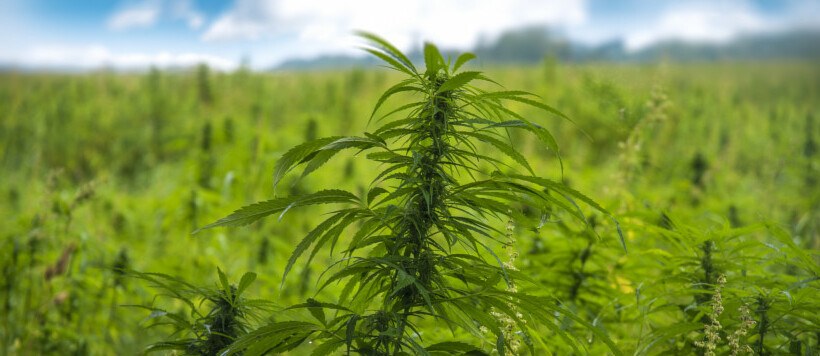
Cannabidiol (CBD) is a molecule belonging to the cannabinoids, substances originating from industrial hemp (Cannabis Sativa), and more generally in the different kinds of cannabis (Cannabis Sativa, Cannabis Indica, Cannabis Ruderalis). You have surely already heard about another very famous cannabinoid, THC. The THC molecule is psychotropic. CBD is not psychotropic and is not classified as a narcotic in France. Its possible effects are the subject of many studies, mostly on rodents, including the following ones concerning our subject:
- A 2012 study (Farrimond et al., University of Reading, UK) observed that CBD (cannabidiol) reduced the amount of food absorbed in animals.
- Other studies (Scopinho 2012, Farrimond 2012) explored possible effects of CBD on appetite and weight, mostly in rodents.
- In 2011, a study observed a reduced weight gain in rats given CBD (Ignatowska-Jankowska et al.).
These results cannot be transposed to horses. CBD is not a veterinary medicine: the weight loss of your horse relies on feed and activity, under the supervision of your veterinarian, and no product should be given without his advice.