
What is osteoarthritis in cats?
Osteoarthritis is responsible for an abnormal change in the joints of cats, and more generally in other animals. It usually appears with age, and results in a progressive degradation of the cartilage of one or more joints. The condition may occur in the hips, knees, elbows, or discs of the spine. Gradually, the degeneration of the joint will lead to a bone deformation due to the thinning of the cartilage or its disappearance. The cat will then feel more or less important inflammatory pains, which can have an impact on its quality of life, and even provoke changes in its behavior. The animal may be subject to anxiety, stress, and sometimes loss of appetite. That's why we recommend that you consult your pet's veterinarian at the first sign of concern.
What is the role of cartilage?
In cats and other animals (including humans), cartilage is an extremely smooth, pearly white tissue that covers the bones at the joints to provide a sliding surface to avoid friction between 2 bones (knee, elbow, etc.). It also plays a role of shock absorber, by attenuating the pressures and the shocks. When your cat jumps off the table, the cartilage will absorb part of the energy due to the impact on the ground.
In cats, osteoarthritis manifests itself as premature wear of the cartilage. As a rule, this wear and tear occurs slowly, and gradually the thickness of the cartilage decreases. This decline reduces the efficiency of its cushioning and gliding power, which will further increase its premature wear. Osteoarthritis is classified in 2 categories:
- Primary osteoarthritis is normal wear and tear, which mainly affects animals in advanced age.
- Secondary osteoarthritis can occur when the cartilage of the joint has been damaged by an injury or disease of the cat.
What are the symptoms of this condition in cats?
To find out if your cat has the beginnings of osteoarthritis, you can observe its behavior when it stands up, runs, or jumps. Does your cat have problems going up or down stairs, or jumping up or down? Does it follow an object you throw? Does it run at ease, with long strides? When one or more of its joints are painful, the cat reduces its activity and avoids running or jumping; it may even limp. At rest, it may also avoid putting all its weight on the joint that bothers it. Your pet may also change its behavior and be less lively when you start a game with it. It may shy away from being petted, or become aggressive when someone approaches it. In the advanced stages, the affected joints may even become permanently locked, making it difficult and painful for the animal to move.
All of these symptoms are effects of, and markers of, the pain inflicted by the disease. By noticing them in their early stages, you can take action before your cat's health condition deteriorates too much.
Diagnosing osteoarthritis in cats
If you've noticed any of the above signs, regardless of your cat's age, make an appointment with your veterinarian. He or she will perform a thorough examination of all of your cat's joints. The diagnosis will also be based on x-rays that will confirm or not the assumptions of the veterinarian.
Treatment
Osteoarthritis is a disease that unfortunately cannot be cured, but its symptoms can be reduced. The veterinarian can prescribe painkillers and anti-inflammatories. Even if the pain is present, it will be necessary to maintain a sufficient physical activity so that the animal does not lose its muscles. In the most disabling cases, surgery may be considered depending on the health of the cat and the affected joint.
CBD and osteoarthritis in cats
You've probably already heard about CBD (cannabidiol). But what is known about it in animals? Research is still very limited, and no CBD product sold to the public is a veterinary medicine.
A little reminder about CBD
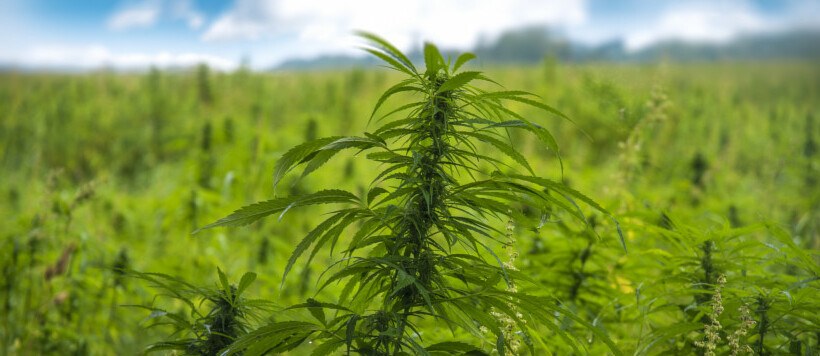
CBD is the abbreviation of cannabidiol, this molecule comes from hemp (Cannabis Sativa). It is found in the flowers and aerial parts of this plant. CBD is a molecule that comes from cannabis, but it should not be confused with another substance produced by the same plant, the famous THC which produces psychoactive effects. To better understand, you need to know that cannabis is a family of plants, with 3 main varieties:
- Cannabis Sativa or industrial hemp : Very rich in CBD, it is used for the production of CBD (cannabidiol), THC is present in its flowers in negligible amounts, less than 0.3% in accordance with the law. Hemp is used in many industries (textile, food processing, construction, etc.).
- Cannabis Indica : Very rich in THC, cannabis Indica is illegally cultivated to make recreational products, such as marijuana or resin.
- Cannabis Ruderalis : low in THC and CBD, this variety has no known use.
CBD does not have the intoxicating effect of THC, but this does not make it harmless for an animal: cats metabolise many substances differently from humans, and some products may contain traces of THC or ingredients that are toxic to them. Never give your cat a CBD product without the advice of your veterinarian.

CBD in cats: what does research say?
Today, in France and in Europe, there is a multitude of CBD products, but very few studies have been carried out on cats, and most of the data come from laboratory work, rodents or humans. Here are the areas that researchers are exploring:
- Inflammation: animal studies, mostly on rodents, have explored possible anti-inflammatory effects of CBD (MECHA, et al. 2013, KOZELA et al. 2013, BUCCELLATO et al. 2011, RIBEIRO et al. 2012). In 2016, a laboratory study reported an increase in the concentration of the anti-inflammatory cytokine IL-10 (KOZELA et al.). These results cannot be transposed to cats.
- Pain: a study on mice from Temple University in Philadelphia (United States) explored the possible effects of CBD on nerve pain caused by a chemotherapy drug (Ward et al., 2014). The pain of an arthritic cat must be treated by a veterinarian, who can prescribe suitable painkillers.
- Sleep: Osteoarthritis can greatly disrupt the sleep of cats, as the pressure exerted by the body when resting can have the effect of awakening pain in the diseased area. The cat then wakes up, and changes position to relieve the sore spot. One study on rats reported changes in total sleep time and depth with CBD (Chagas et al. 2013); this does not allow any conclusion for cats.
- Anxiolytic and anti-stress: Pain that reactivates with every movement, and sometimes even at rest, can have devastating effects on the health of cats, and generate anxiety disorders. Studies mainly on rodents have explored the effects of CBD on anxiety-related behaviour (Campos et al. 2012, Elbatsh et al. 2012), but nothing allows us to say that CBD reduces anxiety or stress in cats.
How CBD is extracted
In its natural state, cannabidiol is found in hemp flowers. After harvesting, it is time to extract the CBD. There are several methods of extraction, and some should be avoided:
- The extraction of CBD through a vegetable oil: The cannabidiol is extracted from hemp flowers through a vegetable oil, such as olive oil, hemp oil, or sesame oil. This method is simple, but not very efficient, and much CBD is lost in the operation.
- The extraction by solvents: The flowers are embedded in a solvent (isopropyl alcohol, butane, propane, ethanol, etc.). This method is very cheap, but it often leaves traces of these products in the final solution. Residual solvents are a real safety concern.
- Supercritical CO2 extraction: This is considered the reference method. It has been used since the early eighties in the food, pharmaceutical, and cosmetic industries to carefully extract molecules from plants like hemp. The low extraction temperature protects the heat-sensitive molecules such as phytocannabinoids (CBD, CBG, etc.), and terpenes. This method yields a very pure extract and is generally considered the most reliable.
Why the origin of the hemp matters
The quality of hemp-derived products depends largely on the origin of the plant:
- What country was it grown in ? Depending on the local growing code, various plant protection products may or may not be allowed.
- What is the quality of the soil in which the plant is grown ? If the soil is full of nutrients, then hemp will produce CBD-rich flowers.
- Is it organic? Hemp absorbs substances present in the soil (heavy metals, pesticides), so organic farming on clean soil limits the risk of contaminants.