
What is autism?
Autism was first described by child psychiatrist Leo Kanner in 1943. Since then, autism has been integrated into a larger group of disorders called Autism Spectrum Disorders, often abbreviated to ASD. It manifests itself early in the life of children, before the age of 36 months, and has variable consequences depending on the individual:
- behavioral problems resulting in a limited, stereotyped, and continuous repertoire of interests and activities
- verbal and non-verbal communication difficulties
- problems with social interactions
- unique sensory reactions
These characteristics can have a strong impact on young children, causing difficulties in learning and social interaction. Recent studies indicate that more than 1% of the world's population is affected by autism spectrum disorders, i.e. nearly 78 million people, with about 3 boys for 1 girl, although some studies suggest that this ratio should be qualified, as girls are often under-diagnosed. The average age of diagnosis for children with ASD is between 3 and 5 years old, well after the first symptoms of autism appear.
What causes autism?
Autism and ASD are caused by abnormalities in neurodevelopment. In people with autism, the growth of the brain and the organization of neurons are unusual, resulting in varying degrees of difficulty in many areas for these children and adults.
Studies on the subject show that autism spectrum disorders have a strong genetic component: variants have been identified on many genes. Environmental factors may also, in the presence of certain genetic predispositions, influence brain development.
It is important to note that autism cannot be "caught", but that the child is born with this disorder.
How are autism and ASD diagnosed?
The diagnosis of autism and ASD is complex, because their manifestations are very diverse depending on the individual. The diagnosis is therefore multidisciplinary. The child will meet with several health professionals, including:
- a pediatrician
- a speech therapist
- a psychologist
- a psychiatrist
- a psychomotor therapist
- etc.
At the end of the assessment, these professionals will share their conclusions and propose a personalized accompaniment for the autistic person and his/her family.

What therapies for autism and ASD?
The treatment of autism and ASD is specific to each child, depending on the manifestations he or she encounters. The earlier the diagnosis is made, the better the treatment will be adapted and effective in promoting learning, social relations and autonomy. Today, there is no treatment that can cure autism and ASD. Early, personalized and adapted support and care, on the behavioral, educational and psychological levels, will improve relational capacities and social interactions, autonomy, language and non-verbal communication.
What medications are used for people with autism?
Today, there are no specific medications for autism. However, some medications may be used to treat associated complications. These may include neuroleptics for behavioral problems and severe anxiety, anti-epileptics for epilepsy, medications to promote healthy bowel movements, and sleeping pills for sleep disorders.
CBD and autism spectrum disorders
What is CBD?
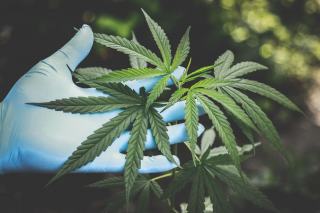
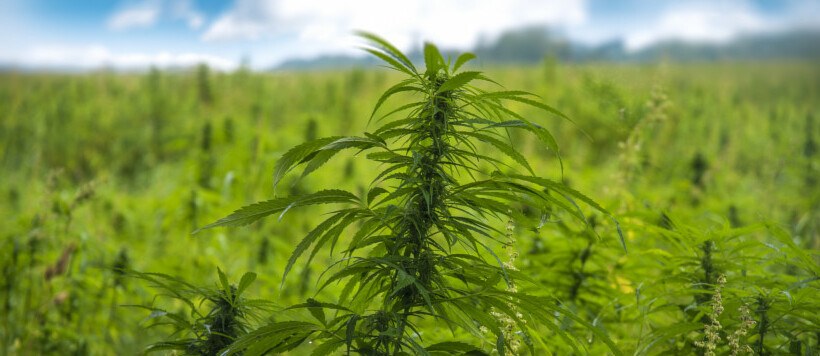
CBD or cannabidiol is a molecule present in industrial hemp and more generally in cannabis. It is a member of the cannabinoid family, just like THC. However, unlike THC, CBD is not psychotropic.
To understand why CBD and THC are so often confused, you need to know that cannabis is a family of plants including:
- Cannabis Sativa, or industrial hemp from which cannabidiol (CBD) is derived. In France, it may only be grown with authorised varieties, selected for their very low THC content, which must be below 0.3%.
- Cannabis Indica is very rich in THC, its culture is illegal because of the psychotropic effects which its consumption causes.
- Cannabis Ruderalis, low in CBD, as in THC, it is used in Asia for its fibers.
What is CBD studied for?
Hemp has been used by mankind since time immemorial, and CBD is today the subject of much research, mostly preclinical or on small groups:
- Inflammation: animal studies (BUCCELLATO et al. 2011, MECHA, et al. 2013, KOZELA et al. 2013, RIBEIRO et al. 2012) have explored possible anti-inflammatory effects of CBD; these results have not been confirmed in humans.
- Pain: researchers are studying the possible effects of CBD on pain; current data do not allow any conclusion, and CBD is not a painkiller.
- Anxiety, stress and sleep: some small studies explore the links between CBD, anxiety and sleep; their results are preliminary and do not allow any conclusion.

CBD and autism and ASD: what research says
There are currently few studies on CBD and autism and ASD, and their results do not allow any conclusion.
- In 2018 a study suggested possible effects of a cannabis extract rich in CBD on some ASD symptoms in children, under medical supervision. Its authors themselves called for controlled clinical trials to verify these results.
- In January 2020, a review published in the Journal of Cannabis Research discussed the use of CBD in anxiety, ASD, schizophrenia and attention deficit disorder; such a review is not a medical authorisation, and no CBD product sold to the public is authorised to treat these disorders.
CBD is not a medicine: it should never be given to a child or an autistic person on one's own initiative. This page does not replace a consultation: ask a doctor or a paediatrician first, especially because CBD may interact with other medicines.
CBD and autism, the important points
Research on CBD (cannabidiol) and autism spectrum disorders is very recent, and its results do not allow any conclusion. Only one cannabidiol-based medicine (Epidyolex) is authorised, on prescription, for certain rare epilepsies; outside this case, CBD is not a treatment for symptoms associated with ASD. Larger studies may tell us more in the future; in the meantime, support for autistic people relies on health professionals.