
What is CBD (cannabidiol)?
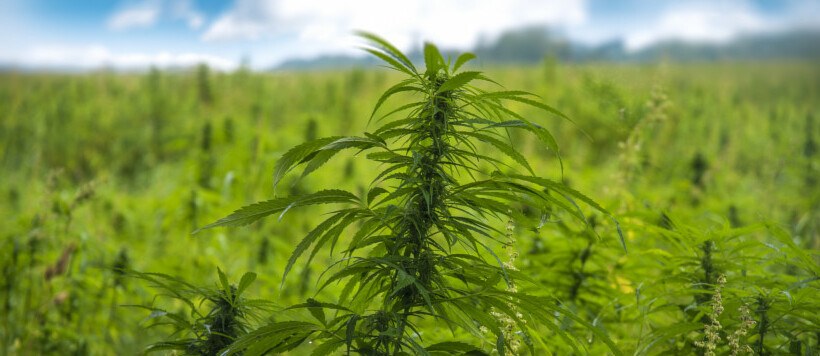
CBD, or cannabidiol, is a substance produced by the hemp plant (Cannabis Sativa). It should not be confused with THC (tetrahydrocannabinol), which has psychotropic properties (high), and whose consumption is prohibited by law.
In France, CBD is not classified as a narcotic, and its sale is strictly regulated. Since the decision of the Conseil d'Etat of 29 December 2022 (n° 444887), hemp flowers and leaves containing no more than 0.3% THC can be sold; the same 0.3% limit applies to the hemp varieties grown in the EU. Below this limit, the quantity of THC is considered negligible, and does not produce the psychoactive effects usually met.
CBD itself is not psychotropic. Note however that traces of THC may remain in some products and lead to a positive roadside drug test.
In what forms is CBD found?
Human imagination having no limit, CBD is found in many different forms, absorbed in different ways. Here are the most common:
- Sublingual route: CBD oils placed under the tongue. In France, these products are considered foods, which are not authorised under the Novel Food Regulation (EU) 2015/2283: they must be withdrawn from the market.
- Oral route: CBD capsules, gummies or bars, swallowed, are in the same situation and are not authorised either; only plain hemp leaves for infusion, not enriched with CBD, remain allowed.
- Inhalation: CBD flowers, sold legally in France, but whose combustion, especially with tobacco, is harmful to health; CBD e-liquids, which are vaping products subject to the rules of the French Public Health Code.
- Cutaneous route: CBD balms and creams, applied to the skin.
At Kannabay we do not recommend any form to be swallowed: CBD foods are not authorised in the EU. For external use, cosmetic products such as balms or creams are legally marketed forms.
The cutaneous route concerns cosmetic products applied to the skin; a cosmetic does not treat skin problems, joint or muscle pain, or migraines.
What effects of CBD (cannabidiol) are being studied?
The late legal clarification of CBD is partly due to the existing confusion with THC. But thanks to the numerous scientific studies that have been published in recent years, the way the public and the different governments look at it has changed. Scientific studies, mostly preclinical or on small groups, explore possible properties of CBD; apart from a cannabidiol-based medicine authorised on prescription for certain rare forms of epilepsy, none is demonstrated for the products sold to the public:
- Anxiolytic
- Anti-inflammatory
- Anti-convulsive
- Antidepressant
- Analgesic
- Neuroprotective
- Sleep
- etc.
You will find in our articles the latest scientific advances on CBD, by browsing our site.
What are the side effects of cannabidiol (CBD)?
After listing the properties being studied, let's now talk about the possible side effects encountered. It is important to understand that the effects can vary from one person to another, and that their frequency is still poorly known. The method of absorption can also come into play, as well as the quality of the product. Labelling is not always accurate either: some products contain THC, or a CBD content different from the one indicated.
CBD can indeed cause, like any other substance, more or less annoying side effects. They are more frequent at high doses.
Here are the main side effects encountered:
- Drowsiness : CBD can lead to drowsiness in some people, especially at high doses. Do not drive or use machines if you feel drowsy.
- Gastrointestinal problems : CBD can lead to intestinal discomfort in some subjects, sometimes accompanied by diarrhea.
- A dry mouth : reported in particular with inhaled products. The sensation of dry mouth (xerostomia) is a side effect depending strongly on the product used, and its way of absorption.
- Loss of appetite : Unlike THC which strongly increases appetite and can cause cravings, CBD could act on the feeling of hunger; one hypothesis involves ghrelin, a digestive hormone stimulating appetite. A strong feeling of hunger is due to a high concentration of ghrelin, and after a meal, the level of ghrelin drops again. A decrease in appetite has been reported in some users: if you notice it, talk to your doctor.
- Feeling of fatigue : CBD can cause a feeling of fatigue in some people, especially at high doses.
- Nausea: in some sensitive people, especially at high doses, an unpleasant sensation in the stomach can occur, as well as feelings of nausea.
How to limit the risk of side effects?
In order to reduce the risk of side effects, ask your doctor or pharmacist for advice before using a CBD product, especially if you have a health condition or take medication, and stop using it if an undesirable effect occurs. At high doses, an increase in liver enzymes has also been observed.
Are there any contraindications to CBD?
People undergoing medical treatment: CBD can interact with many medicines (via the CYP450 liver enzymes), and taking it at a distance from them does not prevent these interactions. Ask your doctor or pharmacist for advice before any use, and never stop or change a treatment on your own.
- Pregnant women : Given the lack of studies on the use of CBD during pregnancy, CBD is not recommended during pregnancy and breastfeeding, as a precautionary measure, in order to protect the mother and the child.
- Allergic people : Allergies to hemp are extremely rare, but if you are prone to allergies, first apply a small quantity of a CBD cosmetic on a small area of skin, and check whether a skin reaction occurs. In case of reaction, stop and ask a doctor for advice.
CBD side effects and precautions to remember
Undesirable effects reported with CBD include drowsiness, fatigue, digestive disorders, decreased appetite and, at high doses, an increase in liver enzymes. CBD can interact with many medicines and is not recommended during pregnancy and breastfeeding. CBD is not a medicine: before any use, especially if you are under treatment, ask your doctor or pharmacist for advice.