A new source of income for our farmers
In France, as in many other countries of the European Union, products made with CBD (cannabidiol) are enjoying soaring success with a large part of the population. Grown in many countries, hemp (cannabis) is also attracting farmers in France.
Hemp and cannabis: what is the difference?
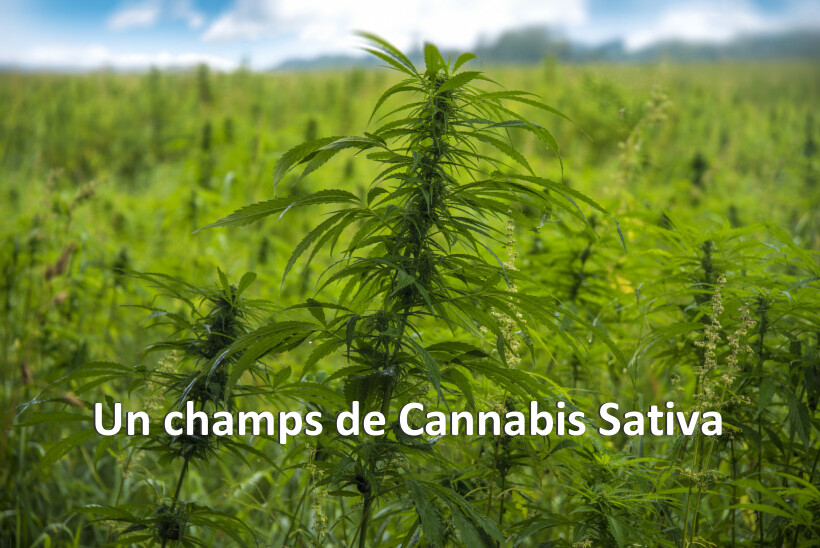
The short answer is: none. Hemp and cannabis are one and the same plant with several names, one of which is more "acceptable" than the other. Cannabis, also called hemp depending on its use, is first and foremost a botanical genus that includes 3 varieties:
- Cannabis Sativa or industrial hemp, which may contain CBD (cannabidiol) and a negligible amount of THC (less than 0.3%)
- Cannabis Indica, rich in THC and low in CBD
- Cannabis Ruderalis, low in both CBD and THC
The two most widely used plant varieties are industrial Cannabis Sativa and Cannabis Indica. Only the cultivation of Sativa hemp varieties listed in the European catalog is authorized, and the THC content must be below 0.3%, the threshold set by the Common Agricultural Policy since 2023 and by French regulations.
What is CBD?
CBD, whose full name is cannabidiol, has gained popularity in recent years. A substance found in cannabis (hemp), CBD is isolated and added to certain products to make it easier to consume. Often wrongly associated with THC, CBD is not psychotropic: it does not get you high. It is the subject of extensive research, often preclinical, whose results do not allow any conclusion about an effect on health: CBD is not a medicine. This enthusiasm means that demand for CBD has literally exploded in recent months, and to meet such demand, hemp production has to increase.
Hemp in France
Besides CBD production, the hemp plant (Cannabis Sativa) has many uses. Once widely grown, with its first uses dating back to the Neolithic, it was used in particular to make fabrics and rope, in certain building materials, and also in human food and animal feed. Today these uses continue, and others have been discovered: hemp is used as a biofuel, as a composite material combined with plastics, and so on. It is therefore easy to understand why many farmers now want to start growing hemp.
Since the early 1990s, the area devoted to hemp crops has tripled, making France the largest producer in Europe, with nearly 17,900 hectares out of the 58,196 cultivated in Europe, far ahead of Lithuania, the second largest producer in the Union with its 9,182 hectares of crops.
Generally speaking, farmers fall into two groups: those who grow hemp stalks for industrial use, and those who grow "cannabis" hemp for its flowers and the production of CBD for commercial products. It is a safe bet that cultivated areas will keep increasing in the coming years, giving farmers a new source of income.