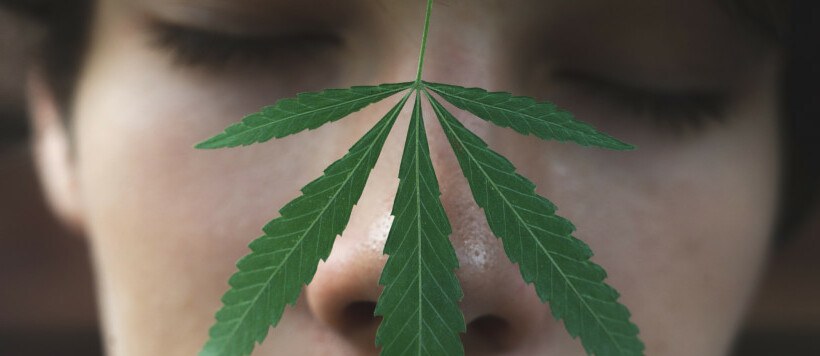

The flowers of discord
Double thunderclap in the hemp industry, the Council of State contradicts the recent decision of the government, and suspends the ban on the sale of flowers and leaves of Cannabis Sativa. This is a relief for many stores, for which these flowers represent up to 80% of turnover. But beware: the venerable institution specifies that this suspension is only provisional. Let's see what CBD flowers are, and the reasons France gave to prohibit them. Update: on 29 December 2022, the Council of State ruled on the merits and annulled the ban (decision n° 444887).
CBD flowers
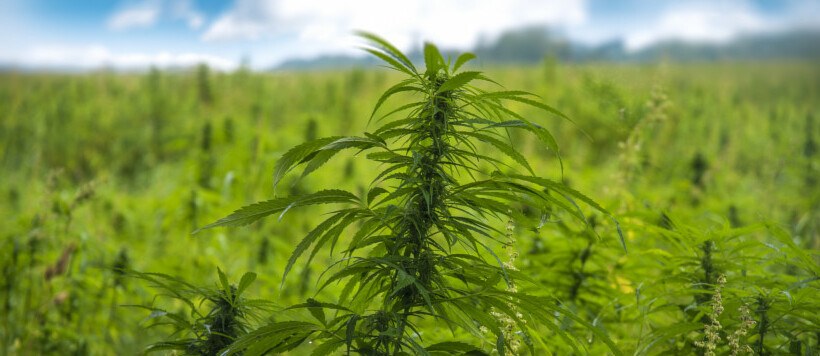
CBD flowers come from the hemp plant (Cannabis Sativa), this large plant contains a lot of CBD, and a negligible amount of THC, less than 0.3 % according to the law. Once mature, the flowers are picked, and carefully dried before being offered for sale. Their richness in terpenes and flavonoids gives them a very similar scent to marijuana or recreational cannabis, yet their effects are not the same. As we explained above, in France, CBD flowers cannot contain a quantity higher than 0.3 % of tetrahydrocannabinol (THC). This quantity is tiny, but it is not zero: residual THC may lead to a positive roadside drug test. On the other hand, the flower is rich in CBD.
CBD and recreational cannabis
If the flowers of CBD and recreational cannabis have the same aspect, their effects are however quite different. Banned in France, recreational cannabis comes from Cannabis Indica, which is very rich in THC, but also very poor in CBD. THC is a psychoactive substance that can cause a second state in consumers. THC is also studied for certain medical uses, under strict medical supervision. CBD does not have the intoxicating effect of THC and is not a narcotic in France. Research explores its possible effects, mostly in preclinical studies whose results do not allow any conclusion, for example on:
- Inflammation
- Anxiety and stress
- Pain
- Sleep
CBD is not a medicine: for any health question, ask your doctor.
Why would France want to ban CBD flowers?
After having tolerated the sale of CBD flowers and leaves for 3 years, France decided to ban them on January 1st 2022. The reason given by the government is the impossibility to differentiate CBD flowers (Cannabis Sativa) from THC-rich recreational cannabis flowers (Cannabis Indica). This difficulty of identification makes the work of Police control extremely complicated, since analyses must be carried out to know the true nature of the products. The order did not concern other products made from hemp extracts; however, CBD is not authorised as a food in the European Union (Novel Food Regulation (EU) 2015/2283), and the Ministry of Agriculture recalled on 20 May 2026 that foods containing CBD, such as oils to swallow or capsules, cannot be sold in France.
The reaction of the professionals of the sector
The market share of CBD flowers and leaves is such, that their prohibition could lead purely and simply to the closure of hundreds of stores across the country. Indeed, estimates indicate that flowers and leaves account for 50 to 70% of the activity of physical stores. This is why these merchants have filed an appeal with the Council of State.
The opinion of the Council of State
The highest administrative court, referred to by hemp industry players, ruled in summary proceedings on Monday, January 24, 2022. In its order, it considers that it does not appear that hemp flowers and leaves with a tetrahydrocannabinol content lower than 0.3% are so harmful to health as to justify a general and absolute ban on their sale to consumers and their consumption. However, this order only had a provisional value, pending a final decision on the order challenged by the traders.
The final decision of 29 December 2022
Ruling on the merits on 29 December 2022 (decision n° 444887, published on Legifrance), the Council of State annulled the ban on the sale of hemp flowers and leaves. Their sale is therefore authorised in France, provided their THC content remains below 0.3%. CBD itself is not a narcotic, but semi-synthetic cannabinoids such as HHC have been classified as narcotics since 3 June 2024.
Other CBD products
CBD is now offered in many forms, such as balms or cosmetics, oils, candies or chewing gums; but as seen above, foods containing CBD cannot be sold in France. The CBD contained in these products is extracted from the flowers and leaves of the Cannabis Sativa plant, whose flowers have small glands called trichomes that produce a substance rich in CBD, but also a large number of other cannabinoids, as well as aromatic terpenes and flavonoids (odoriferous molecules). Once the extraction of these substances is done, they are mixed with a carrier, such as coconut oil, to ensure good preservation, then the product is packaged in its final form. In the case of CBD oils (which, as seen above, cannot be sold as food in France), the mixture is placed in a vial fitted with a pipette.