Separated from his masters
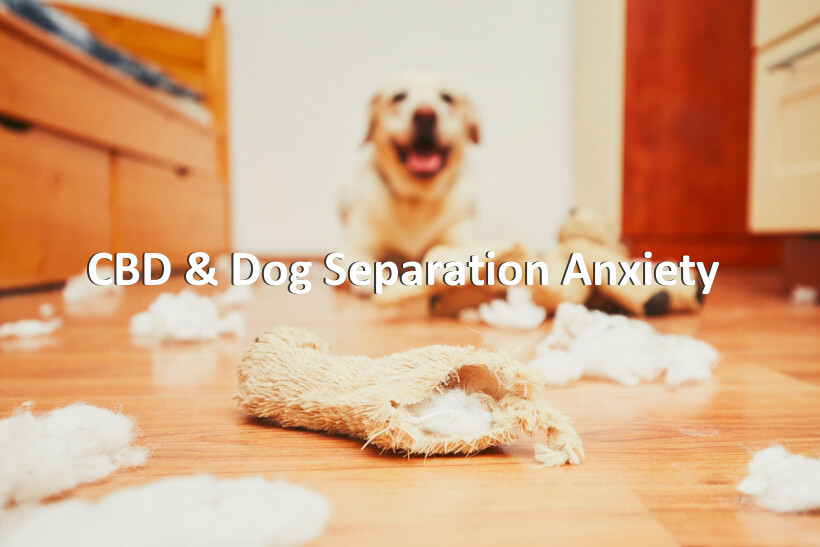
Separation anxiety is a behavioural disorder that many dog owners experience in their dogs. It occurs when the owner or a person with a very attached dog leaves. The pet then enters into great emotional suffering. Let's talk about what to do if your dog has symptoms, and what research says about Cannabidiol (CBD). Another behavioural issue is covered in our page on CBD and aggressive dogs.
What is separation anxiety?
Separation anxiety is a behavioural disorder that is considered normal in the very young dog (less than 6 months old), separated from his mother and siblings. In older dogs, however, it can quickly become a problem. The absence of the owner causes great stress in the sick dog, the effects of which can be manifested in :
- Vocalizations, the dog barks, cries.
- Attempts to get out, the animal frantically scratches the door or window.
- Destruction of objects, furniture, etc.
- House soiling, the dog relieves himself inside the house.
- Loss of appetite, the dog does not touch his bowl or treats left by his master.
Separation anxiety can occur when the dog's owner leaves the house, or even simply when the owner leaves the room and the pet cannot accompany him. And if he barks, or does something stupid, it is important to understand that the dog's behaviour is not motivated by a spirit of revenge, but rather by the symptoms of his anxiety.
How does Separation Anxiety Disorder develop in dogs?
All dogs, male or female and regardless of breed, can be affected. If the dog has been separated from its mother before weaning, or if it has been abandoned, the likelihood that it is anxious is much greater. Other reasons may also favour this behaviour, such as a move, a long absence of the master, changes in the family unit's life, for example a return to work after a long period of teleworking or unemployment, and many other stressful situations.
How can separation anxiety be managed?
It is entirely possible to help anxious dogs, but patience and perseverance will be required. Here are 6 tips that may be useful:
- A long walk where the dog can run and exercise will allow him to release energy before leaving him.
- Eliminate the departure ritual. When you have to leave your home, ignore your dog 20 to 30 minutes before departure. Leave without celebrating your pet.
- Likewise, when you return, don't celebrate with your pet. Departures and returns should be perfectly harmless moments.
- Offer your dog toys to occupy himself in your absence, so that he can pass the time and be stimulated. Beware, the distribution of toys must not become a departure ritual. Give them at least 30 minutes before leaving.
- Simulate false departures in order to desensitize the dog to loneliness, but also to the noises and habits that announce your departure.
- Not always responding to your pet's requests in everyday life teaches him to be more independent.
Cannabidiol (CBD) and separation anxiety in dogs
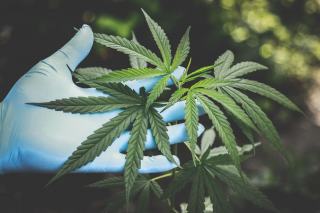
CBD is a molecule that is very popular among humans in France and elsewhere. Its possible effects are being studied. CBD belongs to the cannabinoid family, and is obtained from industrial hemp (Cannabis Sativa). There are other cannabinoids, one of which you probably know without even suspecting it: THC. THC is the molecule that causes psychotropic effects, and is of course prohibited. So if these 2 cannabinoids come from Cannabis, why is CBD authorized for sale? It should be understood that cannabis is a family of 3 main plants:
- Cannabis Sativa (industrial hemp) rich in CBD, very very poor in THC (less than 0.3% according to the law)
- Cannabis Indica, poor in CBD, and very rich in THC
- Cannabis Ruderalis, low in CBD and THC
And of course, Cannabidiol (CBD), unlike THC, is not psychotropic and therefore does not make you high. Traces of THC may remain in some products, and THC is toxic to dogs. Some studies, mostly in rodents or humans, have explored possible effects of CBD on anxiety (Campos et al. 2012, Elbatsh et al. 2012) and on sleep (Nicholson et al. 2004, Chagas et al. 2013); these results cannot be transposed to dogs and do not allow any conclusion. CBD is not a veterinary medicine: separation anxiety is above all managed through behavioural work, and your veterinarian or a behaviourist can guide you. Never give your dog a product without the advice of your veterinarian.