
Hemp
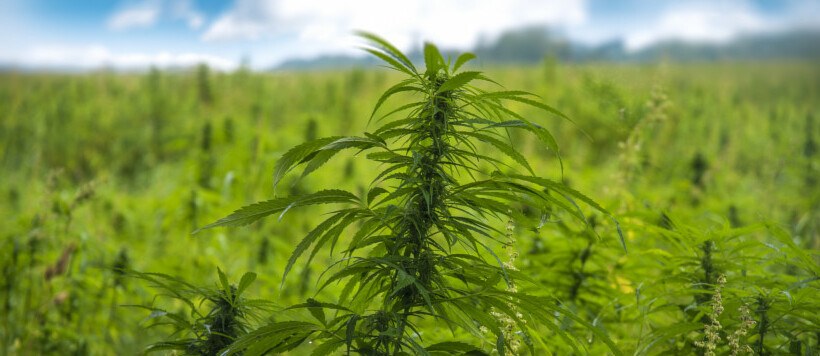
Hemp, with its scientific name Cannabis Sativa, is a plant that has accompanied mankind for thousands of years. Some scientists believe that hemp was one of the first plants domesticated by humans, several thousand years ago. Cannabis Sativa had several uses: its fibers were used to make ropes and clothes, its flowers were used in traditional medicine, the nourishing seeds allowed to produce a hemp oil rich in nutrients (but without CBD, because the seeds do not contain any). Over the millennia, new uses were discovered, and a multitude of hemp-based products were created in different industries:
- Food industry : Hemp seeds and oils are consumed for their nutritional benefits. The composition of the seeds is very interesting, as they are rich in proteins, vitamins and minerals. Their balance between omega 3 and 6 is particularly appreciated.
- Cosmetic industry : Hemp seed oil is appreciated for its nourishing and moisturizing qualities, and many beauty products contain it.
- Construction industry : Hemp is a natural and ecological insulation product thanks to its fibers. Hemp concrete (hempcrete) is used in ecological construction and renovation.
Hemp is great for humans and the planet, its many uses, and the fact that its cultivation requires very little or no phytosanitary products makes this plant, which can be found all over the world, a definite asset for the future of humanity.
Cannabinoids
Cannabinoids, or phytocannabinoids (from the plant world), are a group of substances including CBD, THC, CBN, CBG, etc.
The first cannabinoid to be isolated was CBN, at the end of the 19th century (its structure was described in the 1930s), followed by cannabidiol (CBD) in 1940, then the famous THC (tetrahydrocannabinol), whose structure was identified in 1964. In the cannabis plant (hemp) the numerous phytocannabinoids (more than 100) are found in the trichomes (glands) of the female flowers. Some phytocannabinoids stand out for their effects (beneficial or not) on the body.
Before CBD took its place, THC was the cannabinoid most known by the general public. THC is naturally the phytocannabinoid most present in recreational cannabis (Cannabis Indica), and it is the substance responsible for the psychotropic effects (euphoric, and disinhibiting), which earned cannabis its bad reputation, and its prohibition in most countries in the world.
CBN, or cannabinol, is less known than CBD (cannabidiol), or THC, yet it is the subject of growing interest. CBN is not found naturally in the fresh plant, but it is derived from the degradation of THC by air and light. Its possible effects on inflammation, sleep, appetite or bone growth are being explored in laboratory research, without any conclusion to date.
CBG, or cannabigerol, is a cannabinoid found in hemp in small concentrations. In its acid form (CBGA), it is the precursor from which the plant synthesizes the other cannabinoids (CBD, THC, etc.). Its possible effects, alone or in association with CBD, on pain, inflammation, anxiety, stress, sleep or neuronal protection are being explored, without any conclusion to date.

CBD
CBD, or cannabidiol, is the star of the large family of cannabinoids. It is studied for its possible effects, and according to the World Health Organization, it does not appear to present a risk of dependence, unlike THC. It is found in the form of CBD oil in a bottle that can vary in concentration, and in other products such as balms; CBD gums or capsules, as foods, are not authorised in the EU. Research mainly explores the following areas:
- CBD & pain
Some studies explore a possible effect of CBD on pain; the available data do not show that CBD relieves pain as a medicine would.
- CBD & inflammation
Several preclinical studies have observed anti-inflammatory properties of CBD; these results do not allow any conclusion for muscle or joint pain in humans.
- CBD & stress and anxiety
A small study published in 2011 (Bergamaschi et al.) in 24 patients with social anxiety disorder reported possible anxiolytic effects of CBD. Researchers are also exploring post-traumatic stress, panic attacks and OCD; these results remain preliminary.
- CBD and sleep
Another study released in 2013, carried out on rats, observed an increase in total sleep time after CBD administration; this has not been confirmed in humans. CBD is not a medicine: for any health problem, ask a doctor for advice.
How could CBD act?
All mammals, and therefore the human being have in their body many systems such as the cardiovascular, nervous or gastric system. But there is one, much less known called the endocannabinoid system.
Research results indicate that the endocannabinoid system (ECS) is involved in the regulation of inflammation, appetite, pain, anxiety, metabolism, but also in brain plasticity, etc.
It consists of:
- Cannabinoid receptors present everywhere in the body including the brain and the nervous axis, but also on many cells of the immune system. The main ones are CB1 and CB2; other receptors, such as TRPV1, TRPV2, GPR18, GPR55 and GPR119, are also involved.
- Endocannabinoids, such as anandamide, which the body synthesizes, including in the brain, and which bind to the receptors mentioned above.
- Certain enzymes will break down the endocannabinoids, once they have become useless.
The deregulation of this system is associated with physiopathological situations. Dr Ethan Russo, a cannabis specialist, even talks about clinical endocannabinoid deficiency, a hypothesis not confirmed to date. Whether external cannabinoids such as CBD, CBG or CBN could support the endocannabinoid system remains a research question.
How is CBD oil made?
CBD oil requires a certain amount of care. Once harvested, the first step will be to extract the CBD from the hemp flowers (cannabis sativa). There are mainly 3 extraction techniques, each one having an impact on the final quality of the products:
- CBD extraction with vegetable oil : Cannabidiol is extracted from the flowers with a vegetable oil, such as hemp oil, sesame oil, or olive oil. The CBD will then benefit from the qualities of the chosen vegetable oil. This method does not offer an optimal yield, and the product obtained contains little CBD.
- Solvent extraction : This low cost method extracts CBD with various solvents, such as isopropyl alcohol, propane, butane, or ethanol. Its main defect, and not the least, is that it often leaves traces of these products in the final solution. This risk of residues is its main drawback.
- Supercritical CO2 extraction : This proven and costly method has been used since the early 1980s in the food, pharmaceutical and cosmetics industries to extract molecules from plants. It allows to isolate, and to take with care, the necessary molecule(s) while keeping all their properties. The low temperature during the operation protects those that are sensitive to heat such as phytocannabinoids (CBD, CBG, etc.), and terpenes. This process yields a very pure extract, which is why it is generally considered the cleanest method.
The CBD oil
Once the CBD, and the other phytocannabinoids are extracted, they are placed in a carrier oil, which dilutes and protects them. For an oil intended for external use, the carrier oil also determines the texture and the feel on the skin: MCT (medium chain triglyceride) coconut oil, naturally rich in medium chain fatty acid triglycerides, is light and non-greasy, while hemp seed oil brings its omega 3 and 6. Preferably choose an organic carrier oil.
How to choose a CBD oil for external use?
Faced with all the products offered, how to choose? Organic, THC-free, broad spectrum, or full spectrum, these are terms that for most of us do not mean much. So let's try to make sense of it. We now know that it is important to choose a product extracted by CO2, intended for external use, and to check its carrier oil, here are the other important points to watch out for:
Be aware of the origin of hemp
CBD is derived from the flowers of the Cannabis Sativa plant. To buy high quality CBD, look at its origin:
- In what country or region of the globe is it grown? Depending on the cultivation code in force, harmful pesticides may or may not be used.
- What is the quality of the soil in which the plant is growing? If the soil is rich, then the plant will produce beautiful flowers rich in CBD.
- Is the CBD organic? Hemp is a soil purifier, so any products that might be used during the growth of the plant must be organic, so as not to pollute it.
Choose a broad spectrum product
We find today in France, and in the world a multitude of CBD oils. Labels indicate whether a CBD oil is broad spectrum. The entourage effect, a notion from herbal medicine, refers to the synergy of all the elements found in the plant (Cannabis Sativa), CBD, CBG, CBN, CBC etc., but also terpenes and flavonoids; this hypothesis is still debated.
Checklist for a CBD oil for external use
To sum up, here are the points to check on a CBD oil intended for external use:
- The amount in milligrams of CBD in the bottle.
- The origin of the hemp or flowers (France, USA, or other regions of the world)
- Is the product organic?
- What is the carrier oil?
- The extraction method (supercritical CO2?)
- Is the oil broad spectrum or not?