The difference between CBD, CBG and CBN lies first in their place in the cannabis plant: CBG is the precursor cannabinoid, CBD derives from it, and CBN arises from the aging of THC. In humans, their effect on sleep, stress or pain remains little studied outside of medical cannabis; only CBD has an authorized medicine.
CBD, CBG and CBN in three key points
- Lineage: CBGA, the acid form of CBG, serves as the starting point for the synthesis of CBD and its intoxicating cousin in the flower; CBN appears later, through the oxidation of THC.
- Human data: cannabidiol has clinical trials and a medicine (Epidyolex); CBG and CBN rest mainly on laboratory work.
- Status: in France, these cannabinoids are not classified as narcotics when they come from hemp whose THC content does not exceed 0.3%; none is authorized as a food.
What this article covers
- Where does each cannabinoid come from in the hemp plant?
- How CBD, CBG and CBN act on the endocannabinoid system
- What is the difference between CBD and CBG?
- What are the effects of CBN on sleep?
- What clinical trials say about CBD
- Comparison table of CBD, CBG and CBN
- Entourage effect and full spectrum products
- Flower, resin, oil: where is each cannabinoid found?
- The legal status of CBG and CBN in France
- Questions about the differences between CBD, CBG and CBN
Where does each cannabinoid come from in the hemp plant?
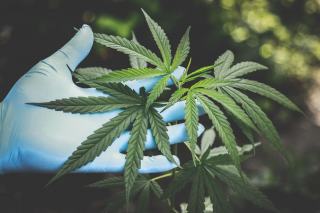
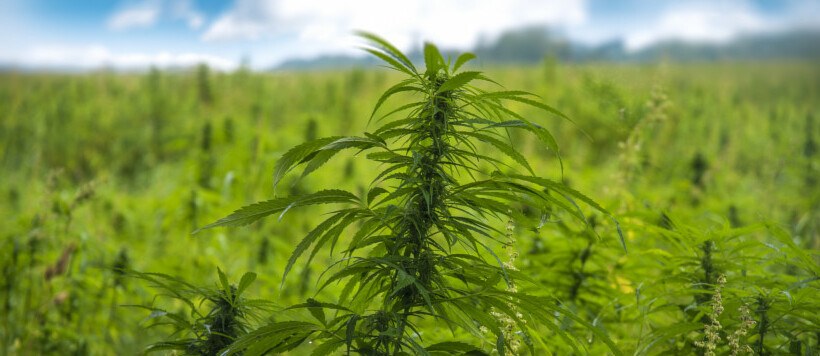
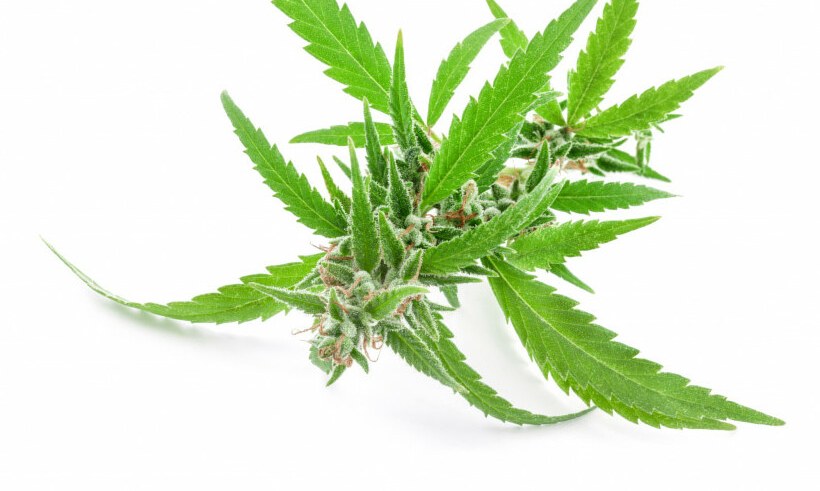
CBG, or cannabigerol, opens the cannabinoid production chain. The plant first produces cannabigerolic acid (CBGA) in the trichomes, the small resinous glands that cover the flower. Three enzymes then transform this CBGA: one into THCA, another into CBDA, a third into CBCA. This is why many authors nickname CBG the "mother cannabinoid." In a mature flower, little of it remains, generally less than 1% of dry weight, since the plant has converted almost all of it.
CBD, or cannabidiol, therefore comes from CBGA by way of CBDA. CBDA, an acid, becomes neutral CBD under the effect of heat (drying, combustion, heating during extraction): this is called decarboxylation. The industrial hemp varieties grown in Europe are selected to accumulate CBD and very little tetrahydrocannabinol.
CBN, or cannabinol, follows a different path: it does not come from a plant enzyme. It results from the degradation of THC, under the action of oxygen, light and time. A THC-rich flower, poorly stored for months, becomes richer in CBN. This degradation product was in fact the first cannabinoid isolated, at the end of the 19th century, from old resin samples. Roger Adams isolated CBD in 1940, its structure was described in 1963 by Raphael Mechoulam, and CBG was identified in 1964 by the same team.
How CBD, CBG and CBN act on the endocannabinoid system
The endocannabinoid system brings together receptors (CB1, mainly in the brain, and CB2, mainly in immune cells), messengers made by the human body and the enzymes that break them down. Each of the three compounds binds to it in its own way, and that is where most of the difference lies.
- CBD
- Cannabidiol binds poorly to the CB1 and CB2 receptors. Instead, it modulates their activity (it dampens the action of THC on CB1) and acts on other targets: 5-HT1A serotonin receptors, TRPV1 channels linked to pain perception. It does not produce intoxication.
- CBG
- Cannabigerol interacts weakly with CB1 and CB2, but is active on alpha-2 adrenergic receptors, involved in blood pressure and alertness. This profile explains laboratories' interest in its anti-inflammatory and appetite-related properties, so far observed only in animals.
- CBN
- Cannabinol activates the CB1 receptor, but with a much lower potency than THC, and shows a slightly stronger affinity for CB2. At high doses, it can produce a mild psychoactive effect, which sets it apart from CBD.
These mechanisms come mostly from experiments on cells or rodents. They point to leads, not results in humans.
What is the difference between CBD and CBG?
CBD and CBG differ first in their abundance: CBD accounts for up to 10 to 20% of the dry weight of a selected flower, CBG rarely more than a few percent, even in recent varieties bred for it. A CBG oil therefore costs more to produce than a CBD oil at the same concentration.
CBD and CBG do not target the same sites either. Where CBD works through serotonin and TRPV1 channels, CBG acts on adrenergic receptors. Unlike CBD, which has been widely evaluated in clinical settings, CBG has very few trials in humans: a study published in 2024 in Scientific Reports tested a single dose of CBG against placebo in 34 adults and noted a decrease in perceived anxiety and stress as well as better verbal memory, with no measured impairment. A single study of this size does not allow any conclusion.
As for research leads, both compounds show anti-inflammatory activity in the laboratory, without proof in humans. CBG is also being studied in models of inflammatory bowel disease and for its antibacterial action, two leads that are still preclinical. The "CBD vs CBG" comparison circulated by online shops often presents these leads as established facts: that is a misreading of the publications.
Cannabigerol also has a long-standing role in glaucoma research: in the 1990s, work carried out on rabbits measured a reduction in intraocular pressure after application of CBG, a lead never confirmed in humans. In rats, the same substance stimulates appetite, a capacity that laboratories are examining for diseases that suppress hunger. These various results explain the scientific interest in the CBG present in flowers, without saying whether it is effective or beneficial for a person.
What are the effects of CBN on sleep?
This substance owes its recent popularity to its reputation as a sleep molecule. This idea comes from an old observation: aged cannabis, richer in CBN, was considered more sedating. The available research qualifies this reputation. The sedative effect of aged cannabis may be explained as much by the remaining THC and by certain terpenes as by CBN itself.
In humans, the data remain thin. A trial published in 2023 compared taking CBN, CBN combined with CBD and a placebo in adults with sleep disorders: the differences in sleep quality turned out to be small and partly not significant. Other small trials report fewer nighttime awakenings, without large-scale replication. No health authority recognizes any indication for CBN against insomnia.
Cannabinol is also the subject of studies on muscle pain (in rats) and on the protection of neurons, still at the preclinical stage. Its mild psychoactive character at high doses calls for caution before driving.
Blends combining CBN and CBD are sold with a promise of falling asleep that nothing justifies: no health claim is permitted for these products, and trials able to compare the blend directly with a placebo are lacking. Adding CBN to an oil makes it neither safer nor more effective; a persistent sleep disorder is a matter for a doctor.
What clinical trials say about CBD
Cannabidiol is the only one of the three to have an authorized medicine: Epidyolex, an oral solution of purified CBD, received its European authorization in 2019 for two rare forms of epilepsy beginning in childhood (Lennox-Gastaut and Dravet syndromes, in patients aged 2 years and older), then in 2021 for tuberous sclerosis complex. This medicine is prescribed at doses well above those of the oils sold in shops, with liver monitoring.
For other uses (anxiety, sleep, chronic pain), published trials give variable results depending on the dose and the population studied. In 2018, the World Health Organization's expert committee concluded that pure CBD has no abuse potential and recommended not placing it under international control. The link between CBD and anxiety is the subject of the largest number of studies; trials conducted on fear and anxious states give an idea of what is established and what is not. Finally, CBD interacts with certain medicines metabolized by the liver (anticoagulants, antiepileptic drugs): medical advice is essential for anyone on ongoing treatment.
Outside of epilepsy, research leads on CBD focus mainly on inflammation and pain, explored in animal models with no result transferable to humans to date. One useful example in particular: in the Epidyolex trials, purified CBD reduced the frequency of seizures in children with a rare disease. For this reason, the European Medicines Agency recognized this single therapeutic indication; a shop oil is not a medicine, and any use for a health problem calls for medical advice. Research is moving forward, and trial registries list far more protocols on CBD than on its two cousins.
Comparison table of CBD, CBG and CBN
The following comparison sums up the features of each cannabinoid described above, with no dosage and no promise of effect.
| Criterion | CBD | CBG (cannabigerol) | CBN (cannabinol) |
|---|---|---|---|
| Origin | Derived from CBGA by an enzyme | Precursor of the others | Oxidation of THC |
| Content in the flower | High | Low, except dedicated varieties | Low, increases with age |
| Main targets | 5-HT1A, TRPV1, modulation of CB1 | Alpha-2 adrenergic, CB1 and CB2 barely | Weak CB1, CB2 |
| Psychoactive character | None | None known | Mild at high doses |
| Human data | Clinical trials, one medicine | A few isolated trials | Small trials on sleep |
Entourage effect and full spectrum products
The entourage effect refers to the hypothesis that a plant's cannabinoids and terpenes would work better together than in isolation. This idea, put forward in 1998 by Shimon Ben-Shabat and Raphael Mechoulam, is used as an argument for so-called "full spectrum" oils, which retain all the compounds of the extract, including traces of CBG, CBN and THC. Direct evidence in humans remains rare: the hypothesis is still debated among specialists.
For the consumer, the full spectrum label has a concrete consequence: the oil contains a little THC, within the legal limit, which matters in the event of a saliva or urine test. "Broad spectrum" oils remove the THC, and isolates keep only the purified molecule. Blends of CBD and CBN sold for the night, or CBD and CBG for the day, are marketing: no study has set an ideal ratio between these substances. Detection thresholds vary with the frequency of use, and the comparison between CBD and THC specifies what separates the two molecules.
Flower, resin, oil: where is each cannabinoid found?
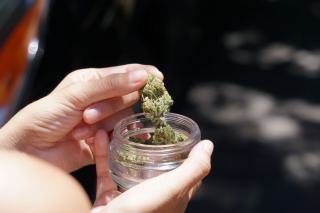
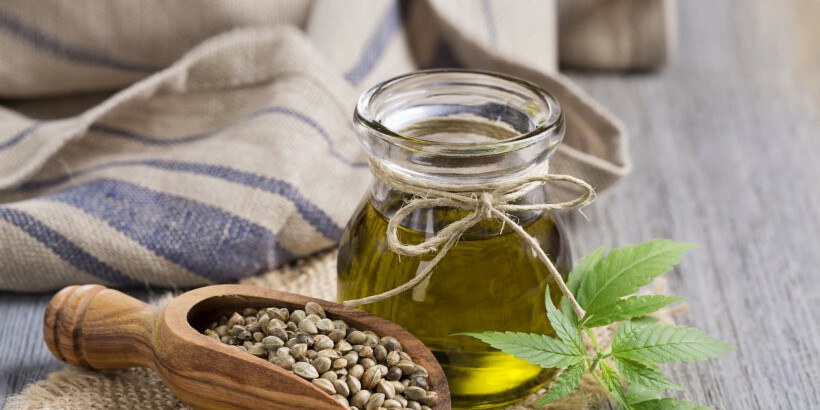
CBD comes in many forms: dried flower, resin, trim (the small leaves and residues from trimming), oil, cosmetics and pre-rolls; capsules, gummies and other forms meant to be swallowed are CBD foods, banned from sale in France. CBG is sold mainly as oil and as flowers from selected varieties, which are rarer. CBN is almost always found in oil or gummies, the latter falling under the same food ban, because a flower naturally rich in CBN would be a degraded flower; manufacturers often obtain it by chemical conversion of other cannabinoids.
Whatever the format, a certificate of analysis from an independent laboratory remains the only way to check the stated content and the THC level. Discrepancies between the label and the actual content are frequent: a survey by the French consumer protection authority (DGCCRF) found numerous labeling anomalies in the CBD products it inspected. Quality also depends on the extraction method (supercritical CO2, ethanol) and on the origin of the hemp.
Manufacturers must treat the raw extract with heat to convert the acids; a CBG or CBN liquid obtained this way remains a processed product, even when sold as natural. Burning a pre-roll also makes the amount absorbed impossible to estimate. Shop blog posts and customer reviews that suggest cannabinoid "combinations" for the evening rarely cite a study and cannot legally promise any effect.
The legal status of CBG and CBN in France
In France, the order (arrêté) of December 30, 2021 authorizes the cultivation and sale of hemp varieties whose THC content does not exceed 0.3%, as well as the products derived from them. The French Council of State (Conseil d'État) overturned the ban on selling raw flower at the end of 2022. Neither CBG nor CBN appears on the list of narcotics, unlike HHC, classified in 2023. Sales conditions and checks change often; the overview of the legal framework for CBD in France details the texts in force. The decision of the French medicines agency (ANSM) of May 22, 2024, which classifies benzo[c]chromene derivatives (notably HHC, HHCP, THCP) as narcotics as of June 3, 2024, expressly excludes CBN; H4-CBD and H2-CBD were classified on the same date.
At the European level, CBD added to food falls under the novel food regulation, and the European Food Safety Authority suspended the assessment of applications in 2022 for lack of sufficient safety data. For an overview of hemp's other cannabinoids, the KannaBay home page brings together the published fact sheets.
Questions about the differences between CBD, CBG and CBN
Which cannabinoids are studied for anxiety?
For anxiety, CBD remains the best-documented cannabinoid, with trials whose results vary depending on the dose. CBG has only one single-dose trial, encouraging but isolated. No published trial evaluates CBN on this point. A doctor remains the right person to consult if the disorder persists.
What is the origin of CBN?
CBN comes from the degradation of THC by oxygen, light and heat. It increases in a flower or resin as it ages, and manufacturers also obtain it by converting other cannabinoids.
How does CBG interact with CBD?
CBG and CBD target different receptors (adrenergic for the former, serotonergic for the latter), which fuels the hypothesis of a complementary action. No study in humans has measured the value of combining them.