A 10% or 20% CBD oil differs only in its concentration: a 10 ml bottle at 10% holds about 1,000 mg of cannabidiol, versus 2,000 mg at 20%. This figure says nothing about quality or about an amount to take; in France, a CBD oil intended to be swallowed is not authorized for sale, and any question about use is a matter for a doctor or a pharmacist.
What does the CBD percentage of a 10% or 20% oil mean?
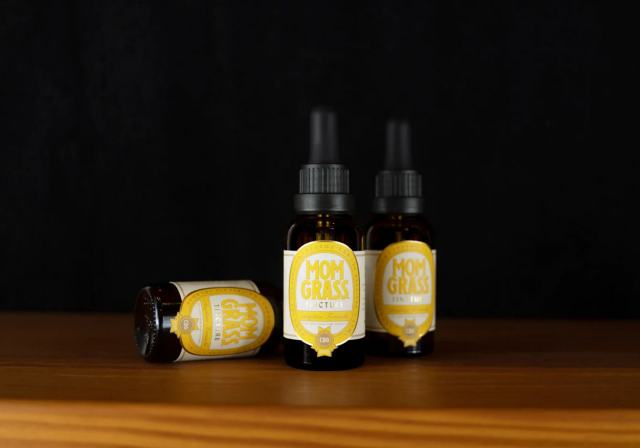
The percentage shown on a CBD oil indicates the concentration of cannabidiol in the bottle, whatever the type of extract (full spectrum, broad spectrum, isolate): a 10 ml bottle at 10% contains about 1,000 mg of CBD, and at 20% about 2,000 mg. The rest of the volume is a carrier oil (MCT coconut oil, hemp oil, olive oil) that dilutes the hemp extract. The CBD level therefore says nothing about the quality of the extract: it only measures its density. In practical terms, 10% means that 10 ml of oil holds 1 g of CBD; it is neither a potency index nor a quality score, a common confusion worth clearing up before choosing.
This level describes a density, not an amount to use. There is no recognized dosage for a CBD oil sold outside pharmacies: only Epidyolex, a medicine based on purified cannabidiol, has a set dose, determined by a doctor according to the patient's weight. Relating the percentage to a drop therefore makes no regulatory sense, especially since the size of a drop varies with the dropper, the viscosity of the oil, and the temperature.
One technical point often misleads buyers. Some manufacturers calculate the percentage by weight (mass of CBD relative to the mass of oil), others by volume. Since 10 ml of oil weighs a little less than 10 g, a "10%" bottle calculated by weight actually contains closer to 900 to 950 mg. A serious product sheet always gives the total in milligrams: that is the figure to read, not just the percentage in large print.
| Labeled concentration | CBD in a 10 ml bottle | CBD in a 30 ml bottle |
|---|---|---|
| 5% | 500 mg | 1,500 mg |
| 10% | 1,000 mg | 3,000 mg |
| 15% | 1,500 mg | 4,500 mg |
| 20% | 2,000 mg | 6,000 mg |
| 30% | 3,000 mg | 9,000 mg |
Why the percentage does not tell you how much to take
Shops often present 10% oil as "the oil for beginners" and 20% as the one for "regular users." This ranking is marketing talk: no health authority defines a starting concentration, and a CBD oil sold in a shop has neither a dosage nor an indication. The concentration a manufacturer chooses reflects formulation and pricing decisions, not a health need.
The response to cannabidiol varies from one person to another, depending on weight, metabolism, and current treatments, and side effects exist (drowsiness, digestive problems, raised liver enzymes at high doses). That is why the question "how much" has no answer on a label: it should be put to a doctor or a pharmacist, especially for anyone on medication, pregnant, or breastfeeding.
The ways of using a CBD oil described by manufacturers do not amount to a recommendation: in France, an oil presented to be placed under the tongue or swallowed is classed as a foodstuff, and CBD is not authorized as a food in the European Union.
What really changes between 10% and 20%
Between a 10% oil and a 20% oil, only the amount of cannabidiol per milliliter changes. A more concentrated oil is not more "effective" in itself, nor is it safer: for the same volume, it contains twice as much CBD, which matters for drug interactions and for side effects linked to quantity. The price generally follows the same logic, hence the practice of relating it to the milligram of CBD.
Why no dosage appears on a CBD oil
A CBD oil sold in a shop is not a medicine: it can carry neither a dosage, nor an indication, nor a promise of effect. The "step-by-step methods" circulating on retail sites (number of drops, waiting days, gradual increase) rest on no authorization and describe therapeutic directions that a consumer product has no right to display.
The French Public Health Code (Code de la santé publique, article L5111-1) classifies as a medicine by presentation any product presented as having curative or preventive properties: an oil accompanied by an intake protocol for sleep or stress falls into this zone. Regulation (EC) No 1924/2006, moreover, authorizes no health claim for cannabidiol.
A person wondering about CBD for a sleep, anxiety, or pain problem would therefore do well to talk to their doctor first: the doctor knows their treatments, can spot an interaction, and can offer validated care. The pharmacist can also check compatibility with a current prescription.
What does the European authority say about the amount of cannabidiol?
The European Food Safety Authority (EFSA) has set a provisional safe level of 0.0275 mg of cannabidiol per kilogram of body weight per day, or about 2 mg for a 70 kg adult, as part of the assessment of CBD as a novel food (EFSA press release). This benchmark applies to a very pure isolate; EFSA states that it cannot establish the safety of CBD for people under 25, pregnant or breastfeeding women, and people on medication. This provisional level, far below the content of a typical bottle, reflects the caution of the European authorities, which have authorized no CBD as a food.
Full spectrum, broad spectrum, or isolate: the spectrum matters as much as the percentage
Two CBD oils at the same level can produce different sensations, because their extract does not have the same composition. A full spectrum oil contains all the compounds of the hemp flower: CBD, other cannabinoids such as CBG or CBN, terpenes, flavonoids, and a trace of THC. A broad spectrum oil keeps these compounds but removes the THC. An oil based on CBD isolate contains only the purified cannabidiol molecule, most often at more than 98%.
The appeal of full spectrum rests on the "entourage effect" hypothesis: the plant's compounds would work together better than CBD alone. This idea, put forward as early as 1998 by researchers Raphael Mechoulam and Shimon Ben-Shabat, is still debated, and clinical trials in humans are still lacking. Hemp terpenes, such as myrcene or limonene, on the other hand, give each variety its smell and taste, which matters for comfort. The CBD profile also depends on cultivation: hemp grown outdoors, fed by rainwater and sunlight, does not develop the same terpenes as a variety grown in a greenhouse. A broad spectrum oil keeps part of the plant's compounds, without the THC.
In France, CBD must come from hemp varieties whose THC content does not exceed 0.3%, under the order of December 30, 2021 (text on Legifrance). For a person subject to testing (drivers, athletes, employees who are tested), this point matters: regular use of full spectrum may leave detectable traces of THC, and a broad spectrum or an isolate offers a guarantee only if the batch analysis confirms it.
| Type of extract | Composition | THC | Good to know |
|---|---|---|---|
| Full spectrum | CBD, minor cannabinoids, terpenes, flavonoids | traces, 0.3% at most | extract closest to the plant |
| Broad spectrum | CBD, minor cannabinoids, terpenes | removed | THC removed, to be checked on the analysis |
| Isolate | cannabidiol alone, very pure | none | neutral taste, simplest composition |
Sublingual route, oral route: what the regulations say
Manufacturers often describe taking the oil "under the tongue." This presentation makes the oil a foodstuff within the meaning of European law, since the product is intended to be ingested: yet cannabidiol extracts fall under Regulation (EU) 2015/2283 on novel foods, and none has been authorized to date. In France, the Ministry of Agriculture reiterated on May 20, 2026, that CBD foodstuffs are banned from sale. The only hemp food products permitted remain the seeds, seed oil, and non-enriched leaves for infusion.
Advice on timing, on taking the oil with a meal, or on regularity that accompanies some oils amounts to therapeutic directions and has no regulatory basis. Since cannabidiol is fat-soluble, it is dissolved in a carrier oil: that is the reason for this medium, not an argument for effectiveness.
A few habits concern storage: keep the oil away from light and heat, and close the cap tightly. An opened bottle keeps its qualities for several months under these conditions; a rancid smell or a darkening color signals an oxidized oil.
What effects can be expected from a 10% or 20% CBD oil?
The effects of a CBD oil remain moderate and non-psychotropic: cannabidiol does not get you "high," unlike THC. Some consumers report a feeling of relaxation; these testimonials are not proof, and no large-scale trial makes it possible to attribute a health effect to a store-bought oil. Research on CBD is progressing, notably on anxiety, sleep, and pain, but many studies involve doses far higher than those in a consumer bottle, or animal models. The potential of CBD for health interests researchers, notably for its role in the endocannabinoid system, but this potential is not a promise: no CBD oil is a medicine.
The only medicine based on purified cannabidiol authorized in the European Union, Epidyolex, is prescribed for rare forms of epilepsy (Dravet and Lennox-Gastaut syndromes, tuberous sclerosis complex), at doses calculated per kilogram of weight and under medical supervision. An oil sold in a shop has neither this status nor this dose, and no bottle can claim to relieve a disease: the words "pain relief" or "anti-anxiety" on a label rest on no health authorization.
Side effects exist: drowsiness, dry mouth, digestive problems, reduced appetite. CBD also alters the work of certain liver enzymes and may change how a treatment acts: CBD interactions with medications justify asking a doctor or a pharmacist for advice before any regular use. A 20% concentration does not bring a different effect from a 10% one: it simply contains more cannabidiol, with the same precautions.
Reading the certificate of analysis and the label of a CBD oil
A quality CBD oil can be recognized first by its certificate of analysis, issued by an independent laboratory for each batch. This document confirms the actual cannabidiol level, the THC content, and the absence of pesticides, heavy metals, or residual solvents. A seller who does not publish this certificate, or who displays a document without a batch number, makes it impossible to check what the bottle contains.
The origin of the hemp and the extraction method come next. Hemp grown in France or in the European Union meets the cultivation rules for varieties listed in the official catalog; supercritical CO2 extraction, the most widespread among serious manufacturers, leaves no solvent in the extract. The ingredient list should stay short: hemp extract and carrier oil, sometimes a natural flavoring. A complete label also states the total CBD in milligrams, the batch number, and the party responsible for placing the product on the market.
Per milligram of CBD, the price of a 20% bottle compares directly with that of a 10% bottle. Customer reviews say nothing about a product's compliance. As for status, the European Union classifies CBD intended to be swallowed among novel foods, with no authorization to date: an oil presented as a cosmetic is reserved for external use, and the differences between CBD oil and hemp oil help avoid confusing the two products on the shelf.
CBD oil 10% or 20%: percentage, label, and status
Is a 10% oil better for beginners?
No concentration is recommended for beginners: a CBD oil sold in a shop has neither a dosage nor an indication. The percentage only describes the amount of cannabidiol in the bottle; any question about use is a matter for a doctor or a pharmacist.
Is a 20% oil twice as effective?
A 20% oil contains twice as much cannabidiol per milliliter as a 10% oil, without any demonstrated effect as a result: no CBD oil is a medicine.
What is the difference between two oils with the same percentage?
Two oils with the same percentage may differ in their extract (full spectrum, broad spectrum, isolate), their carrier oil, and their actual THC content. Only the batch's certificate of analysis, issued by an independent laboratory, makes it possible to check this.
Is a 10% or 20% CBD oil legal in France?
A CBD oil made from hemp with 0.3% THC at most can be sold as a cosmetic for external use. Presented to be swallowed or placed under the tongue, it is classed as a foodstuff, which is banned from sale in the absence of European authorization of CBD as a novel food.