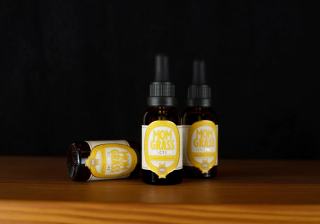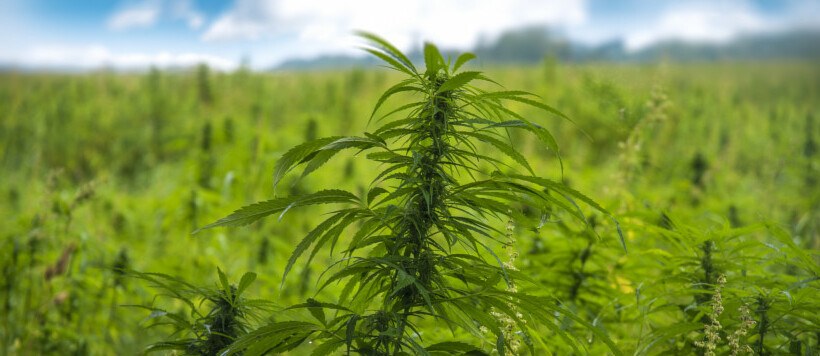
Nearly €1.7 billion of CBD products sold in Europe in 2022, more than €2 billion in 2023: the CBD market in Europe remains a growing niche, according to Prohibition Partners. For France, Xerfi measures €600 million for 2023. Oil, flowers, resin, or cosmetics: every product and every key figure depends on a calculation basis that you need to know how to read.
Updated on October 22, 2026: figures taken from the publications of Prohibition Partners, Xerfi, Data Bridge Market Research, and New Frontier Data, rules reviewed on EUR-Lex, Curia, and Légifrance.
Three key facts about European CBD before reading the studies
- Size: between €1.7 and €2 billion per year for all CBD products according to Prohibition Partners (2022-2023); no European public body publishes an official figure.
- Countries: France and Germany are the two largest national markets in every analysis consulted.
- Rules: 0.3% THC for hemp grown in the Union since 2023, food CBD still blocked by the novel food procedure, and flowers treated differently from one country to another.
Key figures for the CBD market in Europe, source by source
The CBD market in Europe has no official statistics: neither Eurostat nor customs track cannabidiol sales as a separate category. The figures in circulation all come from private firms, each with its own method, its own scope, and often paid data of which only the report summary is public. The table below brings together the figures published in open access, with their date and origin, so that the reader knows what basis an analysis rests on.
| Indicator | Published value | Source and date |
|---|---|---|
| Sales of CBD products in Europe | just under €1.7 billion (2022) | Prohibition Partners, European CBD Report: Health & Wellness |
| European projection | just under €2.6 billion in 2026 | Prohibition Partners, same report |
| All CBD categories, Europe | more than €2 billion (2023) | Prohibition Partners, International Cannabis Weekly |
| European cannabidiol market | $2.43 billion (2024) | Data Bridge Market Research, Europe CBD Market page |
| Germany, largest national market in the same report | $734.77 million (2024) | Data Bridge Market Research |
| CBD market in France | €600 million in revenue (2023) | Xerfi, Le marché du CBD en France, updated June 6, 2024 |
| 2020 forecast for the Union | €13.6 billion in 2025, annual growth of 10.4% | New Frontier Data, July 2020 |
Links to these publications: Prohibition Partners European reports, Xerfi study on CBD in France, Data Bridge Europe CBD Market page. The last row of the table serves as a reminder: a 2020 forecast predicted a market six times larger than the one measured by recent studies.
How big is the European CBD market?
The size of the European CBD market is around €2 billion per year according to the most cited estimate, that of Prohibition Partners, a London firm specializing in cannabis. The firm counted just under €1.7 billion of products sold in 2022, then more than €2 billion for all categories in 2023. Its projection for 2026 remains below €2.6 billion, growth of more than 50% in four years: real, but far from the curves promised at the start of the decade.
Data Bridge Market Research publishes a similar order of magnitude, $2.43 billion for 2024. Yet its own pages show the same value in "billions" on one page and in "millions" on another: the consistency of units should be checked before reusing any figure of this kind. For a reader, the conclusion fits in one line: cannabidiol is worth a few billion euros in Europe, not tens of billions.
Why CBD studies never give the same figure
CBD studies differ first in their scope. Some count only oils and flowers sold to consumers; others add cosmetics, supplements, food, the wholesale market, or even cannabidiol-based medicines such as Epidyolex. Some work from retail prices, others from manufacturers' revenue. The list of territories covered also changes: the 27-member European Union, Europe including the United Kingdom and Switzerland, or only the top five markets.
The method matters just as much. In the absence of public sales data, firms extrapolate from surveys of brands, the number of shops, hemp imports, or consumer panels. A variation of a few points in a starting assumption is enough to double a result. That is why the New Frontier Data forecast published in 2020, €13.6 billion for the Union in 2025, differs so much from the 2023 measurements: it assumed a regulatory opening for food CBD that did not happen.
A good practice is to compare a study with itself from one year to the next, never two firms with each other. The trend from the same data producer remains more reliable than the absolute value it announces.
The French CBD market, a heavyweight of the European sector
The CBD market in France generated €600 million in revenue in 2023 according to Xerfi, in a study updated on June 6, 2024, that covers the sector through 2026. Compared with the €2 billion estimated by Prohibition Partners for all of Europe, the figure would place France at around a quarter to a third of European sales, with the caution required by mixing two different methods.
The French market relies on a dense network of physical shops. Sector analyses describe a network of CBD shops partly structured by franchise chains; no official count of points of sale is published. CBD shops sit alongside tobacconists, pharmacies for certain oils and cosmetics, and online sales, which are very present for CBD oils.
French demand is concentrated on CBD flowers and resin, two products that European consumers buy less where they are restricted. The French regulatory framework has itself shifted: the order of December 30, 2021 banned the sale of raw flowers, then the French Council of State (Conseil d'État) annulled this ban on December 29, 2022. The THC limit for finished products remains set at 0.3%, the same as under the common agricultural policy, as explained on the page about the role of THC and its legal limits.
A multi-speed European market depending on the country
The European CBD market does not work as a single market: each state sets its own rules on sales, THC levels, or the status of flowers, and demand follows. The table below summarizes the situation of the main markets as it emerges from the published texts and analyses, without any value as legal advice; the national texts can be read in the cannabidiol legislation, state by state.
| Country | Market benchmark | Notable regulatory point |
|---|---|---|
| Germany | top of the Data Bridge report ($734.77M in 2024) | Cannabis Act (CanG) in force since April 1, 2024 |
| France | €600M in 2023 according to Xerfi, dense network of CBD shops | flowers authorized since the Council of State decision of December 2022, THC below 0.3% |
| Italy | hemp flower market developed before 2025 | security decree-law of April 2025 targeting hemp inflorescences |
| Czech Republic | niche market | hemp THC limit raised to 1% in 2022 |
| Switzerland (outside the Union) | long-established CBD flower market | products below 1% THC outside the narcotics law |
This diversity explains a large share of the gaps between studies: a firm that includes Switzerland or the United Kingdom does not get the same base as another limited to the Union. It also explains the flows: wholesalers established under a flexible rule supply retailers located elsewhere, as long as the product complies with the law of the country of sale.
Is CBD legal in Europe?
CBD is legal in most European Union states for products derived from authorized hemp varieties, but its status varies with the form of the product and the state concerned. Three decisions have shaped the European market since 2020, and each has changed the way players sell.
The first is the Kanavape ruling of the Court of Justice of the European Union of November 19, 2020 (case C-663/18): cannabidiol extracted from the whole plant is not a narcotic within the meaning of the 1961 Single Convention, and a member state cannot ban a product lawfully manufactured in another state without proof of a health risk. The second dates from December 2, 2020, when the United Nations Commission on Narcotic Drugs removed cannabis from Schedule IV of that same convention. The third concerns agriculture.
THC level: 0.3% in the Union, other limits elsewhere
The THC level authorized for hemp grown in the European Union rose from 0.2% to 0.3% on January 1, 2023, with the new common agricultural policy (Regulation (EU) 2021/2115, article 4). This limit concerns cultivated varieties and agricultural subsidies; finished products remain governed by national law. France applies 0.3% to the finished product, the Czech Republic 1% to hemp, Switzerland 1% outside the Union. THC-free CBD, called isolate or "broad spectrum," moves more easily from one country to another.
Synthetic or semi-synthetic cannabinoids follow a different logic: HHC, sold for a time as an alternative to CBD, has been classified as a narcotic in France since June 2023 and in several other European states. Confusing it with cannabidiol distorts any reading of the market.
Novel food: food CBD still blocked
Food CBD remains blocked in the European Union because cannabidiol extracts fall under the novel food regulation: none can be sold as a food or supplement without prior authorization. The European Food Safety Authority (EFSA) suspended its review of applications in 2022 for lack of sufficient data, then proposed in 2025 a provisional level of 0.0275 mg per kilogram of body weight per day, or about 2 mg for a 70 kg adult, reserved for very pure supplements and healthy adults over 25. This level remains far below the CBD content of the products on the market, which limits the future of the food segment. Cannabidiol foods and supplements are therefore not authorized for sale in the Union; the state of knowledge on CBD applications in cooking and nutrition does not change this status.
Which products are driving CBD growth in Europe?
CBD growth in Europe rests on four product categories, unevenly affected by regulation. Their relative weight varies from one state to another and from one study to another, but their role in the market's momentum is clear.
- CBD oils
- The most widespread product, CBD oil is sold online, in shops, and sometimes in pharmacies, but only its cosmetic presentation for external use is legal: intended to be swallowed, it falls under novel foods, which are not authorized. Its quality varies greatly: cannabidiol concentration, origin of the plant, extraction method, and laboratory analysis make the difference between two bottles at the same displayed price.
- CBD flowers and resin
- The most dynamic category in France and Switzerland, the most fragile in Italy since 2025. They account for a large share of the revenue of French physical shops.
- Cosmetics
- CBD is listed in the European database of cosmetic ingredients (CosIng): creams, balms, and massage oils remain the most stable category from a regulatory standpoint.
- Food and supplements
- A segment held back by the novel food procedure, which nonetheless concentrates the highest expectations of the major food brands.
New products come mainly from new forms: capsules, sprays, gummies, pet products, or blends with other cannabinoids such as CBG and CBN; a large share of them (capsules, gummies, sprays to be swallowed) are CBD foodstuffs, banned from sale in France and without authorization in the Union. Their success depends on perceived quality, the price per milligram of cannabidiol, and the trust the brand inspires, three points on which online sales have forced retailers to be more transparent.
Who are the players in the CBD market in Europe?
The players in the CBD market in Europe fall into three levels: hemp producers, processors and brands, then retailers. The sector remains highly fragmented, with no dominant group on a continental scale, unlike medical cannabis, where a few listed companies carry significant weight.
- Hemp producers: France remains the largest hemp producer in the European Union by area, mainly for fiber and seed; cultivation intended for cannabidiol accounts for less of this total.
- CBD processors and wholesalers: extraction, formulation, packaging, and wholesale, often in Switzerland, the Netherlands, Italy, or Central Europe; a CBD wholesaler offers a range of raw materials and white-label products.
- Brands: a few hundred brands in Europe, from small operations to brands present on several national markets, which stand out through their range, batch analysis, and price.
- Retailers: independent or franchised CBD shops, tobacconists, pharmacies, organic stores, online shops, and marketplaces.
Research firms regularly list big North American names among the main players, but these groups mainly target medical cannabis and the American market; their share of European CBD sales is not published. For a retailer, the real competitors remain the other shops in town and the online stores that deliver to the door.
Opportunities and strategy for a wholesaler or a premium brand
The opportunities of the CBD market in Europe look different for a wholesaler, a brand, or a retailer. Public studies do not give market shares by company; they do, however, show where value lies. For a brand, premium positioning rests on traceability: origin of the raw material, processing of the plant, extraction method, analysis published batch by batch. Consumers compare this information before price, especially for a high-concentration oil.
For a CBD wholesaler, the strategic issue lies in the catalog. Offering flowers, resin, oil, and cosmetics under a single account simplifies orders for shops, provided the wholesaler knows the law applicable to its customers: a catalog that complies in France has not necessarily complied in Italy since 2025. Wholesalers that anticipated these changes well kept their retailers; the others had to have products withdrawn within a few weeks.
For the consumer, regulation is read first in the declared use of the product (cosmetic, smoking product, aromatic), then in the THC content and the date of the analysis. These labeling statements remain the foundation of control, however the rules evolve.
What these figures say about the CBD sector
These figures describe a CBD sector that has emerged from the euphoric phase of 2018-2020. The European market is growing, but at a normal pace for a consumer product, far from the multiplications announced back then. Three readings emerge.
First point: demand exists and is holding up. Going from €1.7 billion to more than €2 billion in one year according to the same source, then projecting less than €2.6 billion in 2026, shows a market that is still growing but slowing down. Second point: growth is concentrated where flowers remain sellable and where the shop network has taken root, which explains France's weight. Third point: the greatest potential, food CBD, remains theoretical as long as the novel food procedure does not succeed.
For example, based on the figures in the table, if the European market reaches €2.6 billion in 2026 and France keeps its 2023 level, the French market would represent about 23% of the total. This calculation has only illustrative value, since it mixes two sources and two methods; above all, it shows that no reliable national projection exists in open access.
The challenges of the CBD market: rules, quality, and price
The challenges of the CBD market in Europe stem first from the instability of the rules. A national decision can shut down an entire segment, as the 2025 Italian decree on flowers showed, or on the contrary reopen it, like the Council of State decision in France. Companies in the sector therefore invest with caution, and banks as well as payment platforms often remain reluctant.
Quality is the second challenge. Tests carried out by consumer associations and laboratories have regularly found gaps between the announced and the measured cannabidiol content, or THC levels above the legal limit. A certificate of analysis per batch, issued by an independent laboratory, is becoming the standard expected by consumers and by serious distributors.
Price is the third challenge. The arrival of many sellers has pushed down the prices of flowers and oils, which squeezes the margins of independent shops. The retailers that hold out are betting on advice, product selection, and consistent quality rather than on a price war.
Finally, health remains a sensitive subject: cannabidiol is not a medicine, except for Epidyolex, prescribed for certain rare epilepsies. Health claims on a CBD product are prohibited, and scientific research is moving slowly. Basic knowledge about the molecule is gathered in the presentation of cannabidiol, its origin, and its uses.
CBD products in Europe: what changes from one country to another
For a CBD product sold remotely in Europe, it is the law of the place of delivery that applies, not that of the seller. An online shop based where flowers are sold freely cannot legally ship them to a state that bans them. Cosmetics move more easily, provided they meet the THC level of the destination country; oils to be swallowed remain unauthorized novel foods throughout the Union.
The requirements overlap from one country to another: an identifiable seller, a recent certificate of analysis for each batch, a stated origin of the plant, a clear composition, and a ban on any therapeutic promise. The minimum age of sale, often 18, applies almost everywhere. Traveling with CBD follows the same rules: the product must comply in every country along the way.
European CBD market: size, trends, legality, and effects
What are the trends in the CBD market?
The trends in the CBD market in Europe are slower growth than announced, a rise in quality checked by analysis, the diversification of product forms, and a strong dependence on regulatory decisions, notably on flowers and food CBD.
How big is the CBD market in Europe?
The size of the CBD market in Europe exceeded €2 billion in 2023 according to Prohibition Partners, which projects just under €2.6 billion in 2026. No official European figure exists.
Is CBD legal everywhere in Europe?
CBD is not legal everywhere in Europe in all its forms. Cosmetics made from authorized hemp are sold in most states, but flowers, the tolerated THC level, and food CBD fall under different national rules.
What are the effects of CBD?
The effects of CBD are the subject of ongoing research: cannabidiol has no psychotropic effect comparable to THC, and only one medicine based on purified CBD is authorized in the European Union. Other products cannot claim any health effect.