In this article, we review what is known about CBD and mental and emotional stability. You will find out what cannabidiol (CBD) is, how it interacts with our receptors, what studies on stress, anxiety and sleep are exploring, and the precautions to be aware of. All explained simply, in conditional terms and with no promises. CBD is not a medicine: if you have a health problem, ask a doctor for advice.
I. What is CBD?
1) CBD in simple terms:
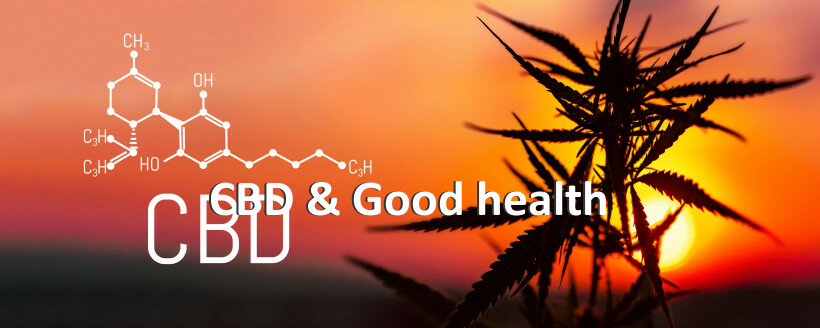
CBD, or cannabidiol, is a compound found in the hemp plant. But make no mistake, CBD is not there to get you high. To understand it better, imagine hemp as an orange full of nutrients. CBD would then be the vitamin C, present in the orange, but without the tangy taste. In other words, CBD is a component of hemp, without the psychoactive effects.
2) CBD vs THC: two brothers with very different characters
Hemp contains many cannabinoids, the best known of which is THC, responsible for the plant's psychotropic effects. Unlike THC, CBD has no psychoactive effect and does not cause dependence. They are like two brothers with very different characters: THC is psychotropic and classified as a narcotic in France, CBD is not.
3) The origins of CBD: a traveling companion since Antiquity
Hemp is nothing new. It has been used for thousands of years, and Egyptian writings dating from 1550 BC already mention its use in the medicine of the time. CBD, for its part, was only isolated in the 20th century. Today, science studies cannabinoids with modern methods, and many questions remain open.
II. CBD and mental stability: what we know
1) The science behind CBD: the endocannabinoid system
Our brain is a real communication hub, where billions of messages are exchanged every second. Among these exchanges, there is a very special communication system: the endocannabinoid system, made up of receptors that interact with cannabinoids. This system helps regulate our mood, our sleep, our appetite and many other functions. Researchers are studying how CBD interacts with it, without yet knowing whether this translates into an effect on stress or anxiety.
2) Testimonials and their limits
Many people juggling work, children and bills say they feel calmer since they started consuming CBD. These accounts are sincere, but a testimonial does not prove an effect: the improvement felt may come from a placebo effect, a change in habits or the natural course of the difficulties. Only controlled studies can settle the question.
3) Scientific studies and results: CBD, anxiety and stress
Studies are exploring the link between CBD, anxiety and stress. For example, a small study published in 2011, carried out on a few dozen people with social anxiety placed in a simulated public speaking situation, observed a decrease in the anxiety they felt. This work involves small samples and experimental situations: its results do not allow any conclusion, and CBD is not recognized as a treatment for anxiety.
III. CBD and emotional balance: the avenues studied
Emotions are a palette of colors
Our emotions are like a palette of colors, each bringing its own shade to our life. Sometimes certain colors can take over and obscure the others, creating an emotional imbalance. When this imbalance lasts, it deserves to be taken seriously and discussed with a doctor or a psychologist: it is the best way to restore harmony.
How does CBD interact with our body?
In the laboratory, CBD interacts with the endocannabinoid system and with other targets, such as certain serotonin and adenosine receptors, chemical messengers involved in mood. These mechanisms explain researchers' interest, but do not demonstrate any effect on our emotions.
Finding serenity in everyday life: what has proven itself
Waking up with a feeling of calm, finding work stress and family worries more manageable, keeping a cool head in the face of the unexpected: these goals are achieved first through recognized levers, such as regular sleep, physical activity, stress management or psychological support. CBD has not been shown to be able to replace them.
IV. CBD products: status and precautions
The different forms of CBD and what the law says
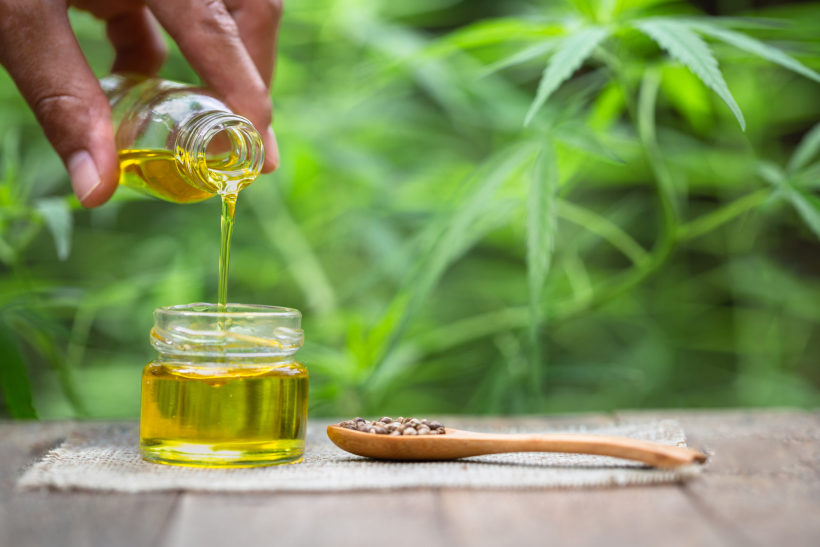
CBD is found in many forms: balms and creams, but also oils to be swallowed, capsules or gummies, which are not authorized. In France and in the European Union, foodstuffs enriched with CBD (oils to be swallowed, capsules, gummies, drinks, foods) are not authorized: CBD has not been authorized as a novel food (Regulation (EU) 2015/2283). Balms and creams fall under cosmetics regulations, with no therapeutic effect claimed, and only hemp leaves for herbal tea not enriched with CBD may be drunk as an infusion.
No dosage, but precautions
As commercial CBD is not a medicine, no dosage can be recommended. It is not without risk: drowsiness, digestive problems, changes in liver enzymes at high doses, and possible interactions with certain medicines (antidepressants, anxiolytics and anticoagulants in particular). It is not recommended during pregnancy and breastfeeding. If you are taking any treatment, talk to your doctor or pharmacist.
Product quality: points to watch
As with any product, quality varies, if only in terms of contaminants and THC. A few points to watch:
- The origin of the hemp and how it is grown: organic farming limits pesticide residues.
- The existence of independent laboratory analyses, which state the purity and concentration of CBD and THC.
- Claims: no CBD product can legally promise a health effect; such a promise should be a warning sign.
CBD and emotional balance: an avenue, not a treatment
CBD is a molecule that interests research on mental and emotional stability, because of its interaction with the endocannabinoid system. Studies nevertheless remain insufficient to recognize any effect on stress, anxiety or depression. It is not a medicine and does not replace any care: if your emotions weigh on you, or if anxiety or a depressed mood sets in, a doctor's opinion is essential.