
What this article covers
Bones and CBD: what research says
Osteoporosis is a bone disease, which causes a decrease in bone mass and a change in the micro-architecture of the bone system, resulting in a loss of bone strength and an increased risk of fractures. In France, this disease mainly affects women, with nearly 4 million patients, compared to 1.5 million in men, and causes no less than 400,000 fractures per year. Let's see how to prevent the risk of fracture, and what research says about CBD and bone.
What is osteoporosis?
Osteoporosis is a well known disease that greatly weakens the skeleton for 2 reasons:
- A decrease in bone mass, the bone loses density.
- A modification of the bone micro-architecture, the bone builds itself differently and becomes less resistant.
The risks of fractures are increased, and shocks or traumas that would not have had any consequences on a healthy bone, can cause great damage to the skeleton of a sick person.
Contrary to what one might think, bone is a living tissue, just like skin or muscles. It is constantly being renewed under the influence of hormones and in particular of signalling molecules called cytokines. When the bone is too old, or damaged, the organism calls upon "worker" cells, each with a specific role:
- The osteoclasts, whose work will be the destruction of the old bone.
- Osteoblasts, whose work will be the construction of new bone
The functioning of this mechanism deteriorates over time, and as we approach our fifties, we observe a natural progressive decrease in bone mass. Depending on the case, the repercussions on bone health will be inconsequential, or may give rise to osteoporosis. In France, women are almost 3 times more affected by this disease, and although osteoporosis generally appears later in men, they are not spared. Every year, there are approximately 400,000 osteoporosis-related fractures, most of which are localized:
- To the vertebrae
- On the wrists
- At the neck of the femur
What factors promote the disease?
As we have seen, as we age, it is normal to lose bone mass, as several scientific studies on patients have shown. However, certain factors can promote the development of osteoporosis, especially if they add up:
- Age
- Gender (women are much more affected, especially due to menopause)
- Ethnicity
- Poor nutrition
- Deficiencies (protein, calcium, vitamin D)
- Lack of physical activity
- Hormonal problems
- Certain diseases
Symptoms
Osteoporosis is a disease that advances in a hidden way, and is usually not accompanied by any clinical signs. Thus, only a measurement of bone mass can validate the hypothesis that the patient suffers from the disease.
Treatment
There are several pathways to treating osteoporosis and reducing the risk of bone fracture in patients.
- Drug treatments: several drugs are used, such as bisphosphonates or denosumab. They aim to reduce the activity of osteoclasts, whose function, as we said above, is to destroy old bone. Other treatments, prescribed in some cases, stimulate bone formation.
- Non-medicinal treatments : they help prevent fractures. Physical activity stimulates bone density, provided it involves loads and impacts (muscle strengthening, running). The diet must be rich in calcium and vitamin D, with vegetables and fruit. Falls can be prevented with an adapted living environment (shower, rugs, obstacles) and suitable closed shoes.
Osteoporosis and CBD
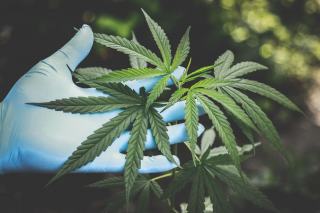
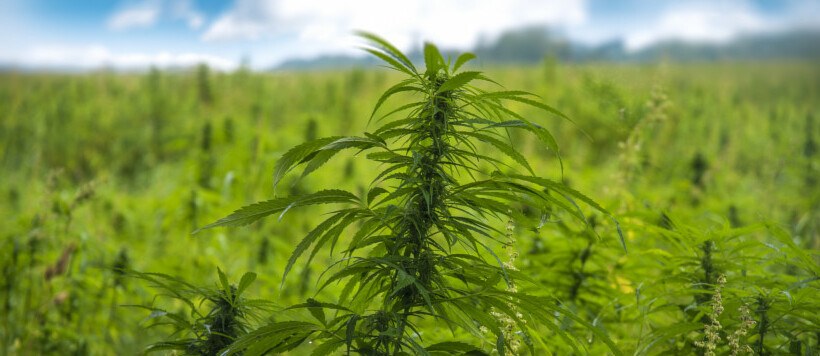
CBD (cannabidiol) is a molecule that has gained great popularity in recent years and is the subject of much research, mostly preclinical. This substance, part of the cannabinoid family, comes from industrial hemp (Sativa cannabis). Cannabis is in fact a family of plants with three main varieties, whose proportions of cannabinoids are very different:
- Cannabis Sativa : rich in CBD, poor in THC
- Cannabis Indica: rich in THC, poor in CBD
- Cannabis Ruderalis: low in CBD, low in THC
CBD and THC are the 2 most well known and used cannabinoids. You have certainly heard of THC: the media regularly talk about it. It is a narcotic in France. Indeed, THC is psychotropic: it modifies certain biochemical and physiological processes of the brain. Its consumption and marketing is currently prohibited in most countries. As for CBD, it is not a narcotic in France, and hemp flowers and leaves with less than 0.3% THC may be sold (Conseil d'Etat, 29 December 2022).
- In 2015, an Israeli study on rats reported that CBD (cannabidiol) improved the biomechanical properties of healing fractures (KOGAN et al 2015).
- In this animal work, CBD was associated with an increased activity of the enzymes responsible for the cross-linking of collagen. Collagen participates in the structure of bone.
- Researchers are also studying the role of the endocannabinoid system in the balance between osteoblasts and osteoclasts.
These results cannot be transposed to humans and do not allow any conclusion. This article does not replace a consultation on osteoporosis: ask your doctor or rheumatologist about prevention and treatment, which CBD cannot replace.