
What this article covers
Pain and CBD: what research says
We have all experienced pain, big or small. This pain may have lasted a few minutes or hours, maybe even a few days. A cut, a burn, a headache, a fracture, childbirth: the intensity of pain varies greatly. Usually, a painkiller is enough and the pain goes away. Unfortunately, in some people, the pain stays and lasts for several months or even years: it is then called chronic pain.
Even if it is not pleasant, and is often feared, pain has a very important, and in some cases even vital, function. It alerts us, warns us that something is not normal. When our body detects a problem, an injury, an illness, it triggers a message of pain to warn us. It prevents us from over-injuring ourselves, or letting a disease develop. For example, do not lean on a broken leg and remove a splinter before the wound gets infected, see a doctor about that back pain, and so on. Defining pain is complicated, we all have the same mechanism, but each of us lives it a little differently. For the same injury, 2 people can have opposite behaviors. We all have in our entourage a person who does not seem to be concerned by the effects of pain and who never complains, while another in the same circumstances would not even stand upright anymore.
Unpleasant or unbearable, how to define pain?
- A physical sensation: it hurts here, more or less strongly. We also know what kind of pain it is. (burn, cut, sting, etc.)
- An emotion: it's unpleasant, it hurts, it's unbearable, etc.
- A cognitive reaction: our behavior adapts to the pain we encounter. We adopt pain postures. Our brain tells us what behaviour we adopt in relation to past painful experiences.
Once the thorny situation is over, we take care of ourselves or go to the doctor. A pain treatment, and soon the effects of the pain will only be a bad memory. Yes, but not necessarily for everyone, not for people with chronic pain.
Chronic pain
When the painful sensation persists in time for more than 3 months, it is said to be chronic. It is an extremely disabling condition, whose consequences are both physical and psychological: physical, because it can lead to secondary arterial hypertension or muscle wasting; psychological, because pain causes mental fatigue, which can lead to depression.
Pain and CBD
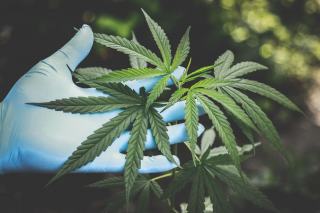
CBD (cannabidiol) is a member of the cannabinoid family, a substance derived from hemp (Cannabis Sativa). When we talk about cannabis, we have to understand that we are talking about a family of plants, of which there are mainly 3 varieties:
- Cannabis Indica, which is rich in THC, and therefore very psychotropic if absorbed
- Cannabis Sativa, very rich in CBD and with less than 0.3% THC. It is also called industrial hemp. It is grown for its seeds and fibres, used in a multitude of products, from hemp seed oil to car parts.
- Cannabis Ruderalis, low in CBD and THC
In France, only authorised varieties of industrial hemp (Cannabis Sativa) containing less than 0.3% THC may be grown. For years, research has explored the possible effects of CBD, mostly in preclinical studies (on cells or animals) or on small groups. Regarding pain, some researchers are studying possible anti-inflammatory effects of cannabidiol. An American study from Temple University in Philadelphia, in mice, reported effects of CBD on nerve pain caused by a chemotherapy drug (Ward et al., 2014); animal results cannot be transposed to humans. Current data do not allow any conclusion on pain linked to arthritis, multiple sclerosis or other chronic conditions. CBD is not a medicine and does not replace any treatment: chronic pain requires medical follow-up, so ask your doctor for advice, especially since CBD may interact with some medicines.