What this article covers
CBD and epilepsy: what we know
Epilepsy is a neurological condition that has long been considered a psychiatric syndrome. In the Middle Ages and still today in some cultures, the person in crisis is considered to be possessed by the devil. It is, of course, a neurological disease like any other, and studies on the subject have led to a better understanding of its effects, and to the development of medications that allow patients to reduce their seizures. Research has also led to a cannabidiol-based medicine, Epidyolex, authorised on prescription for certain rare forms of epilepsy.
What exactly is epilepsy?
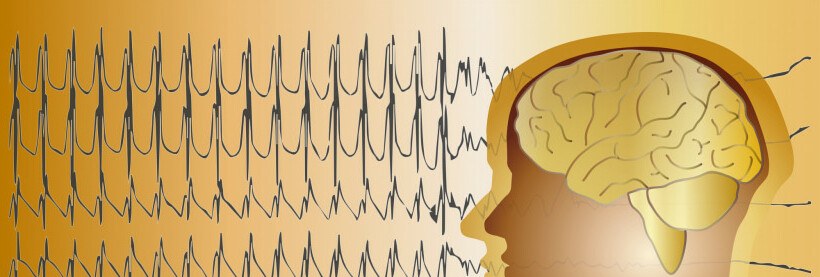
The word epilepsy comes from the Greek epilambanein, which means "to seize". It expresses the well-known seizure effect of this disease, which occurs completely by surprise. This manifestation is transient, and the seizure lasts only a few minutes. It manifests itself by disturbances, such as a loss of consciousness or a confused attitude, a fixed gaze, involuntary repetitive gestures or noisy breathing. Contrary to what one might think, epileptic seizures are not always accompanied by convulsions and tremors, yet they are sometimes spectacular. Epilepsy usually first appears in childhood or adolescence, or even after the age of 60. Seizures are due to a sudden and momentary disruption of the electrical activity of the brain. Sudden and excessively high discharges of nerve impulses will then spread to several neurons with two possible effects:
- Partial epilepsy, if the abnormal electrical activity remains localized in the same area. The effects of these seizures will only affect certain parts of the body.
- Generalized epilepsy, if the nerve impulse spreads to all neurons. The effects of these seizures then affect the entire body.
What causes epilepsy?
This health problem is multifactorial, and in patients suffering from this syndrome we will generally find:
- A hereditary part in 2/3 of the cases.
- Lesions of the brain, following an accident or an illness
- Different diseases (meningitis, encephalitis, lupus)
- More or less localized malformations of the cortex
- The consumption of certain products (alcohol, medication, etc.)
Sometimes the causes of this pathology are not found, making it more difficult to choose a treatment.
What about cannabidiol in the treatment of epilepsy?
Cannabidiol (CBD), is one of the many cannabinoids derived from hemp (Cannabis Sativa). In recent years, the number of studies on CBD and its possible effects has increased steadily. Unlike THC, it has no intoxicating effect: CBD does not cause the high or euphoria well known to cannabis smokers. Some studies suggest that CBD may even modulate some effects of THC.
- In the United States and in the European Union, clinical trials led to the authorisation of a cannabidiol-based medicine (Epidyolex), prescribed by a doctor for certain rare epilepsies of childhood such as Dravet syndrome, Lennox-Gastaut syndrome and tuberous sclerosis complex. For other forms of epilepsy, the data do not allow any conclusion.
- At the beginning of the 1980s, when research on cannabis was very limited, a very small study gave either CBD or a placebo to a few epileptic patients and reported fewer seizures in some patients receiving CBD. Such a small study does not allow any conclusion.
- A 2015 online survey (Hussain et al., University of California, Los Angeles) of the parents of 117 children with epilepsy that was resistant to usual medication reported that 85% of parents observed fewer seizures with a CBD-enriched cannabis product, and 14% reported no seizures at all; parents also reported changes in sleep, mood and alertness. A survey based on parents' reports, without a control group, does not prove any effect.
Cannabidiol medicine: for whom?
Clinical trials on cannabidiol as a medicine have defined the patients for whom it may be prescribed by a doctor.
- Patients with Lennox-Gastaut syndrome, Dravet syndrome or tuberous sclerosis complex, on prescription and under medical supervision.
CBD products sold to the public are not medicines and are not a treatment for epilepsy. If you suffer from this pathology, never modify or stop your antiepileptic treatment on your own, and talk to your doctor or neurologist before using any CBD product, because our page does not replace their advice: cannabidiol can interact with some antiepileptic drugs.
Each person being different, only your doctor can assess the treatment suited to your epilepsy.