What is Degenerative disc disease?
The spinal column is the framework of the human body. It supports the skeleton, and without it, it would be impossible for us to stand upright. Measuring a little over 70 cm in adults, it consists of a stack of 33 vertebrae (the bones of the spine), 24 of which are mobile, and 23 intervertebral discs. These discs have 3 functions:
- Shock absorber, the intervertebral discs look like small cushions whose role is to absorb shocks and distribute pressure.
- Mobility, they give the column a certain mobility.
- Connection, each disc links 2 vertebrae together (for those that are mobile).
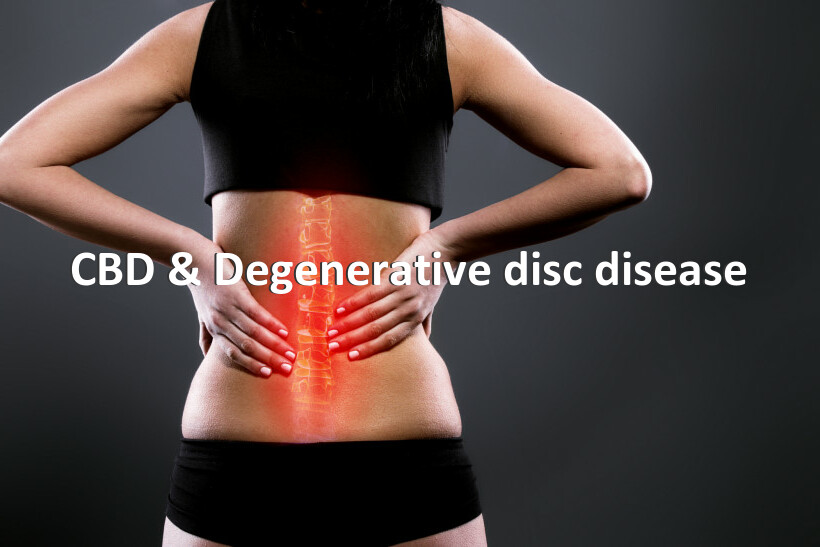
Degenerative disc disease is characterized by deterioration of these discs, which may have become dehydrated or compressed. This may be due to excessive and repeated stress throughout life. It is usually a natural process, linked to aging. Discopathy becomes pathological when its effects cause disabling back pain.
How to recognize a degenerative disc disease?
The main symptom is back pain, which will take a different name depending on its location.
- Low back pain, with pain in the lower back.
- Dorsalgia, when the pain is in the middle of the back
- Cervicalgia, when the pain is in the neck.
This pain in the back is sometimes accompanied by other symptoms, such as stiffness and tingling.
Diagnosis
The diagnosis is established by a clinical examination, during which the doctor will observe the mobility of the back. An X-ray or MRI will confirm the diagnosis.
Treatment
The treatment of degenerative disc disease is mainly aimed at relieving the pain caused by the disease. Various medications are offered such as analgesics, anti-inflammatory drugs, muscle relaxants, infiltrations, and of course, rest. Physiotherapy helps to maintain mobility. When medications and physiotherapy are no longer sufficient to relieve the pain caused by the disease, surgery can help to return to an almost normal life.
CBD and degenerative disc disease
CBD (Cannabidiol) is a molecule found in industrial hemp (Cannabis Sativa), and we hear more and more about it lately. It is the subject of many studies, mostly preclinical (on cells or animals). CBD, whose full name is cannabidiol, is one of the best-known cannabinoids, along with THC, known for its psychotropic effects. Unlike THC, cannabidiol (CBD) is not a narcotic in France; however, it is not authorised as a food in the European Union, and it is not a medicine. Let's take a look at some studies that have explored CBD (cannabidiol) and intervertebral discs.
- Researchers from the University of São Paulo reported that CBD (cannabidiol) limited the effects of an intervertebral disc injury in rats. (SILVEIRA et al. 2014) Animal results cannot be transposed to humans.
- Several studies, mostly on animals, have explored possible anti-inflammatory effects of CBD. (MECHA et al. 2013, KOZELA et al. 2013, Li et al. 2013)
- Other studies have explored the possible effects of CBD on pain. (Lu et al. 2015, GENNARO et al. 2017)
These results do not allow any conclusion. CBD is not a medicine and does not replace the treatment of back pain: ask your doctor for advice, especially since CBD may interact with some medicines.