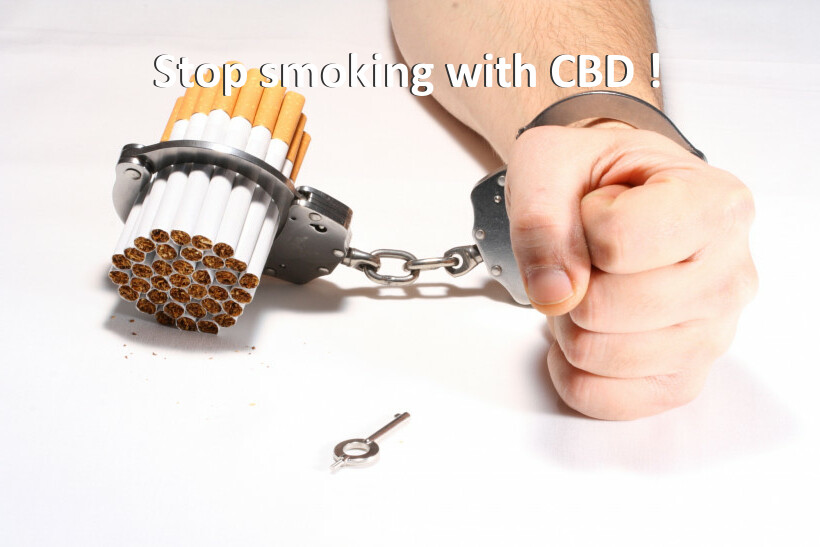
CBD & Tobacco
Smoking is the leading cause of preventable death in France. According to Santé publique France, tobacco caused about 68,000 deaths in France in 2023 (estimate published in February 2026), compared with about 75,000 in 2015. Cigarettes contain a substance called nicotine, which is the main cause of tobacco addiction. According to some studies, it is more addictive than cocaine, no less. Let's look at the different ways to quit smoking. But also what research says about CBD and smoking.
A bit of history
In America, tobacco had already been used for a long time, even when Christopher Columbus had just set foot on the clear Caribbean sand in October 1492. The natives smoked tobacco with long pipes or chewed it. Back at the Court of Portugal, the tobacco plant was used as an ornament. Around 1550, the King of Spain's physician saw tobacco as a universal medicine. From year to year, tobacco gained in popularity, and Cardinal de Richelieu decided to introduce a sales tax. It is only at the beginning of the 20th century that the toxic effects of tobacco on health were brought to light.
Why does smoking kill?
Cigarette smoke is a toxic cocktail containing more than 4,000 chemical compounds, more than 50 of which are recognized as carcinogenic. Of course, there is nicotine, tars, and various flavoring agents, but that's not all, there are also heavy metals (lead, mercury, chromium), harmful gases (carbon monoxide, nitrogen oxide, ammonia). All these substances inhaled several times a day, sometimes for several years, have a devastating impact on the health of smokers. Smoking considerably increases the occurrence of cardiovascular and pulmonary diseases and many cancers. According to a report published in 2017 by the WHO, tobacco kills more than 7 million people each year, including about 890,000 non-smokers exposed to second-hand smoke.
What are the effects on health?
Smoking can cause a wide variety of diseases:
- Cancers: lung cancer, throat cancer, mouth cancer, pancreatic cancer, etc.
- Cardiovascular diseases: Strokes, aneurysms, and various coronary heart diseases.
- Respiratory illnesses: aggravation of asthma, chronic bronchopneumonia, sleep apnea, etc.
- Digestive diseases: gastroesophageal reflux, ulcers, pancreatitis, etc.
- Dental diseases: cavities, gingivitis, changes in the oral ecosystem.
The good news is that the risk of disease decreases rapidly after quitting smoking.
- 48 hours after the last cigarette, certain perceptions, such as taste and smell improve
- 72 hours after stopping, breathing requires less effort.
- After 3 months, coughing is becoming increasingly rare, tiredness flies away.
- After 1 year, the risk of a heart attack decreases by half.
- After 5 years, the risk of stroke becomes identical to that of a non-smoker.
- After 15 years, the smoker's life expectancy returns to that of a person who has never smoked.
How do I quit smoking?
To stop smoking, there is unfortunately no miracle method, and sometimes several tries are necessary before finding THE method.
- The nicotine substitutes : their role is to deliver nicotine slowly and steadily. The body receives its dose of nicotine, relieving the sensation of withdrawal. Nicotine is no longer associated with pleasure, little by little the addiction fades away. Nicotine substitutes are available in pharmacies with or without a doctor's prescription. They can be found in the form of a patch to be stuck on the skin, in the form of chewing gum, lozenges, inhalers or sprays.
- Drug treatments : some medicines for smoking cessation, such as varenicline or bupropion, are only available on a doctor's prescription. They are not suitable for everyone, in particular pregnant women and minors: only a doctor can assess them.
- Vaporization : the French High Council of Public Health (HCSP) considers that the nicotine electronic cigarette can be an aid to stop smoking. However, it is not always easy to know the composition of the liquids.
- Psychological help : Some therapies such as behavioral and cognitive therapies (CBT) have some success during withdrawal, and reduce the effects of cravings.
CBD and smoking cessation
CBD (cannabidiol) is a molecule derived from industrial hemp (Cannabis Sativa), it belongs to the large family of cannabinoids. It has been the subject of numerous studies for several years now, most of them preclinical or on small groups. CBD does not have the intoxicating effect of its cousin THC. Note that THC is a narcotic in France, whereas CBD is not: hemp flowers and leaves with less than 0.3% THC may be sold (Conseil d'Etat, 29 December 2022), but CBD is not authorised as a food in the European Union, and the advertising of vaping products is prohibited in France. Let's see what research says about CBD and smoking.
- In 2013, a small study from University College London (Morgan et al., 24 smokers, one week) reported that participants using a CBD inhaler smoked about 40% fewer cigarettes than before, whereas the placebo group reported no significant change. This result has not been confirmed by larger trials and does not allow any conclusion.
CBD is not a medicine and is not a smoking cessation aid. To quit smoking, ask your doctor, your pharmacist or a tobacco specialist, who can offer you proven methods.