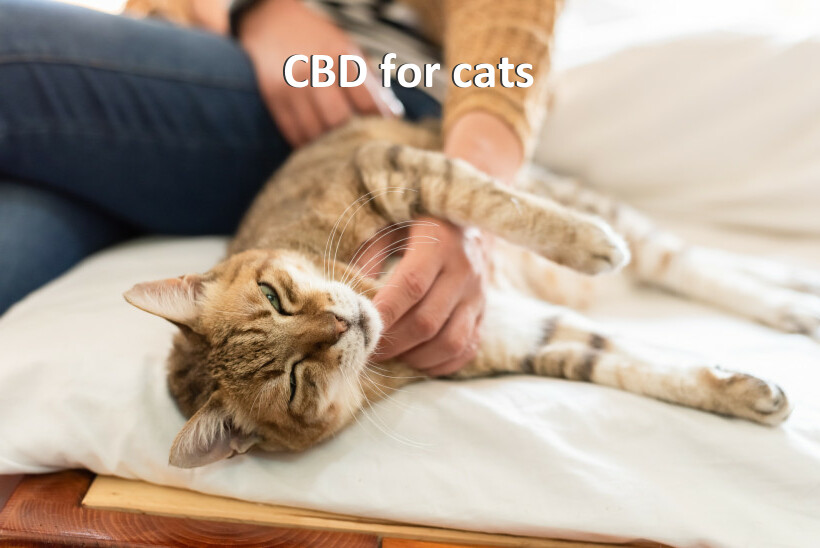
CBD and cats: what do we know?
CBD (cannabidiol) has gained a lot of fame in recent years. It is also talked about for our four-legged friends, because they too have an endocannabinoid system (ECS), just like us. Let's see together what we know, and why any use must first be discussed with your veterinarian.
What is CBD (cannabidiol)?
CBD is a substance produced by industrial hemp (Cannabis Sativa), which is called a cannabinoid. CBD has already been the subject of numerous scientific studies on its possible effects. Cannabis is often associated with its high effect because of THC, but this is misleading, because the cannabis family actually includes 3 different plants:
- Cannabis Sativa, rich in CBD, very low in THC (less than 0.3% according to the law)
- Cannabis Indica, low in CBD, and very rich in THC
- Cannabis Ruderalis, low in CBD and THC
The only plant whose culture is authorized is industrial hemp (Cannabis Sativa), from which cannabidiol and many other products are derived. For cats, never give CBD without the advice of your veterinarian: he alone can assess whether a product is appropriate for your animal, and CBD may interact with veterinary treatments. THC, even in small amounts, is toxic to cats.
What is the endocannabinoid system (ECS)?
The endocannabinoid system (ECS) participates in cell homeostasis. The first cannabinoid receptor was identified in 1988, a major advance in biology. Its functions are numerous and many physiological processes of our body and that of our animals (a cat for example) involve it. One could say, taking a little shortcut, that the ECS is a system of systems (respiratory, lymphatic, muscular, immune, nervous, etc.): a regulating system that takes part in many functions of the organism. The ECS uses cannabinoids to transmit certain signals and regulate homeostasis.
Clinical endocannabinoid deficiency (CECD)
In 2004, the American neurologist Ethan Russo proposed the hypothesis of a "clinical endocannabinoid deficiency", which could play a role in some conditions such as migraine, fibromyalgia or irritable bowel syndrome; he revisited it in 2016. This hypothesis is still debated and has not been demonstrated. Ethan Russo has notably served as medical director of Phytecs, a company studying the endocannabinoid system. The phytocannabinoids present in certain plants such as hemp can interact with the same receptors as the endocannabinoids naturally produced by the human body or by animals such as cats.
CBD and cats: what is being studied?
Research on cannabidiol (CBD) in cats is still very limited. Topics explored include osteoarthritis, anxiety or aggressiveness, and other disorders (inflammation, convulsions, skin problems, pain, etc.), without any conclusion to date. CBD is not a veterinary medicine: for any health problem, consult your veterinarian.