Glaucoma
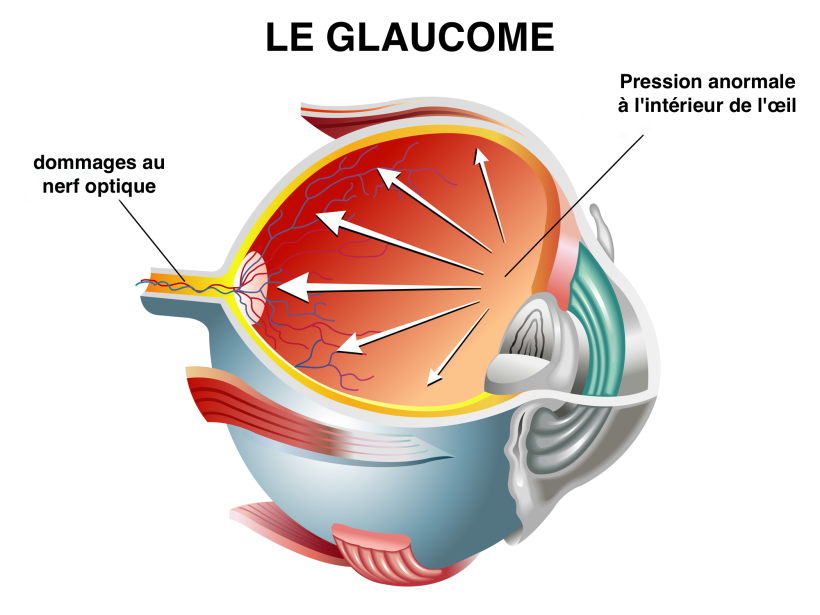
Glaucoma is an eye disease that can cause irreversible damage to the optic nerve and lead to loss of vision. It is most often associated with an increase in intraocular pressure (IOP) inside the eye. This pressure can damage the optic nerve and the fibers that transmit visual information to the brain.
There are several forms of glaucoma, but the two most common forms are:
- Open-angle glaucoma is the most common type: the angle between the iris and the cornea remains open, but the fluid drains poorly, which causes the pressure to rise gradually.
- Closed-angle glaucoma, also known as acute glaucoma, is characterized by a narrow angle between the iris and the cornea, which leads to an obstruction of the flow of fluid through the eye and a rapid increase in intraocular pressure.
The symptoms of glaucoma can be subtle and may include changes in peripheral vision, halos around lights, headaches and blurred vision. In advanced cases, there may be irreversible loss of vision and damage to the optic nerve.
Glaucoma is generally treated by reducing intraocular pressure (IOP): eye drops that reduce the production of eye fluid or help it drain, and laser treatment or surgery in some cases. It is important to note that treatments for glaucoma must be followed regularly throughout life to prevent the disease from progressing.
What is CBD?
CBD, or cannabidiol, is a hemp molecule that has gained in popularity in recent years. Unlike THC (tetrahydrocannabinol), the main psychoactive compound in cannabis, CBD does not cause psychotropic effects. That does not make it a medicine.
Research is looking at CBD in many areas (anxiety, pain, inflammation, neurological diseases), most often at a preclinical stage, with no results that allow any conclusion. Only one cannabidiol-based medicine is authorized, by prescription, for certain rare epilepsies; it has nothing to do with commercial CBD products.
Glaucoma and CBD
As regards glaucoma, an eye disease that can cause irreversible damage to the optic nerve and lead to loss of vision, the question is whether CBD acts on intraocular pressure (IOP), the pressure exerted inside the eye, which treatments seek to lower. The available data do not point in that direction: some studies, in humans as well as in animals, have not observed any decrease in intraocular pressure with CBD, and some have even reported an increase. It is mainly THC that has been studied for this use, with a short-lived effect and side effects that do not allow it to be made into a treatment.
CBD is not a treatment for glaucoma. Never replace or interrupt your treatment: an interruption can lead to irreversible loss of vision. Before any use of CBD, talk to your ophthalmologist about it, as interactions with other medicines are possible. Furthermore, legislation varies from one country to another; in France, CBD foodstuffs and food supplements are not authorized.
Glaucoma: CBD is not a treatment
CBD is a hemp molecule that interests research in many areas, but nothing today supports the claim that it lowers intraocular pressure, and some studies even suggest the opposite. Glaucoma is a serious disease that is treated with eye drops, laser treatment or surgery, with regular follow-up by an ophthalmologist. CBD is not a medicine: if you have a health problem, ask a doctor for advice.