1. What is CBD and how is it obtained?
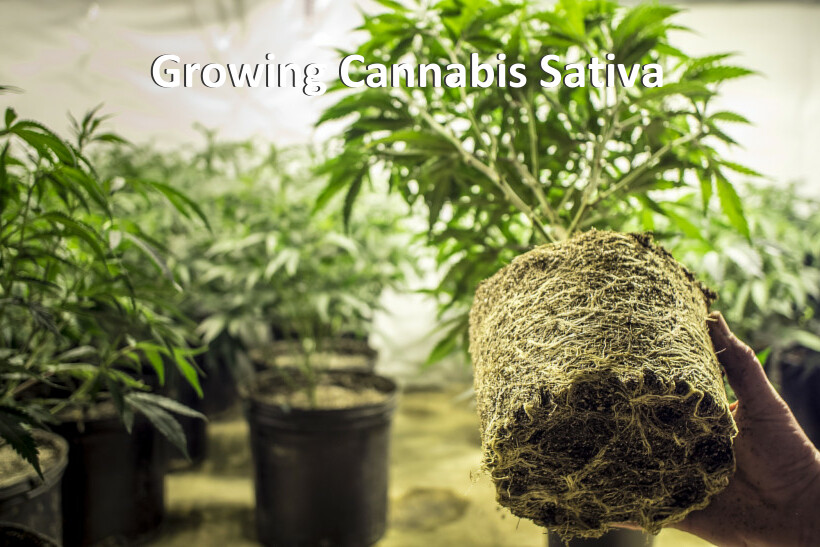
CBD, or cannabidiol, is a natural compound found in the hemp plant (Cannabis sativa). Hemp is a variety of the cannabis family grown mainly for its fibers, its seeds and its cannabinoids, including CBD. Unlike THC (tetrahydrocannabinol), another well-known cannabinoid present in some cannabis varieties, CBD does not cause psychotropic effects; in France, its sale is permitted when it comes from authorized hemp varieties, with less than 0.3% THC.
CBD is one of more than 100 cannabinoids identified in the cannabis plant. Cannabinoids are compounds that interact with the human body's endocannabinoid system (ECS), a complex cell signaling system that plays a key role in regulating various biological functions, such as pain, mood, sleep, appetite and the immune response. The ECS is made up of receptors, enzymes and signaling molecules called endocannabinoids, which are produced naturally by our body.
CBD acts indirectly on the receptors of the endocannabinoid system, by modulating their activity and by influencing the production and breakdown of endocannabinoids. Unlike THC, which binds directly to CB1 receptors and causes psychoactive effects, CBD has a low affinity for these receptors and instead exerts its effects by interacting with other receptors and molecular targets in the body.
Scientific research is exploring many possible effects of CBD (on inflammation, pain, anxiety, seizures...), most often in animals or in the laboratory. Only one medicine based on purified cannabidiol is authorized, on prescription, for certain rare forms of epilepsy; commercial CBD products are not medicines and do not treat any disease.
How is CBD extracted from hemp?
There are 3 methods for extracting CBD from hemp:
- Supercritical CO2 extraction: This method is the most efficient and the safest for extracting CBD, but it is also the most expensive. It involves using carbon dioxide (CO2) at high pressure and low temperature to isolate CBD and other cannabinoids from the hemp plant. Supercritical CO2 extraction yields a pure product free of solvent residues.
- Ethanol extraction : This method uses ethanol, an organic solvent, to extract CBD and the other compounds from the hemp plant. The ethanol is mixed with the plant material, then filtered to remove the solids. Finally, the ethanol is evaporated, leaving behind an extract rich in CBD. This method is less expensive than CO2 extraction, but it can leave traces of solvent in the final product.
- Oil extraction: This method consists of infusing the hemp plant material in a carrier oil, such as coconut oil or olive oil, to extract the CBD. The infused oil is then separated from the plant material. This method is simpler and cheaper than the others, but it can produce much lower concentrations of CBD.
Once extracted, CBD can be used to make a variety of products, such as oils, creams or balms. In France, edible CBD products (oils to swallow, capsules, gummies) are foodstuffs that are not authorized for sale.
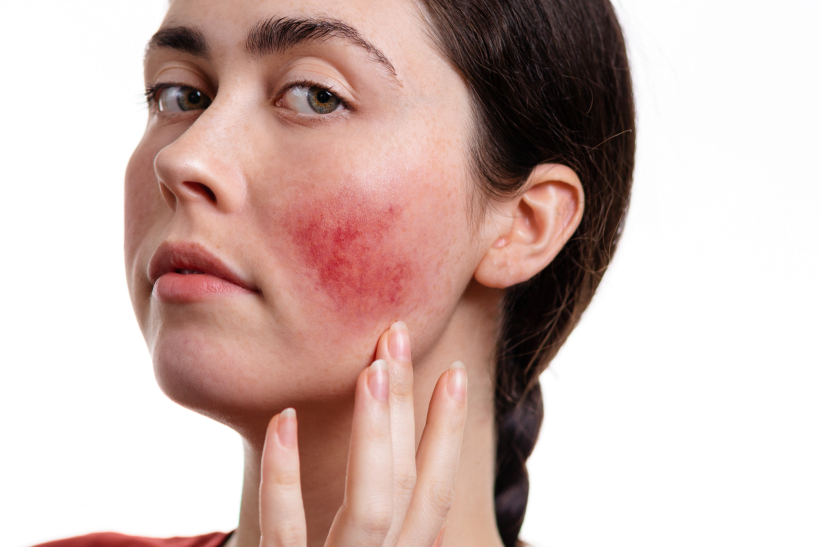
2. The causes of skin redness
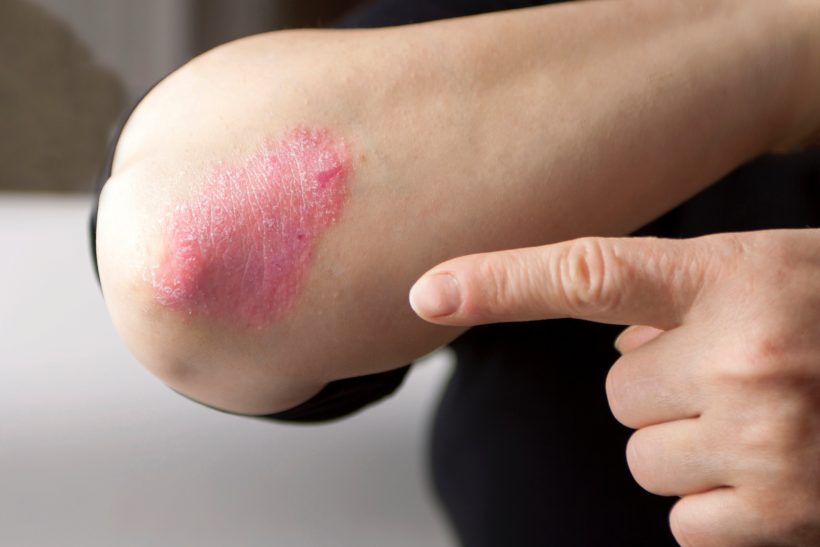
Skin redness can result from various factors, such as allergic reactions, skin conditions like psoriasis and eczema, or simply inflammation caused by external aggressions. Whatever the cause, this redness can be unsightly, uncomfortable and sometimes painful. Its cause should be identified by a doctor or a dermatologist, especially if it persists.
3. CBD, inflammation and skin: what research is exploring
The skin has endocannabinoid system receptors, and studies, mostly in the laboratory (skin cells) or in animals, are exploring the effect of CBD on inflammation and itching. These preliminary results do not allow us to state that a CBD cosmetic reduces redness.
4. CBD and skin conditions: psoriasis, eczema, acne
Psoriasis, eczema and acne are skin diseases that fall under the care of a doctor. A few studies, in the laboratory or on small groups, are looking at CBD in these conditions, notably its effect on sebum production by cultured cells; they do not allow any conclusion to be drawn, and CBD does not replace any dermatological treatment.
5. CBD cosmetics: oil, cream, balm
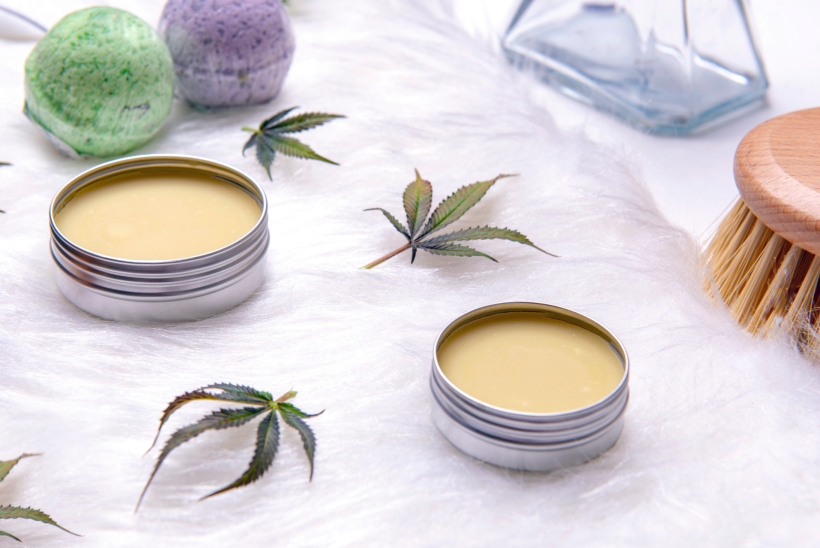
CBD is found in cosmetics: oils to apply to the skin, creams or balms. These are hygiene and comfort products, which do not treat any condition. As with any cosmetic, try it on a small area of skin first, and stop in case of irritation or allergic reaction.
6. Testimonials: what to make of them
More and more people are turning to CBD to take care of their skin, and many enthusiastic reviews can be found online. These testimonials remain individual impressions: they do not replace controlled studies, and the improvement of a skin condition can have many other causes (natural course in flare-ups, season, other care).
- If you read that a CBD balm "made eczema disappear", keep in mind that eczema progresses in flare-ups and can improve on its own; only a doctor can judge a treatment.
- Likewise, acne varies with age, hormones and the products used: a testimonial does not prove the effect of a product. Acne treatments prescribed by a doctor or a dermatologist, on the other hand, have been evaluated.
7. CBD and skin: a cosmetic ingredient, not a treatment
CBD is present in many cosmetics, but research does not, to date, allow any effect on redness or on conditions such as psoriasis, eczema and acne to be attributed to it. CBD is not a medicine: if a skin problem persists, consult a doctor or a dermatologist.
If you choose a CBD cosmetic for its comfort, check its composition and THC content, try it on a small area first and keep a critical eye on the claims made.