Who has never felt that weight on their shoulders, that knot in the stomach or those incessant thoughts that keep us awake at night? Stress has become the scourge of the 21st century, affecting millions of people around the world. Many turn to CBD, presented as a natural option. What do we really know about its role in stress? In this article, we review, in conditional terms and with no promises, what CBD is, what studies are exploring and the precautions to be aware of. CBD is not a medicine: if you have a health problem, ask a doctor for advice.
I. CBD, what are we talking about?
You have probably already heard of cannabidiol, more commonly known as CBD, especially if you are looking for ways to manage your stress. Derived from hemp, it is in fact very different from what you might imagine. So where does it come from and what do we know about its link with stress?
A. The origin of CBD and how it differs from THC
CBD, or cannabidiol, is a molecule derived from hemp, a plant with many uses. Hemp contains more than a hundred cannabinoids, including CBD and THC. THC is the substance responsible for the psychotropic effects linked to cannabis use. CBD, for its part, has no psychotropic effect and is not classified as a narcotic in France; the sale of hemp flowers and leaves with less than 0.3% THC is permitted there. Traces of THC may nevertheless remain in some products.
B. The different forms of CBD and their status
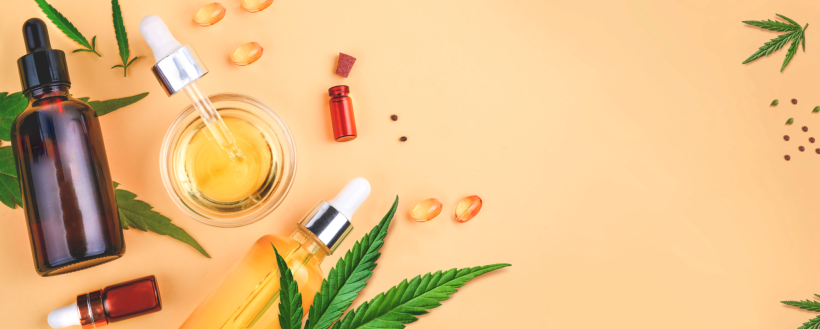
CBD comes in many forms: oils, bags of gummies, capsules, balms. In France and in the European Union, foodstuffs enriched with CBD (oils to be swallowed, capsules, gummies, drinks, foods) are not authorized: CBD has not been authorized as a novel food (Regulation (EU) 2015/2283). Balms fall under cosmetics regulations and cannot claim any therapeutic effect.

II. CBD, stress and anxiety: the mechanisms studied
A. CBD and the endocannabinoid system
To understand why researchers are interested in CBD and stress, we first need to look at our body. Our body has a little-known system, called the endocannabinoid system, which helps regulate our mood, our sleep, our appetite and our response to stress. CBD interacts with this system, but it is not yet known whether this translates into an effect on stress in humans.
B. CBD and serotonin
Imagine an orchestra whose musicians play in perfect harmony. Serotonin is one of these musicians: a key neurotransmitter that contributes to our feeling of well-being and happiness. In the laboratory, CBD interacts with certain serotonin receptors: this is one of the reasons for researchers' interest, although it has not been shown to act as a conductor of our mood.
C. To understand it better
Think of your balance as a garden. Stress, anxiety and depression are the weeds that invade it. To pull them out, the recognized tools are sleep, physical activity, stress management and, when necessary, support from a professional. CBD has not been shown to be able to create, on its own, an environment conducive to relaxation.
So what do studies say about CBD and anxiety disorders? That is what we will see in the next part.
III. CBD and anxiety disorders: what studies are exploring
A. Anxiety and depression
A few studies, often on small samples or in animals, explore the link between CBD (cannabidiol), anxiety and depression. Their results do not allow any conclusion, and CBD is not recognized as a treatment for any of these disorders. If worries and negative thoughts overwhelm you, talk to a doctor: anxiety and depression can be treated.
B. The physical symptoms of stress
Stress and distress are often accompanied by physical symptoms: palpitations, muscle tension, headaches, digestive problems. No study supports the claim that CBD relieves them. These signs can also reveal another illness: if they persist, see a doctor.
C. Sleep and relaxation
Restorative sleep is essential for our general well-being. Studies are looking at CBD and sleep, with variable results that do not allow any conclusion. Insomnia that lasts deserves a doctor's opinion.

IV. CBD products: choosing with caution
A. Choosing the right product
Given the multitude of products available, first check that they are authorized (flowers, leaves, cosmetics), then their quality: laboratory analyses, THC level below 0.3%, absence of contaminants. Be wary of any product that promises an effect on stress: this is prohibited.
B. Why no dosage is given
As commercial CBD is not a medicine, no dosage can be recommended for an effect on stress. CBD is not without risk: side effects have been reported (drowsiness, digestive problems, changes in liver enzymes at high doses) and it can interact with certain medicines, including antidepressants and anxiolytics. It is not recommended during pregnancy and breastfeeding, and traces of THC can lead to a positive roadside drug test.
C. Consulting a health professional
Consult a health professional if stress weighs on your daily life, if you suffer from anxiety disorders or if you are already taking medication. CBD (cannabidiol) does not replace appropriate medical follow-up, and a treatment should never be stopped without medical advice.
V. Testimonials: what they say and what they do not prove
A. Accounts to be read with a critical eye
Many people say they have tried CBD to cope with stress. A testimonial remains a personal experience: it does not tell you whether the improved well-being felt comes from the product, from a placebo effect or from other changes. Those who manage to take back control of their lives most often owe it to several levers at once.
- Paralyzing panic attacks that prevent a social life are an anxiety disorder that can be treated: psychotherapy, breathing techniques and, if necessary, prescribed treatment. This is not a problem to be managed alone with CBD capsules, which are moreover not authorized as food.
- For an entrepreneur stressed by work and responsibilities, who struggles to sleep and relax, the best-studied options remain meditation, exercise, a regular sleep pattern and, if necessary, help from a doctor or psychologist.
VI. CBD and stress: an avenue of research, not a treatment
CBD is an avenue of research on stress and anxiety, because of its interaction with the endocannabinoid system and serotonin. Studies nevertheless remain insufficient to recognize any effect on stress, mood, sleep or physical tension.
If stress weighs on your daily life, the first step is to talk to your doctor about it. CBD is not a medicine: if you have a health problem, ask a doctor for advice.
Taking care of your mental health means relying on recognized levers and on professionals. CBD oils to be swallowed, capsules and gummies are not authorized as food in the European Union, and no CBD product can promise to restore your peace of mind.